The Islamic Ministry released a list of guidelines ahead of Ramzan this year, including no loudspeakers, no i'tikaf without ID, no prayer broadcasts, and a ban on iftar in mosques. Many critics referred to it as the Saudi government’s attempts to reduce the influence of Islam in public life
The holy month of
Ramzan – a period of fasting, prayer, and reflection for Muslims – is expected to begin on 22 March.
Saudi Arabia seems to rebrand its Ramzan approach this year.The Islamic Ministry released a list of guidelines and limitations on the celebration of the holy month this year, including no loudspeakers, no i'tikaf without identification, no prayer broadcasts, and a ban on iftar in mosques.These divisive guidelines have received backlash from Muslims across the globe.Let’s take a closer look.
Saudi Arabia’s new restrictions on RamzanIn a document released and circulated Friday, Minister of Islamic Affairs, Dawah and Guidance, Sheikh Abdullatif Bin Abdulaziz Al-Alsheikh gave out ten-point directions as Ramzan approaches for the year 1444 AH.
The aforementioned instructions prohibited mosques from collecting monetary assistance for hosting meals for worshippers. It stated that such meals should be planned and held outside of the mosque, in designated mosque courtyard areas.These meals should be prepared and served under the supervision of the muezzin and imam, who direct Islamic prayer sessions (the official who proclaims the call to the daily prayer five times a day at a mosque).Imam and muezzin are also required to be present throughout the whole month, save in cases of "extreme necessity," according to the ministry's directives.They must make sure that the night prayers, Tahajjud, and the evening prayers, Tarawih, are finished in enough time to avoid disturbing the worshippers.
They must also give permission for the i'tikaf, or seclusion, in the mosque, during the final 10 days of Ramzan.In mosques, it is also forbidden to take pictures or use cameras to broadcast worshippers or the execution of prayers.The Ministry barred visitors from bringing kids to mosques since doing so would annoy others and undermine the concept of devotion.The restriction on the volume of the loudspeakers that broadcast the call to prayer is one of the rules that have been kept from past years.According to its circulars, the Ministry also encourages worshippers to study helpful publications about the mosque.
Also read: Saudi Crown Prince launches ‘Murabba’ project to develop world’s largest modern downtown in RiyadhThe controversyThe latest guidelines did not go well with Muslims around the world.Many critics referred to it as the Saudi government’s attempts to reduce the influence of Islam in public life by enforcing restrictions that have long been used by countries like the former Soviet Union and Tunisia's dictator Zine El Abidine Ben Ali, according to
Middle East Monitor.Critics noted that the government, in an effort to draw in foreign audiences and open the Kingdom's society, is progressively promoting musical events and inviting well-known Western artists and other bawdy cultural icons.[caption id="attachment_12274442" align="alignnone" width="640"]
![]()
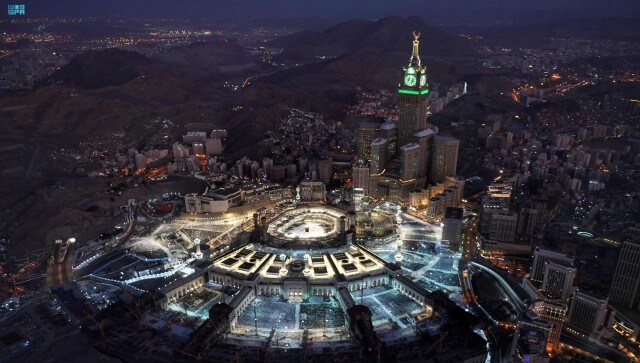
Muslims perform late night prayers on the night of 27th Ramadan in the Grand Mosque during the holy month of Ramazan, in the holy city of Mecca, Saudi Arabia. Reuters[/caption]Also read: After years, Israel back to demolishing illegal houses in East Jerusalem during Ramadan‘Protecting platforms from exploitation’According to Middle East Monitor, the Ministry's spokesperson addressed concerns in a phone interview with the Saudi news outlet Al-Saudiya, saying, “The Ministry does not prevent breaking the fast in mosques but, rather, organises it, so that there is a responsible person present and will have facilities within the framework of preserving the sanctity and cleanliness of the mosque.”Additionally, he asserted that the prohibition on recording and airing prayers was put in place “to protect platforms from exploitation and was not issued due to mistrust of imams, preachers, or lecturers but rather to avoid any mistake, especially if it was unintended.”With inputs from agenciesRead all the Latest News, Trending News, Cricket News, Bollywood News,India News and Entertainment News here. Follow us on Facebook, Twitter and Instagram.