
Advertisement


Sections
Over 20 crore Indians living in ‘multidimensional poverty’: What does this mean?
As per the latest report by Niti Aayog, approximately 14.96 per cent of the Indian population is ‘multidimensionally’ poor. However, multidimensional poverty has declined in the country, from 24.85 per cent in 2015-16 to 14.96 per cent in 2019-21

An estimated 14.96 per cent of the Indian population is ‘multidimensionally’ poor, according to a report on poverty released by the government think tank Niti Aayog on Monday (17 July). In absolute terms, about 20.79 crore people in the country are poor, facing deprivations in key development areas. One in seven Indians are still living in multidimensional poverty.However, multidimensional poverty has declined in India in five years, from 24.85 per cent in 2015-16 to 14.96 per cent in 2019-2021, says the report. This means a projected 13.5 crore Indians have moved out of poverty. The latest report titled ‘National Multidimensional Poverty Index: A Progress Review 2023’ is Niti Aayog’s second edition on the index.What does multidimensional poverty mean and what are the findings of the latest report? We explain.What is multidimensional poverty?As Mint notes, multidimensional poverty is a composite measure that takes into account factors other than money, such as education, health, and standard of living.Niti Aayog’s Multidimensional Poverty Index (MPI) divides these three broad indicators into further dimensions. Health includes nutrition, child-adolescent mortality and maternal health, while education considers years of schooling and school attendance.![health in india]() Niti Aayog considers factors such as education, health, and standard of living to calculate National MPI. AP (Representational Image)[/caption]Findings of the reportAccording to the MPI report, the number of multidimensionally poor individuals in rural areas has decreased from 32.59 per cent to 19.28 per cent in the five-year period.In urban regions, multidimensional poverty has reduced from 8.65 per cent to 5.27 per cent.As per the latest report, the MPI value nearly halved from 0.117 to 0.066 between 2015-16 and 2019-21, while the intensity of poverty fell from 47 per cent to 44 per cent, reported news agency PTI.Indicator-wise assessment The report shows that when it comes to indicators like nutrition and access to education, India has seen only a slight improvement. Approximately 31.52 per cent of the Indian population is considered deprived as far as nutrition is concerned. However, nutrition deprivation has come down from 37 per cent to 31 per cent.
Niti Aayog considers factors such as education, health, and standard of living to calculate National MPI. AP (Representational Image)[/caption]Findings of the reportAccording to the MPI report, the number of multidimensionally poor individuals in rural areas has decreased from 32.59 per cent to 19.28 per cent in the five-year period.In urban regions, multidimensional poverty has reduced from 8.65 per cent to 5.27 per cent.As per the latest report, the MPI value nearly halved from 0.117 to 0.066 between 2015-16 and 2019-21, while the intensity of poverty fell from 47 per cent to 44 per cent, reported news agency PTI.Indicator-wise assessment The report shows that when it comes to indicators like nutrition and access to education, India has seen only a slight improvement. Approximately 31.52 per cent of the Indian population is considered deprived as far as nutrition is concerned. However, nutrition deprivation has come down from 37 per cent to 31 per cent.![cooking fuel in India]() About 43.90 per cent of the Indian population does not have access to clean cooking fuel. Reuters (Representational Image)[/caption]As per Niti Aayog, around 30.13 per cent people in India continue to be deprived of sanitation services.The latest report shows that 41 per cent of Indians still do not have access to housing, as compared to 46 per cent of the population in 2015-16.The percentage of households facing electricity deprivation has gone down from 12 per cent to 3.27 per cent, while only 3.69 per cent of the population does not have access to bank accounts.How have states fared?All states and Union Territories have lowered the percentage of multidimensional poverty between 2015-16 and 2019-21.Notably, the number of states with less than 10 per cent multidimensionally poor people has doubled in this period. These states include Mizoram, Himachal Pradesh, Punjab, Sikkim, Tamil Nadu, Goa, Kerala, Telangana, Andhra Pradesh, Haryana, Karnataka, Maharashtra, Manipur, and Uttarakhand.Bihar has shown the most improvement in reducing multidimensional poverty, from 51.89 per cent in 2015-16 to 33.76 per cent in 2019-21. However, this is not surprising as only Bihar in India has over one-third of its population living in multidimensional poverty, noted ThePrint.In Jharkhand, the percentage of people considered multidimensionally poor fell from 42 per cent to 28.82 per cent, while Uttar Pradesh reported a decrease from 37.68 per cent to 22.93 per cent.Madhya Pradesh also saw an improvement with multidimensional poverty dropping from 36.57 per cent to 20.63 per cent.Kerala, where only 0.70 per cent of the population was multidimensionally poor, has further seen a decline to 0.55 per cent in five years.With inputs from agencies
About 43.90 per cent of the Indian population does not have access to clean cooking fuel. Reuters (Representational Image)[/caption]As per Niti Aayog, around 30.13 per cent people in India continue to be deprived of sanitation services.The latest report shows that 41 per cent of Indians still do not have access to housing, as compared to 46 per cent of the population in 2015-16.The percentage of households facing electricity deprivation has gone down from 12 per cent to 3.27 per cent, while only 3.69 per cent of the population does not have access to bank accounts.How have states fared?All states and Union Territories have lowered the percentage of multidimensional poverty between 2015-16 and 2019-21.Notably, the number of states with less than 10 per cent multidimensionally poor people has doubled in this period. These states include Mizoram, Himachal Pradesh, Punjab, Sikkim, Tamil Nadu, Goa, Kerala, Telangana, Andhra Pradesh, Haryana, Karnataka, Maharashtra, Manipur, and Uttarakhand.Bihar has shown the most improvement in reducing multidimensional poverty, from 51.89 per cent in 2015-16 to 33.76 per cent in 2019-21. However, this is not surprising as only Bihar in India has over one-third of its population living in multidimensional poverty, noted ThePrint.In Jharkhand, the percentage of people considered multidimensionally poor fell from 42 per cent to 28.82 per cent, while Uttar Pradesh reported a decrease from 37.68 per cent to 22.93 per cent.Madhya Pradesh also saw an improvement with multidimensional poverty dropping from 36.57 per cent to 20.63 per cent.Kerala, where only 0.70 per cent of the population was multidimensionally poor, has further seen a decline to 0.55 per cent in five years.With inputs from agencies
The indicators under living standards consist of access to cooking fuel, sanitation, electricity, drinking water, housing, bank accounts and assets.All these indicators are weighed in to calculate the ‘deprivation score’. The deprivation score is the sum of the weighted status of all the indicators for an individual, as per Niti Aayog. “If the deprivation score is more than 0.33, only then an individual is considered multidimensionally poor”, The Wire reported citing the latest report.The government think tank used National Family Health Survey-5 (NFHS-5) data as the primary data source to calculate the figures.[caption id="attachment_12882412" align="alignnone" width="640"]
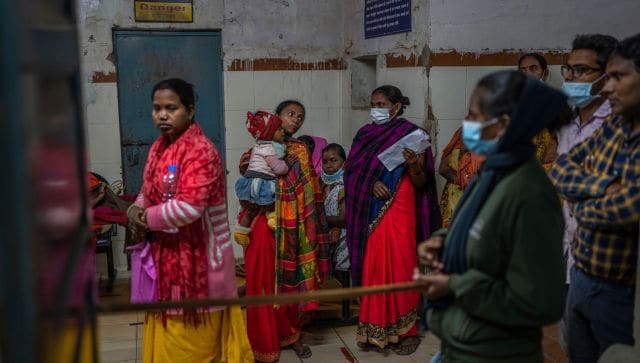 Niti Aayog considers factors such as education, health, and standard of living to calculate National MPI. AP (Representational Image)[/caption]Findings of the reportAccording to the MPI report, the number of multidimensionally poor individuals in rural areas has decreased from 32.59 per cent to 19.28 per cent in the five-year period.In urban regions, multidimensional poverty has reduced from 8.65 per cent to 5.27 per cent.As per the latest report, the MPI value nearly halved from 0.117 to 0.066 between 2015-16 and 2019-21, while the intensity of poverty fell from 47 per cent to 44 per cent, reported news agency PTI.Indicator-wise assessment The report shows that when it comes to indicators like nutrition and access to education, India has seen only a slight improvement. Approximately 31.52 per cent of the Indian population is considered deprived as far as nutrition is concerned. However, nutrition deprivation has come down from 37 per cent to 31 per cent.
“Contributing to nearly one-third of the multidimensional poverty in India, nutrition is arguably one of the most important indicators in India’s national MPI,” the report said.After nutrition, lack of years of schooling contributed to 16.65 per cent in calculating India's MPI. Other factors that are keeping Indians poor are inadequate access to maternal health services (11.73 per cent), lower-than-preferred school attendance (9.10 per cent), lack of access to clean cooking fuel (8.82 per cent), housing requirements (8.65 per cent), sanitation services (6.63 per cent), asset ownership (3.39 per cent) and so on.Deprivation in years of schooling has reported a marginal improvement, decreasing from 13 per cent in 2015-16 to 11.4 per cent in 2019-21. Also, school attendance deprivation has abated from 6.4 per cent to 5.27 per cent.While clean cooking fuel has become more accessible, still 43.90 per cent of the population in the country is deprived of the facility.[caption id="attachment_12882382" align="alignnone" width="640"]
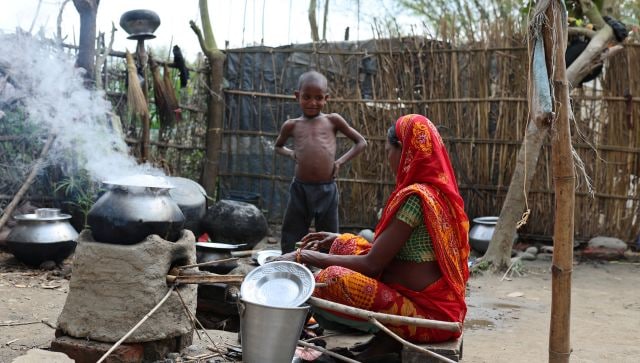 About 43.90 per cent of the Indian population does not have access to clean cooking fuel. Reuters (Representational Image)[/caption]As per Niti Aayog, around 30.13 per cent people in India continue to be deprived of sanitation services.The latest report shows that 41 per cent of Indians still do not have access to housing, as compared to 46 per cent of the population in 2015-16.The percentage of households facing electricity deprivation has gone down from 12 per cent to 3.27 per cent, while only 3.69 per cent of the population does not have access to bank accounts.How have states fared?All states and Union Territories have lowered the percentage of multidimensional poverty between 2015-16 and 2019-21.Notably, the number of states with less than 10 per cent multidimensionally poor people has doubled in this period. These states include Mizoram, Himachal Pradesh, Punjab, Sikkim, Tamil Nadu, Goa, Kerala, Telangana, Andhra Pradesh, Haryana, Karnataka, Maharashtra, Manipur, and Uttarakhand.Bihar has shown the most improvement in reducing multidimensional poverty, from 51.89 per cent in 2015-16 to 33.76 per cent in 2019-21. However, this is not surprising as only Bihar in India has over one-third of its population living in multidimensional poverty, noted ThePrint.In Jharkhand, the percentage of people considered multidimensionally poor fell from 42 per cent to 28.82 per cent, while Uttar Pradesh reported a decrease from 37.68 per cent to 22.93 per cent.Madhya Pradesh also saw an improvement with multidimensional poverty dropping from 36.57 per cent to 20.63 per cent.Kerala, where only 0.70 per cent of the population was multidimensionally poor, has further seen a decline to 0.55 per cent in five years.With inputs from agencies
First Published:Jul 18, 2023, 17:35:20 IST
Advertisement
Advertisement

Military drones & police check-ups: How Sri Lanka is fighting against worst dengue outbreak in a decade
Sri Lanka is fighting its most severe dengue outbreak in nearly a decade, with infections rising sharply across the nation. Military drones have been deployed to tackle the outbreak, which has claimed 56 lives. Health officials said the outbreak is being driven primarily by the DENV-2 variant of the virus
3 min read
How Facebook job ad lured 2 Karnataka men into Myanmar cyber scam camp
The Karnataka Cyber Command has rescued two youths from a scam compound in Myanmar operated by Chinese fraudsters. The duo from Karnataka were lured on the pretext of data-entry jobs. They were asked to work for 16 hours a day and were expected to sleep for six hours daily
4 min read
Why is India seeing 95% cloud cover despite a Super El Niño?
India is witnessing nearly 95 per cent cloud cover despite a Super El Niño, a climate event usually linked to weaker monsoons. Regional weather systems, cyclonic circulations, the monsoon trough and moisture from two seas are temporarily overpowering one of the world's strongest climate phenomena
5 min read
What is CJP’s fourth demand to the government as protests in Delhi intensify?
The protest by the Cockroach Janta Party at Delhi’s Jantar Mantar refuses to die down. The group have made a fourth demand to the Centre, asking that no FIRs are filed against the agitators and that no legal action be taken. The government has expressed willingness to speak to the protesters, but refused to accede on the resignation of Education Minister Dharmandra Pradhan
5 min read
The new geography of war: Why the Houthis can no longer be ignored
The rise of the Houthis marks the emergence of a new geography of war — one in which influence flows not only from capitals and conventional armies, but also from rugged mountains overlooking vital sea lanes
6 min read
Advertisement
Advertisement