
Advertisement


Sections
Nepal plane crash: What answers does the black box hold?
A flight data recorder and a cockpit voice recorder have been recovered from the crash site of Yeti Airlines flight 691. These recorders combined comprise a black box, which helps during the investigation of a plane mishap

Nepal’s Civil Aviation Authority has said a black box has been retrieved from the accident site of the Yeti Airlines flight which crashed on Sunday (15 January).At least 68 of the 72 people aboard the ATR 72 have been confirmed dead as Yeti Airlines flight 691 plunged just before landing in Pokhara, a tourist city in Nepal.While it is unclear what led to the disaster, the recovery of a flight data recorder (FDR) and a cockpit voice recorder (CVR) would prove helpful in answering queries related to the tragedy.What is a black box and why are they sought after a plane crash? We explain.Black boxWell, first things first, it is not black in colour.![black box]() Black boxes are bright orange in colour. Wikimedia Commons (Representational Image)[/caption]Initially, the black boxes recorded limited data on wire or foil and later on magnetic tape. Now, the new ones use solid state memory, as per Reuters.Black boxes are usually located on the tail end of the aircraft as it increases their chances of survival during a mishap.The highly protective equipment – weighing about 4.5 kg – records information about a flight and helps in finding out what led to the plane crash.Australia was the first country to make black box compulsory on planes, following the crash of Trans Australia Airlines Flight 538 in 1960.FDRAlso known as accident data recorders, flight data recorders are made of titanium or stainless steel.They document over a hundred kinds of information including altitude, flight speed, fuel, turbulence, wind speed, roll, autopilot status, among others.“There are sensors wired from various areas on the plane to the flight-data acquisition unit, which is wired to the FDR. So whenever the pilot flips a switch or twiddles a knob, the FDR records each action,” says How Stuff Works in its article.FDRs can survive depths of over 6,000 metres underwater. When submerged in water, the beacon found in these devices can transmit ultrasound signals for 30 days.This underwater locator beacon (ULB), which has a battery life of more than six years, transmits sound as deep as 14,000 feet and can be tracked by sonar and audio equipment.These beacons will not send out ultrasonic pings if the plane crash occurred on land; thus, the investigators will have to scour the accident site for the black box.ALSO READ: Over 27 plane crashes in 30 years: Why Nepal's mountains aren't the only reason for its poor air safety recordCVRA cockpit voice recorder records radio transmissions and other audio in the cockpit such as conversations between pilots, engine sounds and instrumentation warnings.Data from the black boxes is stored on “stacked memory boards inside the crash-survivable memory unit (CSMU)”, as per the How Stuff Works article.These CSMUs can hold out against extreme heat, crashes and tons of pressure.[caption id="attachment_11996852" align="alignnone" width="640"]
Black boxes are bright orange in colour. Wikimedia Commons (Representational Image)[/caption]Initially, the black boxes recorded limited data on wire or foil and later on magnetic tape. Now, the new ones use solid state memory, as per Reuters.Black boxes are usually located on the tail end of the aircraft as it increases their chances of survival during a mishap.The highly protective equipment – weighing about 4.5 kg – records information about a flight and helps in finding out what led to the plane crash.Australia was the first country to make black box compulsory on planes, following the crash of Trans Australia Airlines Flight 538 in 1960.FDRAlso known as accident data recorders, flight data recorders are made of titanium or stainless steel.They document over a hundred kinds of information including altitude, flight speed, fuel, turbulence, wind speed, roll, autopilot status, among others.“There are sensors wired from various areas on the plane to the flight-data acquisition unit, which is wired to the FDR. So whenever the pilot flips a switch or twiddles a knob, the FDR records each action,” says How Stuff Works in its article.FDRs can survive depths of over 6,000 metres underwater. When submerged in water, the beacon found in these devices can transmit ultrasound signals for 30 days.This underwater locator beacon (ULB), which has a battery life of more than six years, transmits sound as deep as 14,000 feet and can be tracked by sonar and audio equipment.These beacons will not send out ultrasonic pings if the plane crash occurred on land; thus, the investigators will have to scour the accident site for the black box.ALSO READ: Over 27 plane crashes in 30 years: Why Nepal's mountains aren't the only reason for its poor air safety recordCVRA cockpit voice recorder records radio transmissions and other audio in the cockpit such as conversations between pilots, engine sounds and instrumentation warnings.Data from the black boxes is stored on “stacked memory boards inside the crash-survivable memory unit (CSMU)”, as per the How Stuff Works article.These CSMUs can hold out against extreme heat, crashes and tons of pressure.[caption id="attachment_11996852" align="alignnone" width="640"]![nepal plane crash]() All commercial flights must have black boxes. AP[/caption]CVRs pick up audio from the crew's microphones, pilots' headsets, and from area recorders mounted on the cockpit's roof.It can record two hours of audio data, while 25 hours of flight data remain available on FDRs.The FDR and CVR are kept in one box made of titanium or stainless steel and wrapped with fire and heat-resistant insulation, The Quint report said.As per The Quint, before being put on flights, black boxes have to undergo extreme stress tests including impact tests (such as impacts at speeds exceeding 750 km/h), load tests (carrying static loads upwards of two tonnes), and fire tests.ALSO READ: Nepal Air Tragedy: Pilot couple die in similar crashes 16 years apart, flying for the same Yeti AirlinesHow long before data becomes available?After the black box is sent for investigation, the protective material is removed and connections are cleaned properly so as not to accidentally erase important data, Reuters reported.The audio or data file is downloaded and copied.As per Reuters, "spectral analysis" – a way of inspecting sounds – is sometimes used by investigators to “pick out barely audible alarms or the first fleeting crack of an explosion”.It mostly takes around 10-15 days to analyse the data retrieved from the black box.Interim reports are published about a month after the crash, but they do not offer many insights.It takes over a year to complete deeper investigations.With inputs from agenciesRead all the Latest News, Trending News, Cricket News, Bollywood News,India News and Entertainment News here. Follow us on Facebook, Twitter and Instagram.
All commercial flights must have black boxes. AP[/caption]CVRs pick up audio from the crew's microphones, pilots' headsets, and from area recorders mounted on the cockpit's roof.It can record two hours of audio data, while 25 hours of flight data remain available on FDRs.The FDR and CVR are kept in one box made of titanium or stainless steel and wrapped with fire and heat-resistant insulation, The Quint report said.As per The Quint, before being put on flights, black boxes have to undergo extreme stress tests including impact tests (such as impacts at speeds exceeding 750 km/h), load tests (carrying static loads upwards of two tonnes), and fire tests.ALSO READ: Nepal Air Tragedy: Pilot couple die in similar crashes 16 years apart, flying for the same Yeti AirlinesHow long before data becomes available?After the black box is sent for investigation, the protective material is removed and connections are cleaned properly so as not to accidentally erase important data, Reuters reported.The audio or data file is downloaded and copied.As per Reuters, "spectral analysis" – a way of inspecting sounds – is sometimes used by investigators to “pick out barely audible alarms or the first fleeting crack of an explosion”.It mostly takes around 10-15 days to analyse the data retrieved from the black box.Interim reports are published about a month after the crash, but they do not offer many insights.It takes over a year to complete deeper investigations.With inputs from agenciesRead all the Latest News, Trending News, Cricket News, Bollywood News,India News and Entertainment News here. Follow us on Facebook, Twitter and Instagram.
The black box is bright orange so that it can be easily discovered in the debris in the wake of a mishap.FDR and CVR combined are called the black box. It is mandatory for commercial flights to have at least two black boxes on board.Some historians credit Australian scientist David Warren for the invention of the flight recorder in the 1950s, Reuters reported.As per How Stuff Works, these aviation recorders started being used widely after the Second World War.[caption id="attachment_11996832" align="alignnone" width="640"]
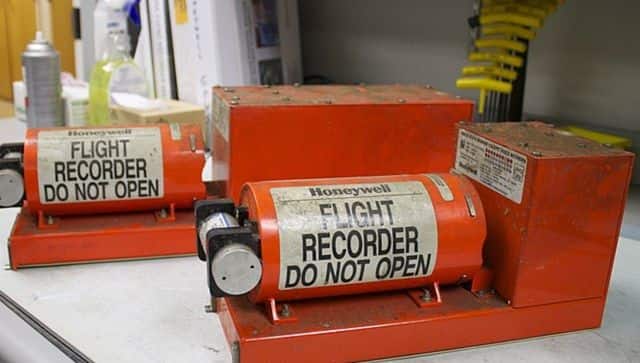 Black boxes are bright orange in colour. Wikimedia Commons (Representational Image)[/caption]Initially, the black boxes recorded limited data on wire or foil and later on magnetic tape. Now, the new ones use solid state memory, as per Reuters.Black boxes are usually located on the tail end of the aircraft as it increases their chances of survival during a mishap.The highly protective equipment – weighing about 4.5 kg – records information about a flight and helps in finding out what led to the plane crash.Australia was the first country to make black box compulsory on planes, following the crash of Trans Australia Airlines Flight 538 in 1960.FDRAlso known as accident data recorders, flight data recorders are made of titanium or stainless steel.They document over a hundred kinds of information including altitude, flight speed, fuel, turbulence, wind speed, roll, autopilot status, among others.“There are sensors wired from various areas on the plane to the flight-data acquisition unit, which is wired to the FDR. So whenever the pilot flips a switch or twiddles a knob, the FDR records each action,” says How Stuff Works in its article.FDRs can survive depths of over 6,000 metres underwater. When submerged in water, the beacon found in these devices can transmit ultrasound signals for 30 days.This underwater locator beacon (ULB), which has a battery life of more than six years, transmits sound as deep as 14,000 feet and can be tracked by sonar and audio equipment.These beacons will not send out ultrasonic pings if the plane crash occurred on land; thus, the investigators will have to scour the accident site for the black box.ALSO READ: Over 27 plane crashes in 30 years: Why Nepal's mountains aren't the only reason for its poor air safety recordCVRA cockpit voice recorder records radio transmissions and other audio in the cockpit such as conversations between pilots, engine sounds and instrumentation warnings.Data from the black boxes is stored on “stacked memory boards inside the crash-survivable memory unit (CSMU)”, as per the How Stuff Works article.These CSMUs can hold out against extreme heat, crashes and tons of pressure.[caption id="attachment_11996852" align="alignnone" width="640"]
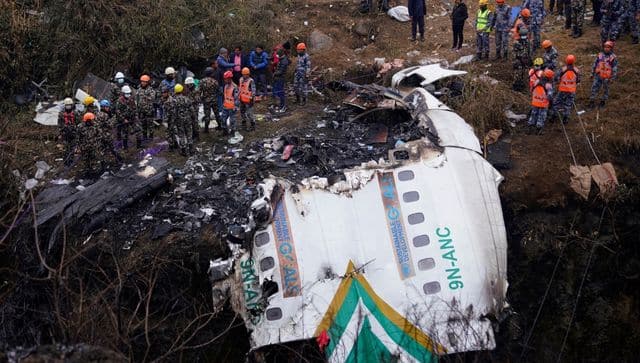 All commercial flights must have black boxes. AP[/caption]CVRs pick up audio from the crew's microphones, pilots' headsets, and from area recorders mounted on the cockpit's roof.It can record two hours of audio data, while 25 hours of flight data remain available on FDRs.The FDR and CVR are kept in one box made of titanium or stainless steel and wrapped with fire and heat-resistant insulation, The Quint report said.As per The Quint, before being put on flights, black boxes have to undergo extreme stress tests including impact tests (such as impacts at speeds exceeding 750 km/h), load tests (carrying static loads upwards of two tonnes), and fire tests.ALSO READ: Nepal Air Tragedy: Pilot couple die in similar crashes 16 years apart, flying for the same Yeti AirlinesHow long before data becomes available?After the black box is sent for investigation, the protective material is removed and connections are cleaned properly so as not to accidentally erase important data, Reuters reported.The audio or data file is downloaded and copied.As per Reuters, "spectral analysis" – a way of inspecting sounds – is sometimes used by investigators to “pick out barely audible alarms or the first fleeting crack of an explosion”.It mostly takes around 10-15 days to analyse the data retrieved from the black box.Interim reports are published about a month after the crash, but they do not offer many insights.It takes over a year to complete deeper investigations.With inputs from agenciesRead all the Latest News, Trending News, Cricket News, Bollywood News,India News and Entertainment News here. Follow us on Facebook, Twitter and Instagram.
First Published:Jan 16, 2023, 20:42:27 IST
Advertisement
Advertisement

Military drones & police check-ups: How Sri Lanka is fighting against worst dengue outbreak in a decade
Sri Lanka is fighting its most severe dengue outbreak in nearly a decade, with infections rising sharply across the nation. Military drones have been deployed to tackle the outbreak, which has claimed 56 lives. Health officials said the outbreak is being driven primarily by the DENV-2 variant of the virus
3 min read
How Facebook job ad lured 2 Karnataka men into Myanmar cyber scam camp
The Karnataka Cyber Command has rescued two youths from a scam compound in Myanmar operated by Chinese fraudsters. The duo from Karnataka were lured on the pretext of data-entry jobs. They were asked to work for 16 hours a day and were expected to sleep for six hours daily
4 min read
Why is India seeing 95% cloud cover despite a Super El Niño?
India is witnessing nearly 95 per cent cloud cover despite a Super El Niño, a climate event usually linked to weaker monsoons. Regional weather systems, cyclonic circulations, the monsoon trough and moisture from two seas are temporarily overpowering one of the world's strongest climate phenomena
5 min read
What is CJP’s fourth demand to the government as protests in Delhi intensify?
The protest by the Cockroach Janta Party at Delhi’s Jantar Mantar refuses to die down. The group have made a fourth demand to the Centre, asking that no FIRs are filed against the agitators and that no legal action be taken. The government has expressed willingness to speak to the protesters, but refused to accede on the resignation of Education Minister Dharmandra Pradhan
5 min read
The new geography of war: Why the Houthis can no longer be ignored
The rise of the Houthis marks the emergence of a new geography of war — one in which influence flows not only from capitals and conventional armies, but also from rugged mountains overlooking vital sea lanes
6 min read
Advertisement
Advertisement