
Advertisement


Sections
Moon o'clock: Can the lunar time zone soon become a reality?
Space organisations are considering developing a universal time zone for the Moon. However, the idea is not without its own challenges including who gets to decide and clocks running faster on the lunar surface than on Earth

Do you ever wonder what time it is on the Moon? Well, we may soon get the answer to that.Space organisations have started mulling over giving the Moon its own time zone.As per Sky News report, the talks about lunar time-keeping started in a meeting at European Space Agency’s (ESA) ESTEC technology centre in the Netherlands last November.Let’s understand this in detail.Why is it needed?With countries planning dozens of lunar missions over the coming decade, ESA says there is a need for some synchronicity.In a statement, ESA navigation system engineer Pietro Giordano said: "We agreed on the importance and urgency of defining a common lunar reference time, which is internationally accepted and towards which all lunar systems and users may refer to.""A joint international effort is now being launched towards achieving this."Till now, missions to the Moon have used deep space antennas “onboard chronometers synchronised with terrestrial time at the same time as they facilitate two-way communications”, the ESA said in its statement.However, this will not be sustainable as lunar missions increase in the future.A standard, universal time-keeping in space is key for guidance and navigation, noted Sky News.Like GPS systems on Earth needs precise coordination and timing, similarly, any infrastructure built and operated on the Moon will require it.The discussion about keeping time on the Moon is a part of common ‘LunaNet’ architecture that covers lunar communication and navigation services.This project is an important part of NASA’s Artemis program under which the US agency will establish lunar bases as well as launch regular missions to the Moon, as per NBC News. Moreover, Europe, the US, Japan and Canada are also involved in building the Gateway lunar station, a multinational project which aims to mark the return of humans to the Moon.NASA’s Orion spacecraft will take astronauts to the Gateway.[caption id="attachment_12222282" align="alignnone" width="640"]![time zone on the moon]() Many countries are planning missions on the Moon in the coming decade. Pixabay (Representational Image)[/caption]“Looking ahead to lunar exploration of the future, ESA is developing through its Moonlight programme a lunar communications and navigation service," Wael-El Daly, system engineer for Moonlight, said in the agency's statement."This will allow missions to maintain links to and from Earth, and guide them on their way around the Moon and on the surface, allowing them to focus on their core tasks. But also, Moonlight will need a shared common timescale in order to get missions linked up and to facilitate position fixes."ALSO READ: Can shooting clouds of Moon dust towards the Sun combat global warming?What are the challenges?There are several obstacles when it comes to timekeeping on the Moon.First, who will decide what time is it on the Moon? Will a single space agency decide the lunar time and whether it would be set on an independent basis or be kept synchronised with Earth?Secondly, there are technical issues around this as clocks on the Moon run faster than their equivalents on Earth – gaining 56 microseconds or millionths of a second per day, ESA further said in its statement.[caption id="attachment_12222272" align="alignnone" width="640"]
Many countries are planning missions on the Moon in the coming decade. Pixabay (Representational Image)[/caption]“Looking ahead to lunar exploration of the future, ESA is developing through its Moonlight programme a lunar communications and navigation service," Wael-El Daly, system engineer for Moonlight, said in the agency's statement."This will allow missions to maintain links to and from Earth, and guide them on their way around the Moon and on the surface, allowing them to focus on their core tasks. But also, Moonlight will need a shared common timescale in order to get missions linked up and to facilitate position fixes."ALSO READ: Can shooting clouds of Moon dust towards the Sun combat global warming?What are the challenges?There are several obstacles when it comes to timekeeping on the Moon.First, who will decide what time is it on the Moon? Will a single space agency decide the lunar time and whether it would be set on an independent basis or be kept synchronised with Earth?Secondly, there are technical issues around this as clocks on the Moon run faster than their equivalents on Earth – gaining 56 microseconds or millionths of a second per day, ESA further said in its statement.[caption id="attachment_12222272" align="alignnone" width="640"]![moon time zone]() There are several obstacles when it comes to timekeeping on the Moon. Pixabay[/caption]“Their exact rate depends on their position on the Moon, ticking differently on the lunar surface than from orbit”, the statement read.“Of course, the agreed time system will also have to be practical for astronauts," Bernhard Hufenbach, a member of the Moonlight Management Team from ESA's Directorate of Human and Robotic Exploration, said."This will be quite a challenge on a planetary surface where in the equatorial region each day is 29.5 days long, including freezing fortnight-long lunar nights, with the whole of Earth just a small blue circle in the dark sky. But having established a working time system for the Moon, we can go on to do the same for other planetary destinations.”Also, the international community will have to agree on a "common selenocentric reference frame, similar to the role played on Earth by the International Terrestrial Reference Frame, allowing the consistent measurement of precise distances between points across our planet", the ESA said."Throughout human history, exploration has actually been a key driver of improved timekeeping and geodetic reference models," Javier Ventura-Traveset, ESA's Moonlight navigation manager, coordinating ESA contributions to LunaNet, was quoted as saying by the European space agency in the statement."It is certainly an exciting time to do that now for the Moon, working towards defining an internationally agreed timescale and a common selenocentric reference, which will not only ensure interoperability between the different lunar navigation systems, but which will also foster a large number of research opportunities and applications in cislunar space.”With inputs from agenciesRead all the Latest News, Trending News, Cricket News, Bollywood News, India News and Entertainment News here. Follow us on Facebook, Twitter and Instagram.
There are several obstacles when it comes to timekeeping on the Moon. Pixabay[/caption]“Their exact rate depends on their position on the Moon, ticking differently on the lunar surface than from orbit”, the statement read.“Of course, the agreed time system will also have to be practical for astronauts," Bernhard Hufenbach, a member of the Moonlight Management Team from ESA's Directorate of Human and Robotic Exploration, said."This will be quite a challenge on a planetary surface where in the equatorial region each day is 29.5 days long, including freezing fortnight-long lunar nights, with the whole of Earth just a small blue circle in the dark sky. But having established a working time system for the Moon, we can go on to do the same for other planetary destinations.”Also, the international community will have to agree on a "common selenocentric reference frame, similar to the role played on Earth by the International Terrestrial Reference Frame, allowing the consistent measurement of precise distances between points across our planet", the ESA said."Throughout human history, exploration has actually been a key driver of improved timekeeping and geodetic reference models," Javier Ventura-Traveset, ESA's Moonlight navigation manager, coordinating ESA contributions to LunaNet, was quoted as saying by the European space agency in the statement."It is certainly an exciting time to do that now for the Moon, working towards defining an internationally agreed timescale and a common selenocentric reference, which will not only ensure interoperability between the different lunar navigation systems, but which will also foster a large number of research opportunities and applications in cislunar space.”With inputs from agenciesRead all the Latest News, Trending News, Cricket News, Bollywood News, India News and Entertainment News here. Follow us on Facebook, Twitter and Instagram.
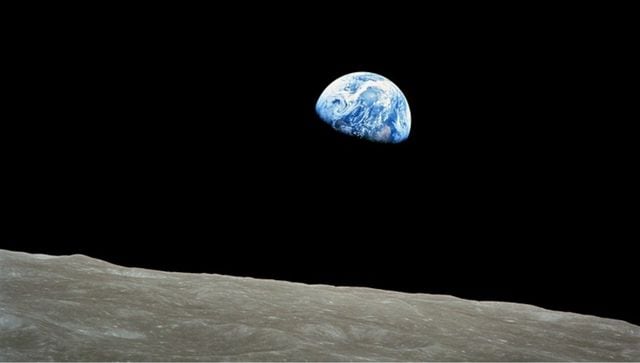 Many countries are planning missions on the Moon in the coming decade. Pixabay (Representational Image)[/caption]“Looking ahead to lunar exploration of the future, ESA is developing through its Moonlight programme a lunar communications and navigation service," Wael-El Daly, system engineer for Moonlight, said in the agency's statement."This will allow missions to maintain links to and from Earth, and guide them on their way around the Moon and on the surface, allowing them to focus on their core tasks. But also, Moonlight will need a shared common timescale in order to get missions linked up and to facilitate position fixes."ALSO READ: Can shooting clouds of Moon dust towards the Sun combat global warming?What are the challenges?There are several obstacles when it comes to timekeeping on the Moon.First, who will decide what time is it on the Moon? Will a single space agency decide the lunar time and whether it would be set on an independent basis or be kept synchronised with Earth?Secondly, there are technical issues around this as clocks on the Moon run faster than their equivalents on Earth – gaining 56 microseconds or millionths of a second per day, ESA further said in its statement.[caption id="attachment_12222272" align="alignnone" width="640"]
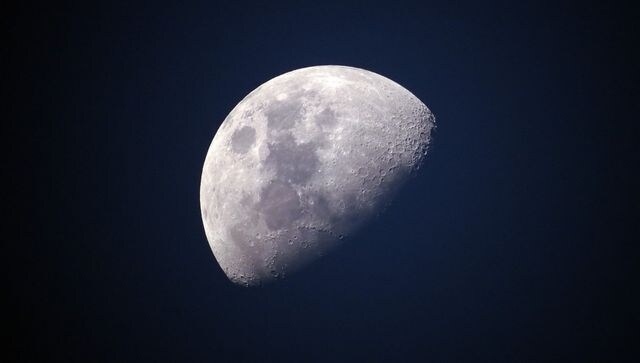 There are several obstacles when it comes to timekeeping on the Moon. Pixabay[/caption]“Their exact rate depends on their position on the Moon, ticking differently on the lunar surface than from orbit”, the statement read.“Of course, the agreed time system will also have to be practical for astronauts," Bernhard Hufenbach, a member of the Moonlight Management Team from ESA's Directorate of Human and Robotic Exploration, said."This will be quite a challenge on a planetary surface where in the equatorial region each day is 29.5 days long, including freezing fortnight-long lunar nights, with the whole of Earth just a small blue circle in the dark sky. But having established a working time system for the Moon, we can go on to do the same for other planetary destinations.”Also, the international community will have to agree on a "common selenocentric reference frame, similar to the role played on Earth by the International Terrestrial Reference Frame, allowing the consistent measurement of precise distances between points across our planet", the ESA said."Throughout human history, exploration has actually been a key driver of improved timekeeping and geodetic reference models," Javier Ventura-Traveset, ESA's Moonlight navigation manager, coordinating ESA contributions to LunaNet, was quoted as saying by the European space agency in the statement."It is certainly an exciting time to do that now for the Moon, working towards defining an internationally agreed timescale and a common selenocentric reference, which will not only ensure interoperability between the different lunar navigation systems, but which will also foster a large number of research opportunities and applications in cislunar space.”With inputs from agenciesRead all the Latest News, Trending News, Cricket News, Bollywood News, India News and Entertainment News here. Follow us on Facebook, Twitter and Instagram.
First Published:Feb 28, 2023, 20:02:57 IST
Advertisement
Advertisement

Military drones & police check-ups: How Sri Lanka is fighting against worst dengue outbreak in a decade
Sri Lanka is fighting its most severe dengue outbreak in nearly a decade, with infections rising sharply across the nation. Military drones have been deployed to tackle the outbreak, which has claimed 56 lives. Health officials said the outbreak is being driven primarily by the DENV-2 variant of the virus
3 min read
How Facebook job ad lured 2 Karnataka men into Myanmar cyber scam camp
The Karnataka Cyber Command has rescued two youths from a scam compound in Myanmar operated by Chinese fraudsters. The duo from Karnataka were lured on the pretext of data-entry jobs. They were asked to work for 16 hours a day and were expected to sleep for six hours daily
4 min read
Why is India seeing 95% cloud cover despite a Super El Niño?
India is witnessing nearly 95 per cent cloud cover despite a Super El Niño, a climate event usually linked to weaker monsoons. Regional weather systems, cyclonic circulations, the monsoon trough and moisture from two seas are temporarily overpowering one of the world's strongest climate phenomena
5 min read
What is CJP’s fourth demand to the government as protests in Delhi intensify?
The protest by the Cockroach Janta Party at Delhi’s Jantar Mantar refuses to die down. The group have made a fourth demand to the Centre, asking that no FIRs are filed against the agitators and that no legal action be taken. The government has expressed willingness to speak to the protesters, but refused to accede on the resignation of Education Minister Dharmandra Pradhan
5 min read
The new geography of war: Why the Houthis can no longer be ignored
The rise of the Houthis marks the emergence of a new geography of war — one in which influence flows not only from capitals and conventional armies, but also from rugged mountains overlooking vital sea lanes
6 min read
Advertisement
Advertisement