
Advertisement


Sections
Moody’s slashes Pakistan’s credit rating to its lowest in 30 years: How this worsens the debt-ridden country’s woes
Global ratings agency Moody’s cut Pakistan’s sovereign credit rating from Caa1 to Caa3 — the lowest in three decades — saying this significantly ‘raises default risks’. This is the latest in Islamabad’s economic woes as it struggles to secure a bailout from the International Monetary Fund

Pakistan’s economic crisis seems to be worsening day by day. Days after New York-based global ratings agency Fitch cut Pakistan’s sovereign credit rating by two notches and warned that a default is a “real possibility”, Moody’s has piled on to the country’s woes.The New York-based company, founded over 100 years ago, cut Pakistan’s rating to ‘Caa3’ from ‘Caa1’ — the lowest it has been in three decades.While the country battles its free-falling economy, we simplify the economic jargon and explain just what does this mean.What has Moody’s said?On Tuesday, global rating agency Moody’s downgraded Pakistan’s sovereign credit rating to Caa3 from Caa1. The rating agency also changed Pakistan’s outlook from negative to stable, and said that the stable outlook reflects Moody’s assessment that the pressures that Pakistan faces are consistent with a Caa3 rating level.Additionally, the agency has lowered Pakistan’s local and foreign currency country ceilings to Caa1 and Caa3 from B2 and Caa1, respectively.[caption id="attachment_12226072" align="alignnone" width="640"]![]() Graphic: Pranay Bhardwaj[/caption]Explaining the ratings being cut, Moody’s in their report said that “Pakistan’s government liquidity and external vulnerability risks have risen further since Moody’s last review in October 2022. Pakistan’s foreign exchange reserves have declined to a critically low level, sufficient to cover less than one month of imports. Amid delays in securing official sector funding, risks that Pakistan may not be able to source enough financing to meet its needs for the rest of fiscal 2023 (ending June 2023) have increased. Beyond this fiscal year, liquidity and external vulnerability risks will continue to be elevated, as Pakistan's financing needs will remain significant and financing sources are far from secure. At the same time, prospects of the country materially increasing its foreign exchange reserves are low”.In its assessment, Moody’s said that Pakistan would need financing of $11 billion for the rest of the fiscal year and to meet this requirement it would need to secure financing from the International Monetary Fund (IMF) and other multilateral and bilateral partners for these financing needs.[caption id="attachment_12226062" align="alignnone" width="640"]
Graphic: Pranay Bhardwaj[/caption]Explaining the ratings being cut, Moody’s in their report said that “Pakistan’s government liquidity and external vulnerability risks have risen further since Moody’s last review in October 2022. Pakistan’s foreign exchange reserves have declined to a critically low level, sufficient to cover less than one month of imports. Amid delays in securing official sector funding, risks that Pakistan may not be able to source enough financing to meet its needs for the rest of fiscal 2023 (ending June 2023) have increased. Beyond this fiscal year, liquidity and external vulnerability risks will continue to be elevated, as Pakistan's financing needs will remain significant and financing sources are far from secure. At the same time, prospects of the country materially increasing its foreign exchange reserves are low”.In its assessment, Moody’s said that Pakistan would need financing of $11 billion for the rest of the fiscal year and to meet this requirement it would need to secure financing from the International Monetary Fund (IMF) and other multilateral and bilateral partners for these financing needs.[caption id="attachment_12226062" align="alignnone" width="640"]![]() Local residents queue to buy wheat flour at government-controlled prices in Islamabad. Pakistan's economy has crumbled alongside a simmering political crisis, with the rupee plummeting and inflation at decades-high levels. AFP[/caption]It added that financing options beyond June 2023 were “highly uncertain”. “It is not clear that another IMF programme is under discussion and if it does happen, how long the negotiations would take and what conditions would be attached to it. However, in the absence of an IMF programme, Pakistan is unlikely to unlock sufficient financing from multilateral and bilateral partners.”Another reason for the credit rating downgrade is the elevated social risks and weak governance, said Moody’s.Also read: No salaries, ban on luxury cars and 5-star hotels: Pakistan’s austerity measures for politicians who looted the nationBut why then a stable outlook?While Moody’s downgraded Pakistan’s rating, it changed the nation’s outlook to stable from negative. For the unaware, a Moody’s rating outlook is an opinion regarding the likely direction of a rating over the medium term.Currently, the agency has changed the outlook from negative in October to stable. It explained, “Continued IMF engagement, including beyond the current programme, would likely help to support additional financing from other multilateral and bilateral partners, which could reduce default risk, if this is achieved urgently and without further raising social pressures.”Can the ratings be upgraded?However, all is not doom and gloom for Pakistan, according to Moody’s. The agency noted that the rating could be upgraded if the government’s liquidity and external vulnerability risks decreased materially and durably.The firm added that this could happen with a sustainable increase in foreign exchange reserves. A resumption of fiscal consolidation, including through implementing revenue-raising measures, pointing to a meaningful improvement in debt affordability would also be credit positive.It further noted that if the country were to default on its debt obligations to private-sector creditors, then the rating would be further downgraded to Ca or a C grade — the lowest possible rating.[caption id="attachment_12226082" align="alignnone" width="640"]
Local residents queue to buy wheat flour at government-controlled prices in Islamabad. Pakistan's economy has crumbled alongside a simmering political crisis, with the rupee plummeting and inflation at decades-high levels. AFP[/caption]It added that financing options beyond June 2023 were “highly uncertain”. “It is not clear that another IMF programme is under discussion and if it does happen, how long the negotiations would take and what conditions would be attached to it. However, in the absence of an IMF programme, Pakistan is unlikely to unlock sufficient financing from multilateral and bilateral partners.”Another reason for the credit rating downgrade is the elevated social risks and weak governance, said Moody’s.Also read: No salaries, ban on luxury cars and 5-star hotels: Pakistan’s austerity measures for politicians who looted the nationBut why then a stable outlook?While Moody’s downgraded Pakistan’s rating, it changed the nation’s outlook to stable from negative. For the unaware, a Moody’s rating outlook is an opinion regarding the likely direction of a rating over the medium term.Currently, the agency has changed the outlook from negative in October to stable. It explained, “Continued IMF engagement, including beyond the current programme, would likely help to support additional financing from other multilateral and bilateral partners, which could reduce default risk, if this is achieved urgently and without further raising social pressures.”Can the ratings be upgraded?However, all is not doom and gloom for Pakistan, according to Moody’s. The agency noted that the rating could be upgraded if the government’s liquidity and external vulnerability risks decreased materially and durably.The firm added that this could happen with a sustainable increase in foreign exchange reserves. A resumption of fiscal consolidation, including through implementing revenue-raising measures, pointing to a meaningful improvement in debt affordability would also be credit positive.It further noted that if the country were to default on its debt obligations to private-sector creditors, then the rating would be further downgraded to Ca or a C grade — the lowest possible rating.[caption id="attachment_12226082" align="alignnone" width="640"]![]() A man withdraws money from an ATM machine along a street in Karachi, Pakistan. Reuters[/caption]Pakistan’s economic crunch and the IMFPakistan has been burdened by an acute economic crisis, with inflation levels rising to unprecedented levels; food inflation is at 42.9 per cent and transport inflation is at 39.1 per cent year-on-year in January 2023. To make matters worse, the foreign exchange reserves have dropped drastically and the unemployment rate is soaring.A report by News18 today stated that the situation had worsened even further as the Pakistan Army was unable to feed its soldiers and field commanders have written letters to the Quarter Master General’s office highlighting the shortage of food.Even the country’s healthcare has been sickened — hospitals are running short of essential medicines and supplies. The lack of forex reserves in the country has affected Pakistan's capacity to import the required medicines or the Active Pharmaceutical Ingredients (API) used in domestic production. As a result, local pharmaceutical manufacturers have been forced to slash their production as patients suffer in hospitals. Doctors are forced to not perform surgeries due to the shortage of drugs and medical equipment.Also read: Pakistan’s ‘mini-budget’ gives major shocker to common man: How petrol, ghee, cigarettes have become unaffordableNews reports state that the operation theatres are left with less than the two-week stock of anaesthetics needed for sensitive surgeries, including for heart, cancer and kidney. The situation might also result in job losses in hospitals in Pakistan, further increasing the miseries of people.In order to alleviate the burden, Pakistan’s government led by Prime Minister Shehbaz Sharif has been in talks with the IMF for a bailout package. Despite numerous rounds of discussions and conditions imposed — new taxes worth 170 billion rupees, — set by the global body, the talks have yielded no positive results yet.On Wednesday, Pakistani newspaper Dawn reported that the government is finding it increasingly difficult to convince the Fund to release a loan instalment. Sources told the daily that authorities are extremely annoyed at the latest situation, describing it as ‘maltreatment’.“We are members of the IMF, not beggars or else our membership be discarded,” a disgruntled senior official was quoted as saying to Dawn. Another official in the same report compared the situation to that in 1998, when Pakistan’s economic difficulties worsened in the wake of nuclear tests, and default seemed imminent.[caption id="attachment_12226112" align="alignnone" width="640"]
A man withdraws money from an ATM machine along a street in Karachi, Pakistan. Reuters[/caption]Pakistan’s economic crunch and the IMFPakistan has been burdened by an acute economic crisis, with inflation levels rising to unprecedented levels; food inflation is at 42.9 per cent and transport inflation is at 39.1 per cent year-on-year in January 2023. To make matters worse, the foreign exchange reserves have dropped drastically and the unemployment rate is soaring.A report by News18 today stated that the situation had worsened even further as the Pakistan Army was unable to feed its soldiers and field commanders have written letters to the Quarter Master General’s office highlighting the shortage of food.Even the country’s healthcare has been sickened — hospitals are running short of essential medicines and supplies. The lack of forex reserves in the country has affected Pakistan's capacity to import the required medicines or the Active Pharmaceutical Ingredients (API) used in domestic production. As a result, local pharmaceutical manufacturers have been forced to slash their production as patients suffer in hospitals. Doctors are forced to not perform surgeries due to the shortage of drugs and medical equipment.Also read: Pakistan’s ‘mini-budget’ gives major shocker to common man: How petrol, ghee, cigarettes have become unaffordableNews reports state that the operation theatres are left with less than the two-week stock of anaesthetics needed for sensitive surgeries, including for heart, cancer and kidney. The situation might also result in job losses in hospitals in Pakistan, further increasing the miseries of people.In order to alleviate the burden, Pakistan’s government led by Prime Minister Shehbaz Sharif has been in talks with the IMF for a bailout package. Despite numerous rounds of discussions and conditions imposed — new taxes worth 170 billion rupees, — set by the global body, the talks have yielded no positive results yet.On Wednesday, Pakistani newspaper Dawn reported that the government is finding it increasingly difficult to convince the Fund to release a loan instalment. Sources told the daily that authorities are extremely annoyed at the latest situation, describing it as ‘maltreatment’.“We are members of the IMF, not beggars or else our membership be discarded,” a disgruntled senior official was quoted as saying to Dawn. Another official in the same report compared the situation to that in 1998, when Pakistan’s economic difficulties worsened in the wake of nuclear tests, and default seemed imminent.[caption id="attachment_12226112" align="alignnone" width="640"]![]() People wait for their turn to buy low-priced bun-kabab from a shop in Karachi, Pakistan. File image/Reuters[/caption]What happens to Pakistan now?A downgraded sovereign credit — which represents the likelihood that a government might be unable, or unwilling, to meet its debt obligations in the future — does not bode well for Pakistan’s future. This has a big impact on a country’s ability to borrow money.As a country moves a step closer to junk, as Pakistan is doing so, investors see more risk and governments are left with fewer options to rescue the economy.This means that the lenders such as IMF and China and other countries have more leverage against Pakistan.And this is exactly what is happening between China and Pakistan right now. Beijing is lending money to Islamabad — it announced a $700 million loan this week — which will only deepen the debt trap. The Guardian reported that China charges higher rates of interest than other lenders. Also, it is very strict about recovering money from Pakistan, adding to the pressure on the debt-ridden country.This type of situation has also led to experts raising concerns that Pakistan could go the Sri Lanka way — with Atlantic Council’s South Asia Center telling The Print that more borrowing from China could cause trouble ahead for Islamabad.Pakistan’s situation is such that India’s former Research and Analysis Wing chief AS Dulat made the prediction that Prime Minister “Narendra Modi will deal with Pakistan. He may bail them out”.Now, while this may seem far-fetched, nothing is impossible and Pakistan is running out of options too.With inputs from agenciesRead all the Latest News, Trending News, Cricket News, Bollywood News,India News and Entertainment News here. Follow us on Facebook, Twitter and Instagram.
People wait for their turn to buy low-priced bun-kabab from a shop in Karachi, Pakistan. File image/Reuters[/caption]What happens to Pakistan now?A downgraded sovereign credit — which represents the likelihood that a government might be unable, or unwilling, to meet its debt obligations in the future — does not bode well for Pakistan’s future. This has a big impact on a country’s ability to borrow money.As a country moves a step closer to junk, as Pakistan is doing so, investors see more risk and governments are left with fewer options to rescue the economy.This means that the lenders such as IMF and China and other countries have more leverage against Pakistan.And this is exactly what is happening between China and Pakistan right now. Beijing is lending money to Islamabad — it announced a $700 million loan this week — which will only deepen the debt trap. The Guardian reported that China charges higher rates of interest than other lenders. Also, it is very strict about recovering money from Pakistan, adding to the pressure on the debt-ridden country.This type of situation has also led to experts raising concerns that Pakistan could go the Sri Lanka way — with Atlantic Council’s South Asia Center telling The Print that more borrowing from China could cause trouble ahead for Islamabad.Pakistan’s situation is such that India’s former Research and Analysis Wing chief AS Dulat made the prediction that Prime Minister “Narendra Modi will deal with Pakistan. He may bail them out”.Now, while this may seem far-fetched, nothing is impossible and Pakistan is running out of options too.With inputs from agenciesRead all the Latest News, Trending News, Cricket News, Bollywood News,India News and Entertainment News here. Follow us on Facebook, Twitter and Instagram.
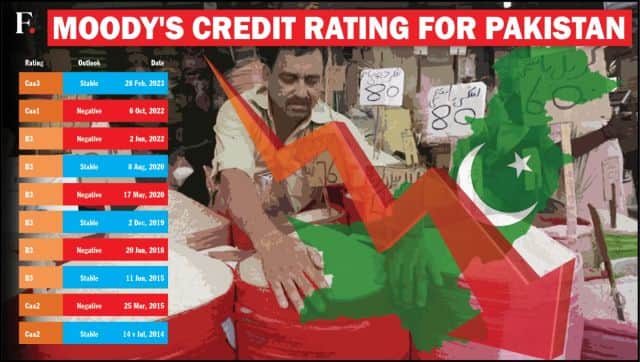 Graphic: Pranay Bhardwaj[/caption]Explaining the ratings being cut, Moody’s in their report said that “Pakistan’s government liquidity and external vulnerability risks have risen further since Moody’s last review in October 2022. Pakistan’s foreign exchange reserves have declined to a critically low level, sufficient to cover less than one month of imports. Amid delays in securing official sector funding, risks that Pakistan may not be able to source enough financing to meet its needs for the rest of fiscal 2023 (ending June 2023) have increased. Beyond this fiscal year, liquidity and external vulnerability risks will continue to be elevated, as Pakistan's financing needs will remain significant and financing sources are far from secure. At the same time, prospects of the country materially increasing its foreign exchange reserves are low”.In its assessment, Moody’s said that Pakistan would need financing of $11 billion for the rest of the fiscal year and to meet this requirement it would need to secure financing from the International Monetary Fund (IMF) and other multilateral and bilateral partners for these financing needs.[caption id="attachment_12226062" align="alignnone" width="640"]
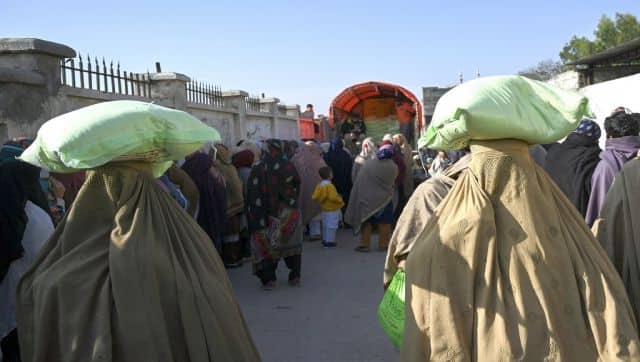 Local residents queue to buy wheat flour at government-controlled prices in Islamabad. Pakistan's economy has crumbled alongside a simmering political crisis, with the rupee plummeting and inflation at decades-high levels. AFP[/caption]It added that financing options beyond June 2023 were “highly uncertain”. “It is not clear that another IMF programme is under discussion and if it does happen, how long the negotiations would take and what conditions would be attached to it. However, in the absence of an IMF programme, Pakistan is unlikely to unlock sufficient financing from multilateral and bilateral partners.”Another reason for the credit rating downgrade is the elevated social risks and weak governance, said Moody’s.Also read: No salaries, ban on luxury cars and 5-star hotels: Pakistan’s austerity measures for politicians who looted the nationBut why then a stable outlook?While Moody’s downgraded Pakistan’s rating, it changed the nation’s outlook to stable from negative. For the unaware, a Moody’s rating outlook is an opinion regarding the likely direction of a rating over the medium term.Currently, the agency has changed the outlook from negative in October to stable. It explained, “Continued IMF engagement, including beyond the current programme, would likely help to support additional financing from other multilateral and bilateral partners, which could reduce default risk, if this is achieved urgently and without further raising social pressures.”Can the ratings be upgraded?However, all is not doom and gloom for Pakistan, according to Moody’s. The agency noted that the rating could be upgraded if the government’s liquidity and external vulnerability risks decreased materially and durably.The firm added that this could happen with a sustainable increase in foreign exchange reserves. A resumption of fiscal consolidation, including through implementing revenue-raising measures, pointing to a meaningful improvement in debt affordability would also be credit positive.It further noted that if the country were to default on its debt obligations to private-sector creditors, then the rating would be further downgraded to Ca or a C grade — the lowest possible rating.[caption id="attachment_12226082" align="alignnone" width="640"]
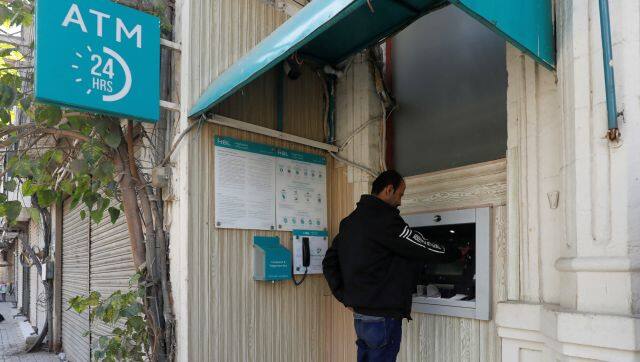 A man withdraws money from an ATM machine along a street in Karachi, Pakistan. Reuters[/caption]Pakistan’s economic crunch and the IMFPakistan has been burdened by an acute economic crisis, with inflation levels rising to unprecedented levels; food inflation is at 42.9 per cent and transport inflation is at 39.1 per cent year-on-year in January 2023. To make matters worse, the foreign exchange reserves have dropped drastically and the unemployment rate is soaring.A report by News18 today stated that the situation had worsened even further as the Pakistan Army was unable to feed its soldiers and field commanders have written letters to the Quarter Master General’s office highlighting the shortage of food.
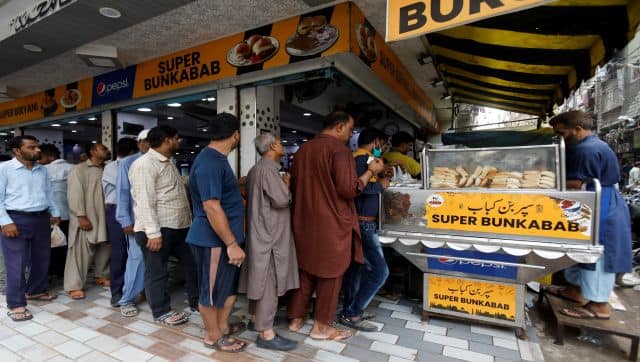 People wait for their turn to buy low-priced bun-kabab from a shop in Karachi, Pakistan. File image/Reuters[/caption]What happens to Pakistan now?A downgraded sovereign credit — which represents the likelihood that a government might be unable, or unwilling, to meet its debt obligations in the future — does not bode well for Pakistan’s future. This has a big impact on a country’s ability to borrow money.As a country moves a step closer to junk, as Pakistan is doing so, investors see more risk and governments are left with fewer options to rescue the economy.This means that the lenders such as IMF and China and other countries have more leverage against Pakistan.And this is exactly what is happening between China and Pakistan right now. Beijing is lending money to Islamabad — it announced a $700 million loan this week — which will only deepen the debt trap. The Guardian reported that China charges higher rates of interest than other lenders. Also, it is very strict about recovering money from Pakistan, adding to the pressure on the debt-ridden country.This type of situation has also led to experts raising concerns that Pakistan could go the Sri Lanka way — with Atlantic Council’s South Asia Center telling The Print that more borrowing from China could cause trouble ahead for Islamabad.Pakistan’s situation is such that India’s former Research and Analysis Wing chief AS Dulat made the prediction that Prime Minister “Narendra Modi will deal with Pakistan. He may bail them out”.Now, while this may seem far-fetched, nothing is impossible and Pakistan is running out of options too.With inputs from agenciesRead all the Latest News, Trending News, Cricket News, Bollywood News,India News and Entertainment News here. Follow us on Facebook, Twitter and Instagram.
First Published:Mar 01, 2023, 14:55:58 IST
Advertisement
Advertisement

Delhi Police asks personnel to wear uniform: What the law says on cops in plainclothes during protests
The Delhi Police has instructed all its personnel to wear uniforms when they report for duty at Jantar Mantar for crowd control. This comes after outrage grew over videos of men in civilian clothes or without name tags hitting protesters in the Capital. Is it legal for the police to ditch uniforms during protests?
4 min read
Military drones & police check-ups: How Sri Lanka is fighting against worst dengue outbreak in a decade
Sri Lanka is fighting its most severe dengue outbreak in nearly a decade, with infections rising sharply across the nation. Military drones have been deployed to tackle the outbreak, which has claimed 56 lives. Health officials said the outbreak is being driven primarily by the DENV-2 variant of the virus
3 min read
How Facebook job ad lured 2 Karnataka men into Myanmar cyber scam camp
The Karnataka Cyber Command has rescued two youths from a scam compound in Myanmar operated by Chinese fraudsters. The duo from Karnataka were lured on the pretext of data-entry jobs. They were asked to work for 16 hours a day and were expected to sleep for six hours daily
4 min read
Why is India seeing 95% cloud cover despite a Super El Niño?
India is witnessing nearly 95 per cent cloud cover despite a Super El Niño, a climate event usually linked to weaker monsoons. Regional weather systems, cyclonic circulations, the monsoon trough and moisture from two seas are temporarily overpowering one of the world's strongest climate phenomena
5 min read
What is CJP’s fourth demand to the government as protests in Delhi intensify?
The protest by the Cockroach Janta Party at Delhi’s Jantar Mantar refuses to die down. The group have made a fourth demand to the Centre, asking that no FIRs are filed against the agitators and that no legal action be taken. The government has expressed willingness to speak to the protesters, but refused to accede on the resignation of Education Minister Dharmandra Pradhan
5 min read
Advertisement
Advertisement