


Macron-Modi talks: Is Rafale still ahead of Pakistan’s F-16, JF-17 and China’s J-10C?
As French President Emmanuel Macron meets Prime Minister Narendra Modi, New Delhi weighs a massive Rafale expansion to fix falling IAF squadron numbers. The move reshapes South Asia’s air power balance as Pakistan fields F-16s, JF-17s and J-10Cs and China rapidly modernises its fighter fleet

French President Emmanuel Macron arrived in India this week for a three-day official visit (February 16, 2026-February 19, 2026), with defence cooperation and artificial intelligence emerging as central themes during his visit.
Following his talks Prime Minister Narendra Modi on Tuesday and elevating their bilateral ties to a 'Special Global Strategic Partnership', Macron said, "There is no doubt about that, because we have complete faith in this relationship, as we have been doing so for the past eight years."
One of the most consequential outcomes of the visit is the renewed focus on a government-to-government acquisition plan valued at nearly $40 billion, under which India intends to induct 114 additional Rafale fighter aircraft in the coming months.
The proposed expansion follows formal clearance granted last week under the Medium Role Fighter Aircraft programme, with a significant portion slated to be manufactured domestically.
 More from Explainers
If executed as planned, this would mark one of the largest single combat aircraft procurements in India’s history and significantly reshape the Indian Air Force’s operational footprint.
The urgency behind this push stems from a widening capability gap. The Indian Air Force currently operates 29 fighter squadrons against an authorised strength of 42. This shortfall comes at a time when Pakistan and China continue to expand and modernise their aerial combat fleets.
Pakistan fields approximately 25 squadrons, while China’s People’s Liberation Army Air Force has crossed 60, with continuous induction of fourth- and fifth-generation aircraft adding further pressure to India’s force planning calculations.
What is Rafale’s role in India’s air combat strategy?
The Rafale, manufactured by Dassault Aviation, occupies a unique position within India’s military aviation architecture. Classified as a 4.5-generation multirole fighter, the platform is currently the most advanced combat aircraft in the Indian inventory.
India inducted its first 36 Rafales under a contract signed in 2016, and the aircraft are now fully operational within the IAF’s frontline squadrons.
In parallel, the Indian Navy has separately contracted 26 Rafale-M carrier-capable variants for deployment aboard INS Vikrant.
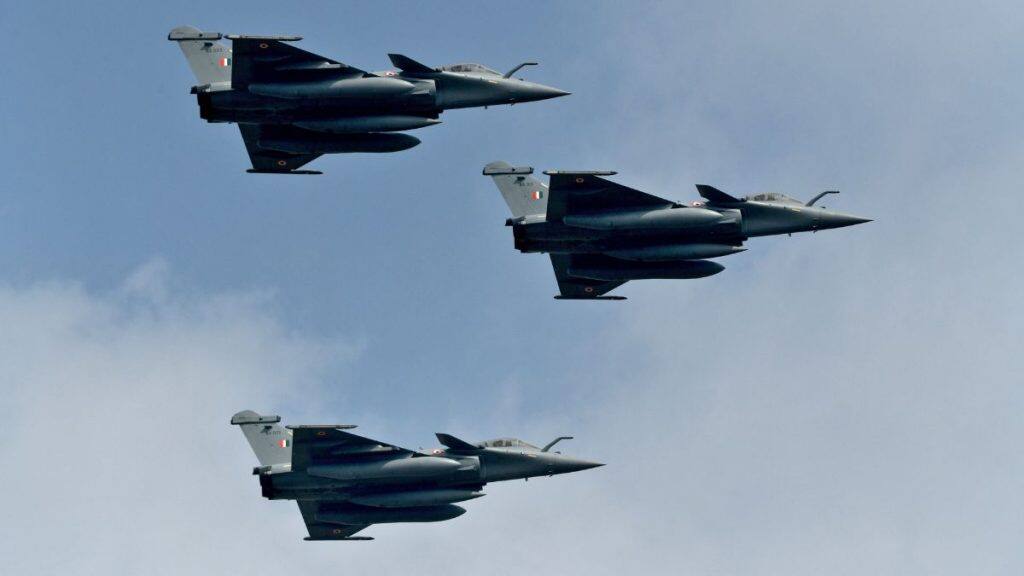
India-specific customisations have significantly enhanced its combat value. These include the integration of the Meteor beyond-visual-range missile, advanced electronic warfare systems, secure communications architecture and upgraded radar.
The aircraft’s Thales RBE2 active electronically scanned array radar improves detection and tracking performance while also enhancing resistance to electronic countermeasures. Frontal stealth shaping and a comprehensive self-protection suite contribute to higher survivability in contested airspace.
The Rafale’s strike profile is strengthened by its ability to deploy precision-guided weapons such as the SCALP cruise missile for long-range penetration missions and HAMMER smart munitions for accurate attacks against hardened and mobile targets.
These capabilities allow the aircraft to operate across the full spectrum of conflict scenarios, ranging from defensive counter-air missions to precision strikes deep within adversary territory.
The push to induct 114 additional Rafales is directly linked to operational lessons drawn from the May 2025 conflict referred to as “Operation Sindoor”.
The brief but intense air campaign served as a real-world stress test for modern fighter fleets operating in heavily contested electronic environments.
During this period, the Indian Air Force demonstrated the value of networked warfare by integrating data from Rafale, Su-30MKI fighters and Netra airborne early warning platforms.
This sensor fusion capability enhanced situational awareness, allowed coordinated engagements and underscored the importance of survivability systems in high-threat airspace.
The recent clearance for additional Rafales also includes a pathway for future upgrades to more advanced standards, which will improve connectivity and sensor performance.
Apart from India, France fields approximately 225 Rafales across its air force and navy, with further orders planned to reach a target fleet of 286 by 2030.
Egypt operates 54 Rafales, Qatar 36, Greece 24 with additional units pending delivery, and Croatia has brought all 12 of its ex-French aircraft into service.
How do US' F-16, Pakistan's JF-17 and China's J-10C compare?
Pakistan’s combat aviation posture rests on a three-tiered mix of platforms that combine legacy American fighters with newer Chinese designs.
Lockheed Martin F-16 Fighting Falcon
The Lockheed Martin F-16 Fighting Falcon remains the most capable air-to-air fighter in Pakistan’s inventory in terms of flight performance and established weapons integration.
Pakistan operates an estimated 70-75 F-16s, although fleet availability is shaped by maintenance demands and the operational constraints imposed by end-use monitoring agreements with the United States.
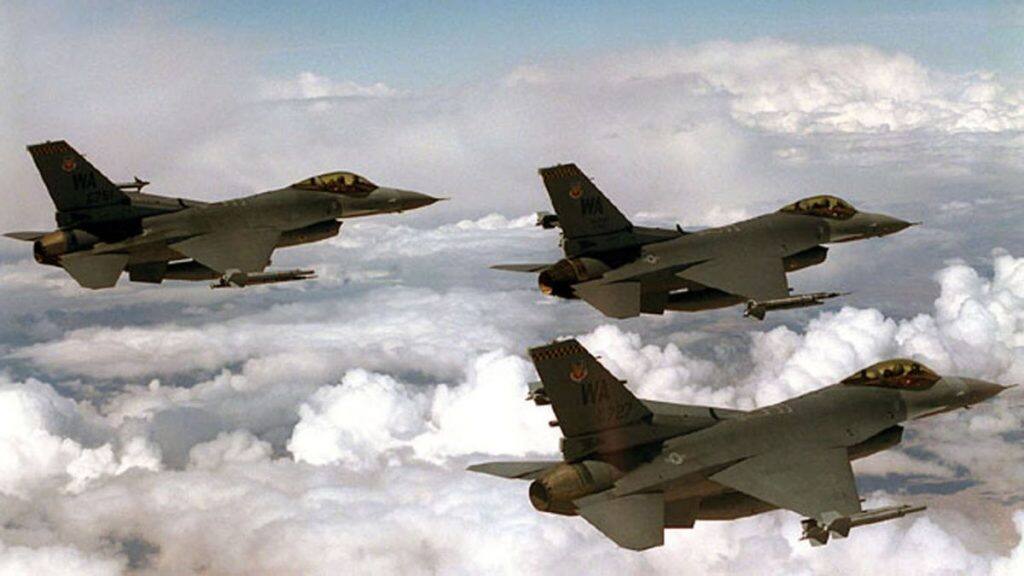
These conditions restrict the employment of the aircraft primarily to defensive and counter-terrorism roles.
From a technical perspective, the F-16 offers high speed, strong dogfighting performance and compatibility with advanced air-to-air missiles. However, analysts point out that its electronic warfare architecture and long-range engagement envelope do not match the depth provided by the Rafale’s integrated systems and Meteor missile capability.
Recent upgrade packages approved by Washington aim to enhance Pakistan’s F-16 fleet with improved radar, secure data links and encryption, strengthening its ability to operate within networked combat environments alongside Chinese-origin platforms.
In terms of dimensions, the Rafale has a wingspan of 10.90 metres and a length of 15.30 metres, while the F-16’s wingspan measures 9.96 metres with a length of 15.06 metres, placing the two aircraft in a broadly similar size class.
The Rafale’s empty weight stands at approximately 10 tonnes, compared to 9.2 tonnes for the F-16.
Maximum take-off weight also favours the Rafale, which can carry up to 24.5 tonnes against the F-16’s 21.7 tonnes. This translates into a higher potential weapons and fuel load for the French aircraft, offering greater operational flexibility in multi-role missions.
Range and speed metrics reveal trade-offs. The F-16’s maximum range of approximately 4,220 kilometres exceeds the Rafale’s 3,700 kilometres, giving the American fighter an advantage in certain strike and ferry profiles.
The F-16 also holds a slight edge in top speed, reaching around 2,414 kilometres per hour compared to the Rafale’s 2,130 kilometres per hour. Both aircraft share a service ceiling of roughly 50,000 feet.
These parameters indicate that while the Rafale benefits from payload and survivability advantages, the F-16 retains strengths in speed and reach.
The Rafale’s arsenal includes MICA air-to-air missiles, Meteor long-range air combat missiles, SCALP cruise missiles, AM39 anti-ship missiles, laser-guided bombs, HAMMER precision munitions and an internal 30 mm cannon.
The F-16’s weapons suite encompasses AIM-9 short-range and AIM-120 medium-range air-to-air missiles, anti-ship munitions such as Penguin missiles, cluster munitions, runway denial weapons, GPS-guided bombs, conventional gravity bombs and an internal 20 mm Vulcan cannon, with certain operators maintaining nuclear delivery capability.
The F-16 remains the most widely operated modern fighter globally, with roughly 3,000 aircraft in service across 25 countries.
The United States maintains around 657 F-16s across active and reserve components, many of which are undergoing modernisation to the Viper standard.
Turkey operates approximately 243 F-16s, Israel around 224 across multiple variants, and Ukraine has inducted about 45 donated aircraft since late 2024.
JF-17 Thunder
The PAC JF-17 Thunder, developed jointly by Pakistan and China, constitutes the numerical backbone of the Pakistan Air Force.
Designed as an affordable, single-engine multirole aircraft, the JF-17 has enabled Pakistan to replace ageing Mirage and F-7 fleets while maintaining force numbers.
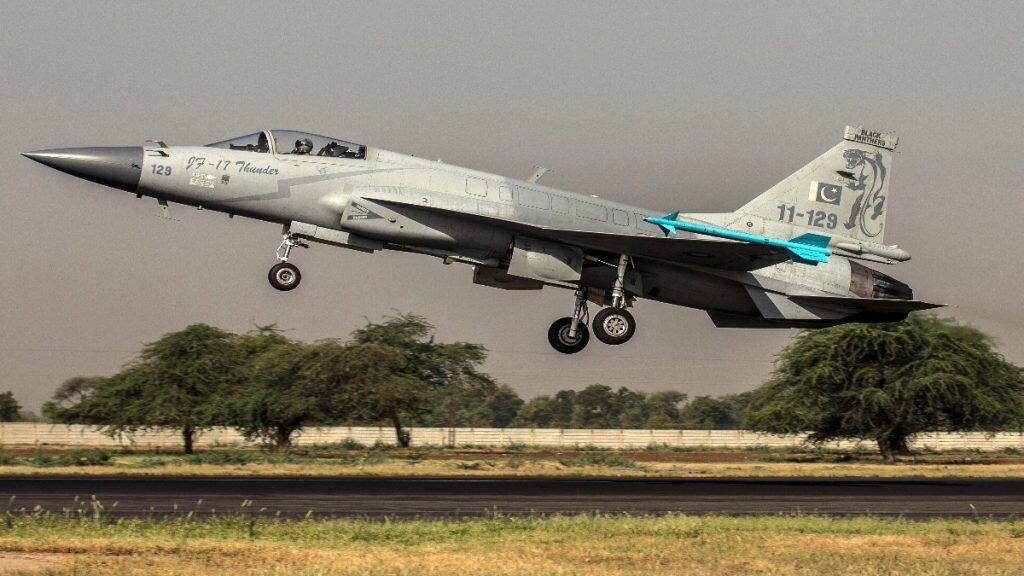
The latest Block III variant introduces an AESA radar and updated avionics, narrowing the technological gap with more advanced fighters.
Despite these improvements, the aircraft’s lighter airframe, lower payload capacity and more basic electronic warfare suite limit its survivability in environments saturated with jamming and advanced air defence systems.
During the 2025 conflict, such limitations were exposed in high-intensity electronic conditions, highlighting the vulnerability of lighter platforms against more sophisticated countermeasures.
Pakistan operates approximately 156 JF-17s across all variants, with several airframes lost during the 2025 conflict.
Myanmar maintains a small JF-17 fleet, Nigeria operates a limited number for counter-insurgency missions, and Azerbaijan has begun inducting aircraft from a 24-jet order.
Chengdu J-10C
Pakistan has also inducted the Chengdu J-10C, a 4.5-generation medium-weight multirole fighter produced by Chengdu Aircraft Corporation.
The J-10C features a delta-canard configuration, modern avionics and advanced beyond-visual-range missiles, positioning it technologically closer to the Rafale than the JF-17.
Its aerodynamic design provides strong instantaneous manoeuvrability, which can be advantageous in close-in engagements. During the 2025 standoff, the platform’s long-range missile capability reportedly compelled Indian fighters to maintain greater standoff distances in certain engagement scenarios.
However, questions remain over engine reliability and long-term sustainment. While improvements to the WS-10B powerplant have enhanced performance, defence observers note that its endurance and efficiency lag behind the Rafale’s twin-engine configuration.
The Rafale’s mature weapons integration and electronic warfare ecosystem also provide operational advantages that extend beyond pure aerodynamic performance.
The J-10C fleet is dominated by China, which operates roughly 410 aircraft of the variant within a broader J-10 inventory exceeding 470 jets.
Pakistan has completed induction of 36 J-10CE aircraft, while Bangladesh has placed orders for 20 units with deliveries expected later in 2026. Egypt has also been linked to a potential J-10C deal, although aircraft have not yet entered active service.
Also Watch:
With inputs from agencies
Inhaling global affairs on a daily basis, Anmol likes to cover stories that intrigue him, especially around history, climate change and polo. He has far too many disparate interests with a constant itch for travel. You can follow him on X (_anmol_singla), and please feel free to reach out to him at anmol.singla@nw18.com for tips, feedback or travel recommendations

Military drones & police check-ups: How Sri Lanka is fighting against worst dengue outbreak in a decade
How Facebook job ad lured 2 Karnataka men into Myanmar cyber scam camp
Why is India seeing 95% cloud cover despite a Super El Niño?
What is CJP’s fourth demand to the government as protests in Delhi intensify?
The new geography of war: Why the Houthis can no longer be ignored