
Advertisement


Sections
Israel carries out rare strikes in Lebanon: Could this escalate into conflict?
The Israeli military said it struck targets linked to the Palestinian militant group Hamas in southern Lebanon early Friday. This comes a day after over 30 rockets were fired from Lebanese territory into Israel. Will this further flame tensions between the two warring sides?

Israel’s military says it hit targets connected to the Palestinian militant group Hamas in southern Lebanon and Gaza early on Friday (7 April).This came after a barrage of rockets was fired from Lebanon into Israel on Thursday afternoon, which the Israeli military blamed on Hamas.These recent attacks come in the wake of increased tensions in the region following violence this week at Jerusalem’s Al-Aqsa Mosque compound.What targets were hit in Lebanon and Gaza? Are Israel and Lebanon at war? Could the recent strikes escalate the situation between the two nations? Let’s take a closer look.Israel launches rare strikes in LebanonThe Israel Defense Forces (IDF) said early in the morning that it struck "terrorist" infrastructure linked to Hamas in southern Lebanon.Quoting the Al-Manar news outlet, supported by the Lebanese militant group Hezbollah, CNN reported that three Israeli rockets hit an open area in southern Lebanon’s Tyre region.As per an AFP report, one missile fell on a farmer’s house close to a Palestinian refugee camp near Tyre.“The IDF will not allow the Hamas terrorist organisation to operate from within Lebanon and holds the state of Lebanon responsible for every directed fire emanating from its territory,” the IDF said in a statement on Twitter.Responding to the attacks, Hamas said in a statement as per Reuters: “We strongly condemn the blatant Zionist aggression against Lebanon in the vicinity of Tyre at dawn today”.Notably, southern Lebanon houses many Palestinian refugee camps and armed factions, reported Al Jazeera.Israel strikes Gaza StripIsrael resumed air strikes on Gaza early Friday, with its military claiming to have targeted two weapons-manufacturing sites of Hamas.According to the IDF, its fighter jets struck two “terror” tunnels in Beit Hanoun and Khan Yunis in the Gaza Strip “as a response to the security violations of Hamas during the last few days”, reported CNN.It also said targeted a shaft to an underground weapons production site.[caption id="attachment_12422582" align="alignnone" width="640"]![israel gaza strikes]() Israel's military also struck targets in the Gaza Strip. AP[/caption]An IDF drone hit a heavy machine gun in northern Gaza that as per the force was used to target IDF jets and Israeli territory.Hamas, which controls the blockaded southern coastal strip, condemned the Israeli strikes.Meanwhile, Gaza retaliated to these strikes early Friday by firing rockets towards southern Israel.34 rockets fired at IsraelIsrael’s attack came after 34 rockets were fired from Lebanon into Israel, as per IDF.While most of them were intercepted by air defence systems, at least four landed in Israel.The strikes left two people injured and damaged some property.Although IDF blamed Hamas for what it described as the “biggest rocket salvo” since the 2006 war, the Palestinian group claimed it is not aware of who was behind the rocket strikes from Lebanon on Israel.After a meeting late Thursday with his Security Cabinet, Israeli prime minister Benjamin Netanyahu said: “Israel’s response, tonight and beyond, will extract a heavy price from our enemies”, reported AP.Lieutenant Colonel Richard Hecht, an Israeli military spokesman, told reporters that the army believed Lebanese rocket fire is linked to the recent flareup in Jerusalem.“It’s a Palestinian-oriented event,” he added. As per AP, Hecht said Hamas or Islamic Jihad militant groups, which are based in Gaza but also have a presence in Lebanon, could have a hand in the attack.Hamas chief Ismail Haniyeh, who was in Lebanon at the time of Thursday's strikes, said Palestinians would not "sit with their arms crossed" when facing aggression from Israel, reported BBC.Moreover, Hecht said the Israeli military believed that Hezbollah and the Lebanese government were aware of Thursday’s attacks.Israeli security experts say Hezbollah, the Iran-backed armed group, must have green lit Thursday’s attacks.“It’s not Hezbollah shooting, but it’s hard to believe that Hezbollah didn’t know about it,” Tamir Hayman, a former head of Israeli military intelligence, said on Twitter.ALSO READ: Why al-Aqsa Mosque in Jerusalem is a regular site of conflict between Israel and PalestineHow did it all begin?Tensions have been on the rise in the region after Israeli police attacked worshippers in the Al-Aqsa Mosque compound in Jerusalem’s Old City during the holy month of Ramadan earlier this week.As Muslims observe month-long Ramadan, Jews are celebrating the Passover holiday.As per CNN, videos from inside the mosque – the third-holiest site in Islam – showed Israeli officers roughing up people with their batons and rifle butts. They also arrested hundreds of Palestinians who wanted to pray overnight inside the compound, which authorities only allow during the last 10 days of Ramadan.[caption id="attachment_12422612" align="alignnone" width="640"]
Israel's military also struck targets in the Gaza Strip. AP[/caption]An IDF drone hit a heavy machine gun in northern Gaza that as per the force was used to target IDF jets and Israeli territory.Hamas, which controls the blockaded southern coastal strip, condemned the Israeli strikes.Meanwhile, Gaza retaliated to these strikes early Friday by firing rockets towards southern Israel.34 rockets fired at IsraelIsrael’s attack came after 34 rockets were fired from Lebanon into Israel, as per IDF.While most of them were intercepted by air defence systems, at least four landed in Israel.The strikes left two people injured and damaged some property.Although IDF blamed Hamas for what it described as the “biggest rocket salvo” since the 2006 war, the Palestinian group claimed it is not aware of who was behind the rocket strikes from Lebanon on Israel.After a meeting late Thursday with his Security Cabinet, Israeli prime minister Benjamin Netanyahu said: “Israel’s response, tonight and beyond, will extract a heavy price from our enemies”, reported AP.Lieutenant Colonel Richard Hecht, an Israeli military spokesman, told reporters that the army believed Lebanese rocket fire is linked to the recent flareup in Jerusalem.“It’s a Palestinian-oriented event,” he added. As per AP, Hecht said Hamas or Islamic Jihad militant groups, which are based in Gaza but also have a presence in Lebanon, could have a hand in the attack.Hamas chief Ismail Haniyeh, who was in Lebanon at the time of Thursday's strikes, said Palestinians would not "sit with their arms crossed" when facing aggression from Israel, reported BBC.Moreover, Hecht said the Israeli military believed that Hezbollah and the Lebanese government were aware of Thursday’s attacks.Israeli security experts say Hezbollah, the Iran-backed armed group, must have green lit Thursday’s attacks.“It’s not Hezbollah shooting, but it’s hard to believe that Hezbollah didn’t know about it,” Tamir Hayman, a former head of Israeli military intelligence, said on Twitter.ALSO READ: Why al-Aqsa Mosque in Jerusalem is a regular site of conflict between Israel and PalestineHow did it all begin?Tensions have been on the rise in the region after Israeli police attacked worshippers in the Al-Aqsa Mosque compound in Jerusalem’s Old City during the holy month of Ramadan earlier this week.As Muslims observe month-long Ramadan, Jews are celebrating the Passover holiday.As per CNN, videos from inside the mosque – the third-holiest site in Islam – showed Israeli officers roughing up people with their batons and rifle butts. They also arrested hundreds of Palestinians who wanted to pray overnight inside the compound, which authorities only allow during the last 10 days of Ramadan.[caption id="attachment_12422612" align="alignnone" width="640"]![al-aqsa mosque]() Tensions are rife since Israeli police's raids at the Al-Aqsa Mosque compound this week. AP[/caption]The Al-Aqsa Mosque stands on a hilltop that Jews call Temple Mount, which is the holiest site in Judaism.
Tensions are rife since Israeli police's raids at the Al-Aqsa Mosque compound this week. AP[/caption]The Al-Aqsa Mosque stands on a hilltop that Jews call Temple Mount, which is the holiest site in Judaism.
 Israel's military also struck targets in the Gaza Strip. AP[/caption]An IDF drone hit a heavy machine gun in northern Gaza that as per the force was used to target IDF jets and Israeli territory.Hamas, which controls the blockaded southern coastal strip, condemned the Israeli strikes.Meanwhile, Gaza retaliated to these strikes early Friday by firing rockets towards southern Israel.34 rockets fired at IsraelIsrael’s attack came after 34 rockets were fired from Lebanon into Israel, as per IDF.While most of them were intercepted by air defence systems, at least four landed in Israel.The strikes left two people injured and damaged some property.Although IDF blamed Hamas for what it described as the “biggest rocket salvo” since the 2006 war, the Palestinian group claimed it is not aware of who was behind the rocket strikes from Lebanon on Israel.After a meeting late Thursday with his Security Cabinet, Israeli prime minister Benjamin Netanyahu said: “Israel’s response, tonight and beyond, will extract a heavy price from our enemies”, reported AP.Lieutenant Colonel Richard Hecht, an Israeli military spokesman, told reporters that the army believed Lebanese rocket fire is linked to the recent flareup in Jerusalem.“It’s a Palestinian-oriented event,” he added. As per AP, Hecht said Hamas or Islamic Jihad militant groups, which are based in Gaza but also have a presence in Lebanon, could have a hand in the attack.Hamas chief Ismail Haniyeh, who was in Lebanon at the time of Thursday's strikes, said Palestinians would not "sit with their arms crossed" when facing aggression from Israel, reported BBC.Moreover, Hecht said the Israeli military believed that Hezbollah and the Lebanese government were aware of Thursday’s attacks.Israeli security experts say Hezbollah, the Iran-backed armed group, must have green lit Thursday’s attacks.“It’s not Hezbollah shooting, but it’s hard to believe that Hezbollah didn’t know about it,” Tamir Hayman, a former head of Israeli military intelligence, said on Twitter.ALSO READ: Why al-Aqsa Mosque in Jerusalem is a regular site of conflict between Israel and PalestineHow did it all begin?Tensions have been on the rise in the region after Israeli police attacked worshippers in the Al-Aqsa Mosque compound in Jerusalem’s Old City during the holy month of Ramadan earlier this week.As Muslims observe month-long Ramadan, Jews are celebrating the Passover holiday.As per CNN, videos from inside the mosque – the third-holiest site in Islam – showed Israeli officers roughing up people with their batons and rifle butts. They also arrested hundreds of Palestinians who wanted to pray overnight inside the compound, which authorities only allow during the last 10 days of Ramadan.[caption id="attachment_12422612" align="alignnone" width="640"]
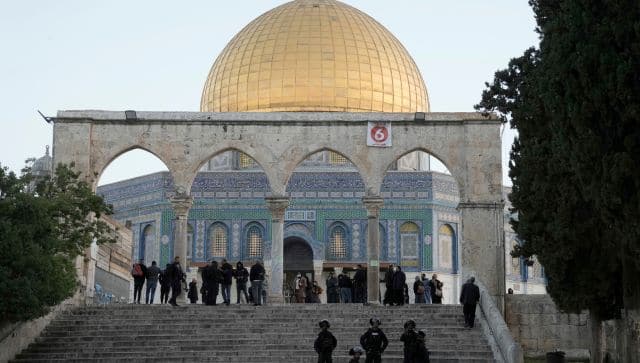 Tensions are rife since Israeli police's raids at the Al-Aqsa Mosque compound this week. AP[/caption]The Al-Aqsa Mosque stands on a hilltop that Jews call Temple Mount, which is the holiest site in Judaism.
The Wednesday raids on the mosque compound elicited sharp condemnation from the Arab and Muslim world.It also triggered retaliatory rocket strikes from Gaza into Israel.In 2021, violence at Al-Aqsa during Ramadan had triggered an 11-day war between Israel and Gaza’s Hamas rulers.ALSO READ: Israel-Palestine tensions rise: Is ‘third intifada’ in offing?Can this escalate tensions between Lebanon and Israel?As per AP, Israeli attacks in Lebanon may bring Hezbollah into the fighting, which could eventually lead to war.In a statement on Thursday, Hezbollah – which dominates much of southern Lebanon, warned that “hundreds of millions of Muslims” were ready to “shed blood” for Al-Aqsa, reported CNN.
In recent years, Hezbollah has avoided escalations related to the Al-Aqsa Mosque.Israel and Lebanon have technically been at war for decades. In 1982, Israel invaded Lebanon when the latter was witnessing a civil war and occupied Lebanese territory until 2000, as per Al Jazeera.While they are considered enemy states, the last major conflict between the nations was the 2006 Lebanon War.Hezbollah had fought Israel during the 34-day war in 2006 and both sides have since stayed away from an all-out offensive.Around 1,200 Lebanese people and 165 Israelis had died during the conflict.In 2021, Israeli air force had carried out its first air strikes in seven years on neighbouring Lebanon in retaliation to rockets fired from Lebanon into Israeli territory, AFP reported.After Friday’s strikes, Lebanon and Israel have both said they both do not want the situation to escalate further.Lebanese prime minister Najib Mikati spoke against any military operations from the country's territory that "destabilise the situation", reported BBC.On Friday, the United Nations’ (UN) peacekeeping force in Lebanon (UNIFIL) said its head of mission and force commander was in touch with authorities from Israel and Lebanon and both have said that “they do not want a war.”Calling the situation"extremely serious", UNIFIL urged "restraint and to avoid further escalation".The Lebanese foreign ministry expressed willingness to cooperate with the UN and take measures to “restore calm and stability” in the south. It also called on “the international community to put pressure on Israel to stop escalation,” the state-owned National News Agency reported, as per CNN. Meanwhile, an Israeli military spokesman said their operation was over "for the moment".
"Nobody wants an escalation right now," he was quoted as saying by Reuters. "Quiet will be answered with quiet, at this stage I think, at least in the coming hours."With inputs from agenciesRead all the Latest News, Trending News, Cricket News, Bollywood News,India News and Entertainment News here. Follow us on Facebook, Twitter and Instagram.
Advertisement
Sub-Editor at Firstpost. Writing Explainers on everything from politics to space.
First Published:Apr 07, 2023, 14:41:40 IST
Advertisement
Advertisement

Delhi Police asks personnel to wear uniform: What the law says on cops in plainclothes during protests
The Delhi Police has instructed all its personnel to wear uniforms when they report for duty at Jantar Mantar for crowd control. This comes after outrage grew over videos of men in civilian clothes or without name tags hitting protesters in the Capital. Is it legal for the police to ditch uniforms during protests?
4 min read
Military drones & police check-ups: How Sri Lanka is fighting against worst dengue outbreak in a decade
Sri Lanka is fighting its most severe dengue outbreak in nearly a decade, with infections rising sharply across the nation. Military drones have been deployed to tackle the outbreak, which has claimed 56 lives. Health officials said the outbreak is being driven primarily by the DENV-2 variant of the virus
3 min read
How Facebook job ad lured 2 Karnataka men into Myanmar cyber scam camp
The Karnataka Cyber Command has rescued two youths from a scam compound in Myanmar operated by Chinese fraudsters. The duo from Karnataka were lured on the pretext of data-entry jobs. They were asked to work for 16 hours a day and were expected to sleep for six hours daily
4 min read
Why is India seeing 95% cloud cover despite a Super El Niño?
India is witnessing nearly 95 per cent cloud cover despite a Super El Niño, a climate event usually linked to weaker monsoons. Regional weather systems, cyclonic circulations, the monsoon trough and moisture from two seas are temporarily overpowering one of the world's strongest climate phenomena
5 min read
What is CJP’s fourth demand to the government as protests in Delhi intensify?
The protest by the Cockroach Janta Party at Delhi’s Jantar Mantar refuses to die down. The group have made a fourth demand to the Centre, asking that no FIRs are filed against the agitators and that no legal action be taken. The government has expressed willingness to speak to the protesters, but refused to accede on the resignation of Education Minister Dharmandra Pradhan
5 min read
Advertisement
Advertisement