
Advertisement


Sections
Profiting Off the War: How defence stocks are rocketing amid Israel-Hamas conflict
No one wins in a war. But maybe military contractors do. As the Israel-Hamas conflict rages on, the stocks of defence companies, including Lockheed Martin, Northrop Grumman and Rheinmetall, have seen a significant jump. However, some experts observe that these spikes stall and are not sustainable

The Israel-Hamas war, now entering Day 13, has extracted a huge toll; over 2,500 people are dead, thousands of others are injured and millions have been displaced from their homes. With the Gaza hospital bombing on Wednesday, there are concerns that the conflict will escalate and plunge the area of West Asia into instability and violence.However, amid the grief, the anguish and the fury, there seems to be a sector that is smiling. Their smiles are because the war is benefiting them.Who are we talking about?The defence sector – the military contractors whose stocks have seen a steady rise since Israel declared war against Hamas after the deadly and brazen attack on 7 October.We take a closer look at how numerous defence manufacturing firms have seen a bump in their stock value and how the business of war benefits them each time a region is plunged into conflict.Defence stocks on a highShares of contractors such as Lockheed Martin, General Dynamics and Britain’s BAE Systems have seen a jump of around 10 per cent since the start of the Israel-Hamas war. Northrop Grumman’s shares are trading 16 per cent higher.Arlington-based RTX, which has been hit by defects, also saw gains of five per cent. The stocks for Germany’s Rheinmetall, the maker of the guns for Leopard 2 tanks, have jumped also jumped 17 per cent.Incidentally, Lockheed Martin manufactures the F-35 fighter jets, which are used by the Israeli military. Similarly, Northrop Grumman manufactures combat vehicles, which are used by Israel.On 16 October, a Reuters report stated that Invesco Aerospace & Defense ETF attracted $48 million in net weekly inflows, its best showing since July 2022. In Europe, the recently launched Future of Defence ETF saw weekly inflows of $1.1 million.The Anadolu Agency further reported that French-based Dassault and Thales’ shares were up 4.15 per cent and 4.26 per cent, while Türkiye’s, Aselsan arms company’s shares added 7.23 last Monday.Speaking on the gains, Bernstein analysts led by Douglas Harned stated, “War stocks typically notch immediate gains after geopolitical shocks, but history shows those increases generally stall and are not sustainable.”Other commentators have agreed with this analysis, but cautioned that any escalation in the war, such as if other West Asia states join in, could trigger more extreme market responses. This is a potential scenario, especially as Iran is reported to have helped plan the Hamas operation.[caption id="attachment_13270892" align="alignnone" width="640"]![]() Israeli soldier drive a tank to a staging area near the border with Lebanon. An Israeli ground offensive in Gaza would further escalate the war raging since Hamas launched its unprecedented attack days ago. AP[/caption]Defence on a war highThis isn’t the first time that defence companies are seeing huge spikes in their share value. In 2022, as Russia and Ukraine went to war against one another, the defence industry supplying the weapons to both sides, saw gains and made substantial profits.In the early days of the war, Lockheed Martin’s stock price rose by 2.79 per cent to $396.19. Similarly, aerospace specialist rival Northrop Grumman experienced a steep 4.53 per cent gain to $399.32, while shipbuilding giant Huntington Ingalls saw its stock price increase by 2.34 per cent to $183.87, and surveillance specialists L3Harris rose by 3.60 per cent to $222.97.Prior to this, the same was seen during the start of the Gulf War in 1990, and the wars in Afghanistan and Iraq.
Israeli soldier drive a tank to a staging area near the border with Lebanon. An Israeli ground offensive in Gaza would further escalate the war raging since Hamas launched its unprecedented attack days ago. AP[/caption]Defence on a war highThis isn’t the first time that defence companies are seeing huge spikes in their share value. In 2022, as Russia and Ukraine went to war against one another, the defence industry supplying the weapons to both sides, saw gains and made substantial profits.In the early days of the war, Lockheed Martin’s stock price rose by 2.79 per cent to $396.19. Similarly, aerospace specialist rival Northrop Grumman experienced a steep 4.53 per cent gain to $399.32, while shipbuilding giant Huntington Ingalls saw its stock price increase by 2.34 per cent to $183.87, and surveillance specialists L3Harris rose by 3.60 per cent to $222.97.Prior to this, the same was seen during the start of the Gulf War in 1990, and the wars in Afghanistan and Iraq.
Israel-Hamas war: Related coverageIn graphics | What is Israel’s military strength? What weapons does it use?Hamas vs Hezbollah: Differences and similarities, explainedIsrael-Hamas war: Why France is seeing a big fallout from conflictWhat the Hamas war means for Israel’s economy and Benjamin NetanyahuHow the Israel-Hamas war left US campuses in an uproarWhy has Israel’s ground invasion of Gaza been delayed?
Time of war and increased defence spendingMany analysts believe that in today’s time of war and aggressive muscular posturing, defence companies experience the greatest windfalls.What does this mean? A threat of war or conflict has seen nations up their defence budgets, which, in turn, is beneficial to defence companies.According to a study by Stockholm International Peace Research Institute (SIPRI), world military spending reached an all-time high of $2.24 trillion last year – eighth year in a row. The SIPRI study noted that Europe saw the steepest rise in at least 30 years in military spending – 13 per cent up. SIPRI said most of that was linked to Russia and Ukraine, but other countries also stepped up military spending in response to perceived Russian threats.[caption id="attachment_13270952" align="alignnone" width="640"]![]() Israeli soldiers get ready to patrol along a road near the border between Israel and Lebanon. AP[/caption]The study also revealed that Russia’s military spending grew by an estimated 9.2 per cent to about $86.4 billion, equivalent to 4.1 per cent of the country’s GDP in 2022, up from 3.7 per cent in 2021.And this rise in military spending isn’t exclusive to European nations. Even Asian nations such as India, Japan and South Korea saw a boost in defence budgets on account of a more aggressive and muscular China.For instance, India was the fourth largest defence spender, 6 per cent more than in 2021 and 47 per cent more than in 2013, a reflection of continuing border tensions with both China and Pakistan.Additionally, Japan, who has been known to be a pacifist country, announced a boost to its defence budget for 2023 to a record 6.8 trillion yen ($55 billion) in the face of regional security concerns and threats posed by China and North Korea. The announcement had made big headlines the world over, as it was an historic change from Japan’s exclusively self-defence policy since the end of World War II.Similarly, South Korea also proposed a $42.1 billion defence budget for 2023. It said the new expenditure is a 4.6 per cents increase over the allocation in 2022. The ruling government attributed the increase to South Korea's “severe security situation” – a reference to North Korea’s escalating efforts to test and launch strategic missiles.As Dr Nan Tian, a senior researcher with SIPRI’s military expenditure and arms production programme, said: “The continuous rise in global military expenditure in recent years is a sign that we are living in an increasingly insecure world.”And this insecure world isn’t changing anytime soon, meaning defence budgets will keep rising, and arms manufacturers will continue to gain from death and destruction.With inputs from agencies
Israeli soldiers get ready to patrol along a road near the border between Israel and Lebanon. AP[/caption]The study also revealed that Russia’s military spending grew by an estimated 9.2 per cent to about $86.4 billion, equivalent to 4.1 per cent of the country’s GDP in 2022, up from 3.7 per cent in 2021.And this rise in military spending isn’t exclusive to European nations. Even Asian nations such as India, Japan and South Korea saw a boost in defence budgets on account of a more aggressive and muscular China.For instance, India was the fourth largest defence spender, 6 per cent more than in 2021 and 47 per cent more than in 2013, a reflection of continuing border tensions with both China and Pakistan.Additionally, Japan, who has been known to be a pacifist country, announced a boost to its defence budget for 2023 to a record 6.8 trillion yen ($55 billion) in the face of regional security concerns and threats posed by China and North Korea. The announcement had made big headlines the world over, as it was an historic change from Japan’s exclusively self-defence policy since the end of World War II.Similarly, South Korea also proposed a $42.1 billion defence budget for 2023. It said the new expenditure is a 4.6 per cents increase over the allocation in 2022. The ruling government attributed the increase to South Korea's “severe security situation” – a reference to North Korea’s escalating efforts to test and launch strategic missiles.As Dr Nan Tian, a senior researcher with SIPRI’s military expenditure and arms production programme, said: “The continuous rise in global military expenditure in recent years is a sign that we are living in an increasingly insecure world.”And this insecure world isn’t changing anytime soon, meaning defence budgets will keep rising, and arms manufacturers will continue to gain from death and destruction.With inputs from agencies
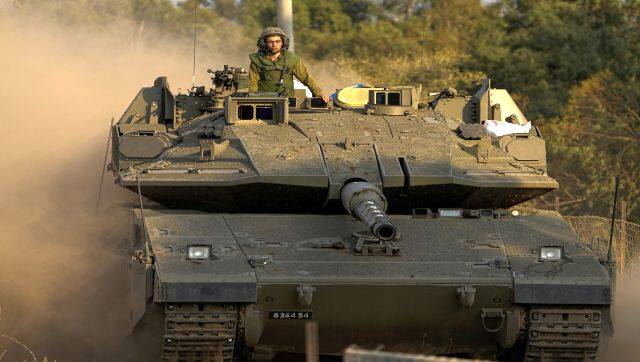 Israeli soldier drive a tank to a staging area near the border with Lebanon. An Israeli ground offensive in Gaza would further escalate the war raging since Hamas launched its unprecedented attack days ago. AP[/caption]Defence on a war highThis isn’t the first time that defence companies are seeing huge spikes in their share value. In 2022, as Russia and Ukraine went to war against one another, the defence industry supplying the weapons to both sides, saw gains and made substantial profits.In the early days of the war, Lockheed Martin’s stock price rose by 2.79 per cent to $396.19. Similarly, aerospace specialist rival Northrop Grumman experienced a steep 4.53 per cent gain to $399.32, while shipbuilding giant Huntington Ingalls saw its stock price increase by 2.34 per cent to $183.87, and surveillance specialists L3Harris rose by 3.60 per cent to $222.97.Prior to this, the same was seen during the start of the Gulf War in 1990, and the wars in Afghanistan and Iraq.
Israel-Hamas war: Related coverageIn graphics | What is Israel’s military strength? What weapons does it use?Hamas vs Hezbollah: Differences and similarities, explainedIsrael-Hamas war: Why France is seeing a big fallout from conflictWhat the Hamas war means for Israel’s economy and Benjamin NetanyahuHow the Israel-Hamas war left US campuses in an uproarWhy has Israel’s ground invasion of Gaza been delayed?
Time of war and increased defence spendingMany analysts believe that in today’s time of war and aggressive muscular posturing, defence companies experience the greatest windfalls.What does this mean? A threat of war or conflict has seen nations up their defence budgets, which, in turn, is beneficial to defence companies.According to a study by Stockholm International Peace Research Institute (SIPRI), world military spending reached an all-time high of $2.24 trillion last year – eighth year in a row. The SIPRI study noted that Europe saw the steepest rise in at least 30 years in military spending – 13 per cent up. SIPRI said most of that was linked to Russia and Ukraine, but other countries also stepped up military spending in response to perceived Russian threats.[caption id="attachment_13270952" align="alignnone" width="640"]
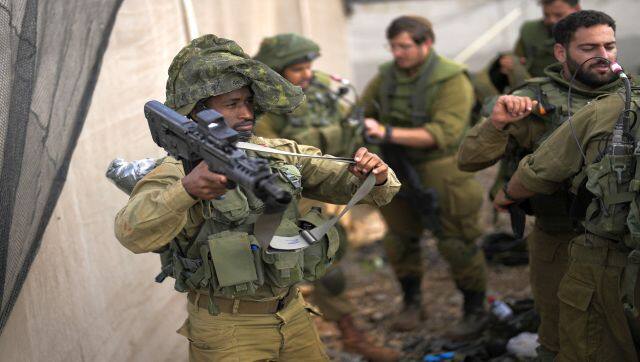 Israeli soldiers get ready to patrol along a road near the border between Israel and Lebanon. AP[/caption]The study also revealed that Russia’s military spending grew by an estimated 9.2 per cent to about $86.4 billion, equivalent to 4.1 per cent of the country’s GDP in 2022, up from 3.7 per cent in 2021.And this rise in military spending isn’t exclusive to European nations. Even Asian nations such as India, Japan and South Korea saw a boost in defence budgets on account of a more aggressive and muscular China.For instance, India was the fourth largest defence spender, 6 per cent more than in 2021 and 47 per cent more than in 2013, a reflection of continuing border tensions with both China and Pakistan.Additionally, Japan, who has been known to be a pacifist country, announced a boost to its defence budget for 2023 to a record 6.8 trillion yen ($55 billion) in the face of regional security concerns and threats posed by China and North Korea. The announcement had made big headlines the world over, as it was an historic change from Japan’s exclusively self-defence policy since the end of World War II.Similarly, South Korea also proposed a $42.1 billion defence budget for 2023. It said the new expenditure is a 4.6 per cents increase over the allocation in 2022. The ruling government attributed the increase to South Korea's “severe security situation” – a reference to North Korea’s escalating efforts to test and launch strategic missiles.As Dr Nan Tian, a senior researcher with SIPRI’s military expenditure and arms production programme, said: “The continuous rise in global military expenditure in recent years is a sign that we are living in an increasingly insecure world.”And this insecure world isn’t changing anytime soon, meaning defence budgets will keep rising, and arms manufacturers will continue to gain from death and destruction.With inputs from agencies
First Published:Oct 19, 2023, 17:03:33 IST
Advertisement
Advertisement

Why has Bangladesh’s choice of India spokespersons raised eyebrows?
Bangladesh’s appointment of journalists Md Saidur Rahman and Umme Marufa to media roles in New Delhi and Kolkata has triggered controversy over their past anti-India social media posts, many of which were later deleted, prompting diplomatic scrutiny as India and Bangladesh seek to improve bilateral ties
6 min read
Who is Sandeep Lamba, the Delhi cop removed from protest site duty after slapping female protester?
Sandeep Lamba, an Additional Deputy Commissioner of Police (DCP) (North East District), was seen slapping a female CJP protester in a video on July 20. Lamba has now been removed from the protest site and sent back to his original station. In 2021, Lamba was awarded the Union Home Minister’s medal for excellent investigation
4 min read
Explorers discover wreckage of plane 72 years later. Will this help in finding MH370?
On April 11, 1952, a Pan Am Flight 526A, crashed into the Atlantic Ocean, killing 52 of the 69 people on board. After decades of effort, explorers have found the wreck of the plane at the bottom of the seabed near Puerto Rico. The discovery offers new hope to families who lost loved ones in the Malaysia Airlines Flight 370 crash in 2014
5 min read
Cruise missiles, drones and more... The deadly arsenal of the Houthis
The Houthis have evolved into one of the world's most formidable non-state military forces, deploying anti-ship ballistic missiles, cruise missiles, drones and explosive boats to threaten Red Sea shipping. Their latest attacks on Saudi oil tankers have raised concerns over shipping through the Bab el-Mandeb Strait amid the Strait of Hormuz crisis
10 min read
Why India may not witness a medal rush at 2026 Commonwealth Games
A 125-strong Indian contingent is in Glasgow for the 2026 Commonwealth Games, starting today (July 23), chasing international glory. However, with a roster of sports such as badminton and wrestling being cut from the event, the country’s medal chances have been drastically reduced
4 min read
Advertisement
Advertisement