
Advertisement


Sections
Is China’s fast fashion giant Shein guilty of using Uyghur forced labour?
A group of 22 US lawmakers have written to the Securities and Exchange Commission, asking for the watchdog to probe if Shein utilises Uyghur forced labour. Previously, the Chinese firm has faced allegations of using cotton from the Xinjiang region and appalling work conditions

Fast fashion and fast controversy. That’s Shein for you. The Chinese fast fashion brand is facing the heat after two dozen US representatives has called for an independent investigation by the Securities and Exchange Commission (SEC) into the company’s labour practices.On Monday, news agency Reuters accessed a letter written by a bipartisan group of lawmakers asking the SEC to independently audit and verify that the company does not use forced labour from the country’s predominantly Muslim Uyghur population.So, is Shein guilty of forced labour? Is this the only controversy affecting the brand? Here are some answers.Shein using forced labour?Ahead of the company’s possible initial public offering in the United States, around 22 lawmakers have written a letter to SEC Chairman Gary Gensler, urging that the watchdog investigate if Chinese company Shein utilises Uyghur forced labour in creating their products.US representatives Jennifer Wexton and John Rose leading the group wrote in the letter that there were credible allegations of the company’s use of underpaid and forced labour in the Xinjiang Uyghur Autonomous Region (XUAR) and that they were demanding transparency and seeking independent verification – free from state influence – that the company does not use Uyghur force labour before it is allowed to register on the US exchange.“We strongly believe that the ability to issue and trade securities on our domestic exchanges is a privilege, and that foreign companies wishing to do so must uphold a demonstrated commitment to human rights across the globe,” the lawmakers further wrote in the letter.The allegations of using Uyghur forced labour aren’t new. In November last year, Bloomberg had reported that the Chinese fashion mammoth had used cotton from the Xinjiang region of China in some of its clothing. Two batches of clothes were selected for the testing and it was found that both batches had cotton which was grown in the Xinjiang region.[caption id="attachment_12536322" align="alignnone" width="640"]![]() Shein has garnered a sordid reputation thanks to its myriad of controversies. AFP[/caption]Last year, the United Nations published a report that stated that there was reasonable evidence to conclude that forced labour was taking place in China’s far-western region, where activists say more than one million ethnic minority Muslims have been detained in internment camps.Tomoya Obokata, the special rapporteur on contemporary forms of slavery, had stated in the report that evidence of forced labour existed within the region’s system of “vocational skills education and training” centres and a poverty alleviation programme that involves transferring surplus rural labourers to other work.While such programmes created employment and income for ethnic minorities as claimed by the government, evidence pointed to the work in many cases being of an “involuntary nature”, the rapporteur said.“Further, given the nature and extent of powers exercised over workers during forced labour, including excessive surveillance, abusive living and working conditions, restriction of movement through internment, threats, physical and/or sexual violence, and other inhumane or degrading treament, some instances may amount to enslavement as a crime against humanity, meriting a further independent analysis,” Obokata said.For those who don’t know, the Uyghurs speak their own language, which is similar to Turkish, and see themselves as culturally and ethnically close to Central Asian nations. They are mostly practising Muslims. Beijing has long been accused of mistreating the Uyghur population – allegations range from forcibly sterilisation of Uyghur women to committing genocide.Interestingly, the letter to the SEC echoes similar concerns by outside human rights groups. A coalition called ‘Shut Down Shein’ has also called on the SEC to deny IPO registration to Shein unless it provides proof of compliance with the Uyghur Forced Labor Prevention Act.“Access to US capital markets is a privilege, not a right, and should not be given freely to corporations who threaten US national security with nefarious business practices, and who are making Americans complicit in their violation of US law,” Chapin Fay, executive director of Shut Down Shein, has written.Many controversies of SheinShein has garnered a sordid reputation thanks to its myriad of controversies. Founded in Nanjing, China in 2008, the fast fashion giant, which is notoriously private, is now headquartered in Singapore.The company is everywhere, even in the US, and has grown to become the world’s largest fashion retailer as of 2022. In April 2022, Bloomberg valued the brand at $100 billion. Its biggest selling point is the low pricing of clothes that are shipped to more than 150 countries and regions worldwide, catering to women in their teens and 20s.Also read: TikTok is facing a ban in US. But America still addicted to these Chinese appsHowever, the e-commerce brand, which is reliant on digital influencer marketing to generate the majority of its advertising, has been embroiled in various scandals – from underpaying its workers, to plagiarising designs and even selling garments that contain an unsafe level of toxic chemicals.In June last year, the company was in a bind when videos emerged online of different ‘help me’ messages written or stitched onto labels of Shein clothing tags. Some of the messages read: ‘help me’ or ‘SOS’ and even ‘I have dental pain’. It was unclear if these notes were specifically made by Shein workers, but it gave credence to the allegations that Shein was using forced labour.[caption id="attachment_12536272" align="alignnone" width="640"]
Shein has garnered a sordid reputation thanks to its myriad of controversies. AFP[/caption]Last year, the United Nations published a report that stated that there was reasonable evidence to conclude that forced labour was taking place in China’s far-western region, where activists say more than one million ethnic minority Muslims have been detained in internment camps.Tomoya Obokata, the special rapporteur on contemporary forms of slavery, had stated in the report that evidence of forced labour existed within the region’s system of “vocational skills education and training” centres and a poverty alleviation programme that involves transferring surplus rural labourers to other work.While such programmes created employment and income for ethnic minorities as claimed by the government, evidence pointed to the work in many cases being of an “involuntary nature”, the rapporteur said.“Further, given the nature and extent of powers exercised over workers during forced labour, including excessive surveillance, abusive living and working conditions, restriction of movement through internment, threats, physical and/or sexual violence, and other inhumane or degrading treament, some instances may amount to enslavement as a crime against humanity, meriting a further independent analysis,” Obokata said.For those who don’t know, the Uyghurs speak their own language, which is similar to Turkish, and see themselves as culturally and ethnically close to Central Asian nations. They are mostly practising Muslims. Beijing has long been accused of mistreating the Uyghur population – allegations range from forcibly sterilisation of Uyghur women to committing genocide.Interestingly, the letter to the SEC echoes similar concerns by outside human rights groups. A coalition called ‘Shut Down Shein’ has also called on the SEC to deny IPO registration to Shein unless it provides proof of compliance with the Uyghur Forced Labor Prevention Act.“Access to US capital markets is a privilege, not a right, and should not be given freely to corporations who threaten US national security with nefarious business practices, and who are making Americans complicit in their violation of US law,” Chapin Fay, executive director of Shut Down Shein, has written.Many controversies of SheinShein has garnered a sordid reputation thanks to its myriad of controversies. Founded in Nanjing, China in 2008, the fast fashion giant, which is notoriously private, is now headquartered in Singapore.The company is everywhere, even in the US, and has grown to become the world’s largest fashion retailer as of 2022. In April 2022, Bloomberg valued the brand at $100 billion. Its biggest selling point is the low pricing of clothes that are shipped to more than 150 countries and regions worldwide, catering to women in their teens and 20s.Also read: TikTok is facing a ban in US. But America still addicted to these Chinese appsHowever, the e-commerce brand, which is reliant on digital influencer marketing to generate the majority of its advertising, has been embroiled in various scandals – from underpaying its workers, to plagiarising designs and even selling garments that contain an unsafe level of toxic chemicals.In June last year, the company was in a bind when videos emerged online of different ‘help me’ messages written or stitched onto labels of Shein clothing tags. Some of the messages read: ‘help me’ or ‘SOS’ and even ‘I have dental pain’. It was unclear if these notes were specifically made by Shein workers, but it gave credence to the allegations that Shein was using forced labour.[caption id="attachment_12536272" align="alignnone" width="640"]![]() Several reports have revealed that Shein employees work in appalling conditions. They are forced to work for more than 18 hours a day and given only one day off a month. AFP[/caption]Another controversy that the clothing brand was embroiled in was when a documentary by British television network Channel 4 titled ‘Untold: Inside the Shein Machine’ shed light on the horrible working conditions of its employees. The documentary revealed that workers were forced to work up to 18-hour days and were given only one day off a month. In one factory, the documentary showed women washing their hair during lunch breaks, and workers were penalised two-thirds of their daily wage if they made a mistake on a clothing item.Swiss watchdog Public Eye released another detailed report in November 2022, which accused Shein of violating Chinese labour laws. The group hired independent Chinese researchers to track Shein’s manufacturing and packing process in China and Europe and found that many were running informal factories set up in residential buildings.There were also reports that said that the fast fashion giant was selling items with high amounts of lead in it. A Greenpeace report had carried out testing on Shein products and found that 15 per cent of 47 products that were tested contained toxic chemicals that break European Union regulatory limits.SheinSpeaksReacting to claims of using forced labour, Shein spokesperson Peter Pernot-Day said in a prepared statement that the company takes visibility across its entire supply chain seriously.“We are committed to respecting human rights and adhering to local laws and regulations in each market we operate in,” Pernot-Day said. “Our suppliers must adhere to a strict code of conduct that is aligned to the International Labour Organization’s core conventions. We have zero tolerance for forced labour.”With inputs from agenciesRead all the Latest News, Trending News, Cricket News, Bollywood News,India News and Entertainment News here. Follow us on Facebook, Twitter and Instagram.
Several reports have revealed that Shein employees work in appalling conditions. They are forced to work for more than 18 hours a day and given only one day off a month. AFP[/caption]Another controversy that the clothing brand was embroiled in was when a documentary by British television network Channel 4 titled ‘Untold: Inside the Shein Machine’ shed light on the horrible working conditions of its employees. The documentary revealed that workers were forced to work up to 18-hour days and were given only one day off a month. In one factory, the documentary showed women washing their hair during lunch breaks, and workers were penalised two-thirds of their daily wage if they made a mistake on a clothing item.Swiss watchdog Public Eye released another detailed report in November 2022, which accused Shein of violating Chinese labour laws. The group hired independent Chinese researchers to track Shein’s manufacturing and packing process in China and Europe and found that many were running informal factories set up in residential buildings.There were also reports that said that the fast fashion giant was selling items with high amounts of lead in it. A Greenpeace report had carried out testing on Shein products and found that 15 per cent of 47 products that were tested contained toxic chemicals that break European Union regulatory limits.SheinSpeaksReacting to claims of using forced labour, Shein spokesperson Peter Pernot-Day said in a prepared statement that the company takes visibility across its entire supply chain seriously.“We are committed to respecting human rights and adhering to local laws and regulations in each market we operate in,” Pernot-Day said. “Our suppliers must adhere to a strict code of conduct that is aligned to the International Labour Organization’s core conventions. We have zero tolerance for forced labour.”With inputs from agenciesRead all the Latest News, Trending News, Cricket News, Bollywood News,India News and Entertainment News here. Follow us on Facebook, Twitter and Instagram.
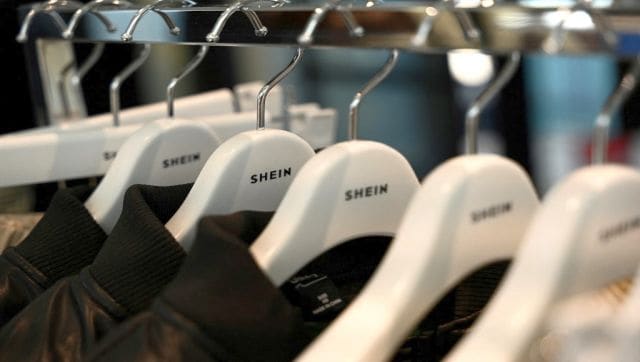 Shein has garnered a sordid reputation thanks to its myriad of controversies. AFP[/caption]Last year, the United Nations published a report that stated that there was reasonable evidence to conclude that forced labour was taking place in China’s far-western region, where activists say more than one million ethnic minority Muslims have been detained in internment camps.Tomoya Obokata, the special rapporteur on contemporary forms of slavery, had stated in the report that evidence of forced labour existed within the region’s system of “vocational skills education and training” centres and a poverty alleviation programme that involves transferring surplus rural labourers to other work.While such programmes created employment and income for ethnic minorities as claimed by the government, evidence pointed to the work in many cases being of an “involuntary nature”, the rapporteur said.“Further, given the nature and extent of powers exercised over workers during forced labour, including excessive surveillance, abusive living and working conditions, restriction of movement through internment, threats, physical and/or sexual violence, and other inhumane or degrading treament, some instances may amount to enslavement as a crime against humanity, meriting a further independent analysis,” Obokata said.For those who don’t know, the Uyghurs speak their own language, which is similar to Turkish, and see themselves as culturally and ethnically close to Central Asian nations. They are mostly practising Muslims. Beijing has long been accused of mistreating the Uyghur population – allegations range from forcibly sterilisation of Uyghur women to committing genocide.
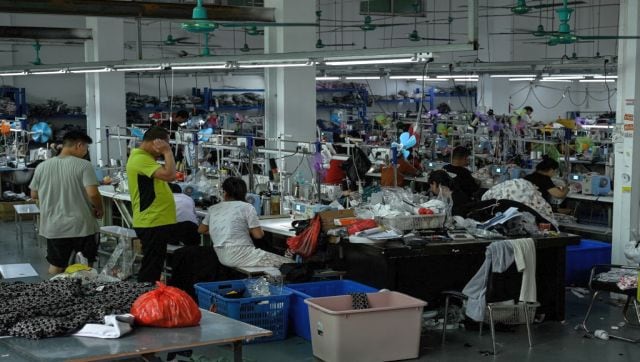 Several reports have revealed that Shein employees work in appalling conditions. They are forced to work for more than 18 hours a day and given only one day off a month. AFP[/caption]Another controversy that the clothing brand was embroiled in was when a documentary by British television network Channel 4 titled ‘Untold: Inside the Shein Machine’ shed light on the horrible working conditions of its employees. The documentary revealed that workers were forced to work up to 18-hour days and were given only one day off a month. In one factory, the documentary showed women washing their hair during lunch breaks, and workers were penalised two-thirds of their daily wage if they made a mistake on a clothing item.Swiss watchdog Public Eye released another detailed report in November 2022, which accused Shein of violating Chinese labour laws. The group hired independent Chinese researchers to track Shein’s manufacturing and packing process in China and Europe and found that many were running informal factories set up in residential buildings.There were also reports that said that the fast fashion giant was selling items with high amounts of lead in it. A Greenpeace report had carried out testing on Shein products and found that 15 per cent of 47 products that were tested contained toxic chemicals that break European Union regulatory limits.SheinSpeaksReacting to claims of using forced labour, Shein spokesperson Peter Pernot-Day said in a prepared statement that the company takes visibility across its entire supply chain seriously.“We are committed to respecting human rights and adhering to local laws and regulations in each market we operate in,” Pernot-Day said. “Our suppliers must adhere to a strict code of conduct that is aligned to the International Labour Organization’s core conventions. We have zero tolerance for forced labour.”With inputs from agenciesRead all the Latest News, Trending News, Cricket News, Bollywood News,India News and Entertainment News here. Follow us on Facebook, Twitter and Instagram.
First Published:May 02, 2023, 13:20:22 IST
Advertisement
Advertisement

Fake jobs, tourist visas: Inside Russia’s vast network luring foreigners to fight Ukraine war
Russia is accused of using fake job offers, tourist visas and lucrative military contracts to recruit thousands of foreign nationals for the Ukraine war. Investigations reveal how poverty, deception and coercion have drawn people from Asia, Africa and Latin America into one of the world's deadliest conflicts
8 min read
Why has Bangladesh’s choice of India spokespersons raised eyebrows?
Bangladesh’s appointment of journalists Md Saidur Rahman and Umme Marufa to media roles in New Delhi and Kolkata has triggered controversy over their past anti-India social media posts, many of which were later deleted, prompting diplomatic scrutiny as India and Bangladesh seek to improve bilateral ties
6 min read
Who is Sandeep Lamba, the Delhi cop removed from protest site duty after slapping female protester?
Sandeep Lamba, an Additional Deputy Commissioner of Police (DCP) (North East District), was seen slapping a female CJP protester in a video on July 20. Lamba has now been removed from the protest site and sent back to his original station. In 2021, Lamba was awarded the Union Home Minister’s medal for excellent investigation
4 min read
Explorers discover wreckage of plane 72 years later. Will this help in finding MH370?
On April 11, 1952, a Pan Am Flight 526A, crashed into the Atlantic Ocean, killing 52 of the 69 people on board. After decades of effort, explorers have found the wreck of the plane at the bottom of the seabed near Puerto Rico. The discovery offers new hope to families who lost loved ones in the Malaysia Airlines Flight 370 crash in 2014
5 min read
Cruise missiles, drones and more... The deadly arsenal of the Houthis
The Houthis have evolved into one of the world's most formidable non-state military forces, deploying anti-ship ballistic missiles, cruise missiles, drones and explosive boats to threaten Red Sea shipping. Their latest attacks on Saudi oil tankers have raised concerns over shipping through the Bab el-Mandeb Strait amid the Strait of Hormuz crisis
10 min read
Advertisement
Advertisement