


Iran formalises Hormuz toll: How will it work? Will India have to pay?
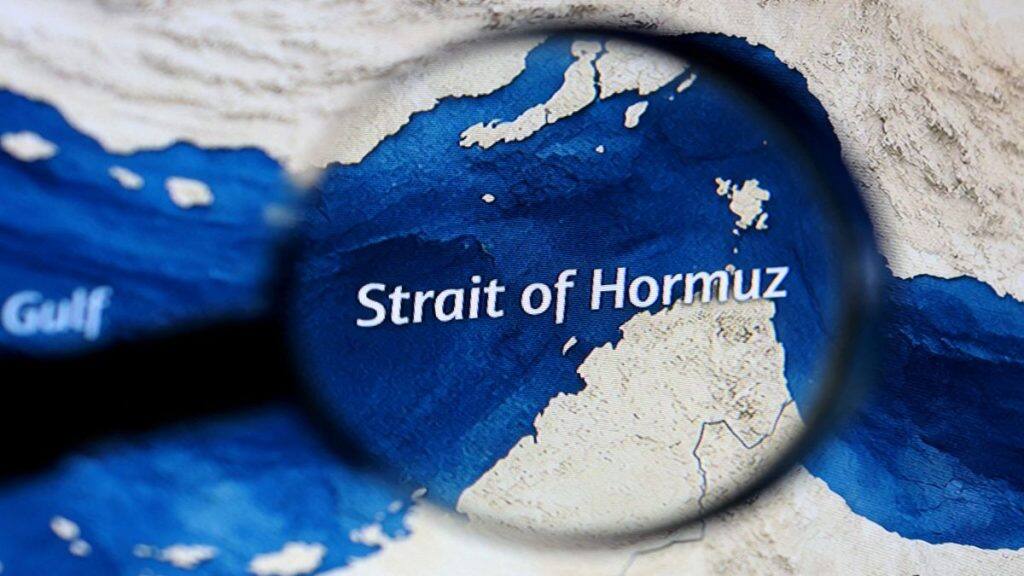
Iran has established a new agency known as the Persian Gulf Strait Authority to collect the tolls from ships in the Strait of Hormuz. Shipping journal Lloyd’s List has said that the agency will also approve transits for ships before they enter the Strait. But what do we know? Will India have to pay

The Iranian government has formalised the toll in the Strait of Hormuz.
Tehran closed the critical maritime chokepoint through which one fifth of the world’s oil and seaborne trade passes since the war began on February 28 after strikes from the United States and Israel.
Trump this week brushed aside Iran’s response to a US peace proposal that sought to reopen negotiations by proposing bringing the fighting to a close before beginning talks on more contentious issues, including Iran's nuclear programme. Iran on Sunday had said the nation should look to end the war on all fronts, including Lebanon, where US ally Israel is fighting Iran-backed Hezbollah militants.
Trump dismissed Iran’s demand for compensation for war damage, acknowledging its sovereignty over the Strait of Hormuz, calling on the United States to end its naval blockade, guarantee no further attacks, lift sanctions and remove a ban on Iranian oil sales as ‘totally unacceptable’.
But what do we know about the Hormuz toll? How will it work? Will India have to pay?
 More from Explainers
Let’s take a closer look
What we know
According to reports, Iran has established a new agency to collect the tolls. Shipping journal Lloyd’s List reported that the agency is known as the Persian Gulf Strait Authority. The agency will also approve transits for ships before they enter the strait.
"The Persian Gulf Strait Authority (PGSA) has already introduced a new framework requiring ships to obtain transit authorisation and pay tolls before sailing," Lloyd's List stated, as per NDTV. It quoted from the form entitled "Vessel Information Declaration" sent by the Persian Gulf Strait Authority, as saying that all ships seeking safe passage through the strait "are required to submit detailed records of ownership, insurance, crew details and intended transit route."
The outlet said that Iranian English-speaking broadcaster Press TV said Tehran had built a "system to exercise sovereignty over the Strait of Hormuz". It added that vessels passing through the strait have been sent "regulations" from the email info@PGSA.ir.
How it will work
According to Sunday Guardian Live, the vessels will likely have to:
- Obtain authorisation from the Persian Gulf Strait Authority,
- Share details of the cargo, and
- Pay transit-related fees.
As per NDTV, the form reportedly has over 40 questions for shipping vessels including their name, identification number, their previous name, country of origin and destination, and nationalities of the vessel's registered owners, operators and crew.
The outlet said that vessels must email “complete and accurate information" to the authority before they can transit the strait. It added that once this is done, “further instructions will be communicated via email" to the ships. It also added that incorrect or incomplete information could lead to consequences for the vessels.
Reuters said Iran began implementing the new oversight mechanism on May 5. However, Iranian state-linked media called it a “traffic management” framework for the waterway.
Will India have to pay?
That remains to be seen.
According to Sunday Guardian Live, those countries that are friendly or diplomatically aligned with Iran are being considered for priority passage. This includes nations such as:
- India
- China
- Pakistan
- Russia
It must be noted that India has previously negotiated with Iran to get its ships stranded near the Strait home. India has thus far brought home around a dozen vessels from West Asia via the Strait.
Some Gulf nations and trading partners in Asia may also be given consideration by Tehran. However, those vessels with links to Israel and the United States could face restrictions. At this moment, the specifics regarding the rules and whether all commercial operators will have to pay remain unknown.
However, Lloyd's List reported that some operators have already paid millions of dollars to secure transit approval in the Strait of Hormuz. One operator paid at least around $2 million (Rs 19.04 crore).
According to Reuters, while Tehran’s move would be illegal under the United Nations Convention on the Law of the Sea (UNCLOS), it remains to be seen who could challenge it. While both the International Tribunal for the Law of the Sea and the International Court of Justice could rule against it, such verdicts are non-binding on Iran.
"Countries that comply with the United States by imposing sanctions on the Islamic Republic of Iran will certainly face difficulties crossing the strait," army official Mohammad Akraminia told Iran's official IRNA news agency on Sunday. "We have established a new legal and security system in the Strait of Hormuz. From now on, any vessel wishing to pass through it must coordinate with us," he added. Akraminia said that the system was "now in force" and would bring "economic, security and political gains".
Ebrahim Azizi, head of the Iranian parliament's national security commission, wrote on X, "We warn governments, including microstates like Bahrain, that siding with the US-backed resolution will bring severe consequences. The Strait of Hormuz is a vital lifeline; do not risk closing it on yourselves forever.”
Supreme Leader Mojtaba Khamenei last week wrote on Telegram about a "new regional and global order under the strategy of a strong Iran" where there would be "no place for foreigners and their mischief". He spoke of "using the leverage of closing the strait" to achieve that vision.
Trump in April had announced a blockade of the already closed passageway by the US Navy after talks between the two countries fell through. Trump claimed this was done after “Iran promised to open the Strait of Hormuz” and “knowingly failed to do so”.
FAQs
1. What is the Strait of Hormuz toll introduced by Iran?
Iran has introduced a system requiring ships to obtain authorisation, submit detailed vessel and cargo information, and pay transit-related fees before passing through the Strait of Hormuz.
2. Will India have to pay the Hormuz toll?
It is not yet clear. Countries like India that are diplomatically aligned with Iran may receive priority passage, but whether they will be exempt from fees remains uncertain.
3. How much are ships being charged for transit?
The exact toll structure is unclear, but reports suggest some operators have already paid millions of dollars, including at least around $2 million (Rs 19.04 crore), to secure transit approval.
With inputs from agencies

Delhi Police asks personnel to wear uniform: What the law says on cops in plainclothes during protests
Military drones & police check-ups: How Sri Lanka is fighting against worst dengue outbreak in a decade
How Facebook job ad lured 2 Karnataka men into Myanmar cyber scam camp
Why is India seeing 95% cloud cover despite a Super El Niño?
What is CJP’s fourth demand to the government as protests in Delhi intensify?