


In Graphics | A last-minute guide to today’s total solar eclipse
The total solar eclipse will traverse around 15 US states, Mexico, and parts of eastern Canada, offering millions a mesmerising sight. Here is why the event is rare

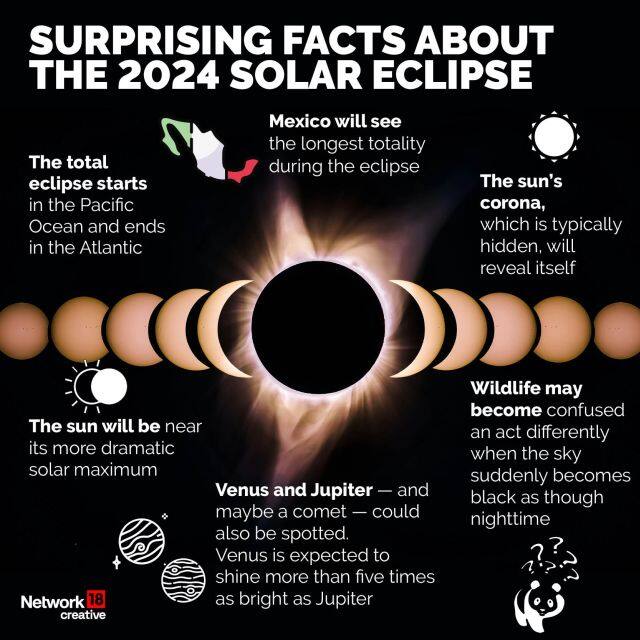
A total solar eclipse will cross North America today.
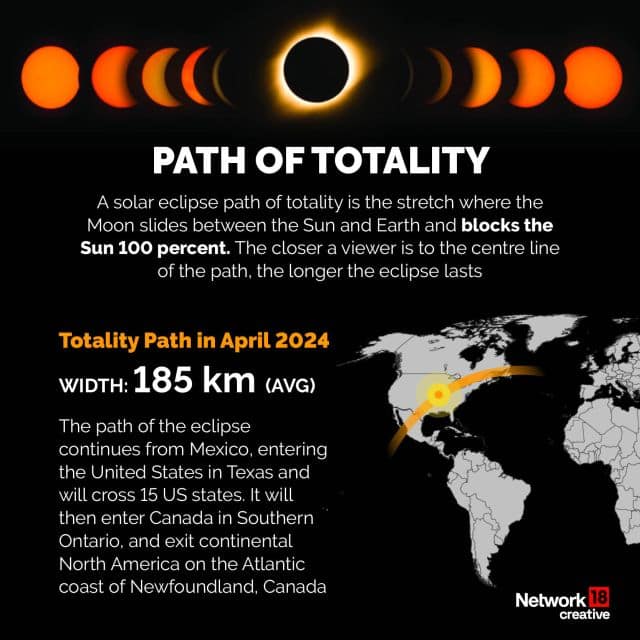
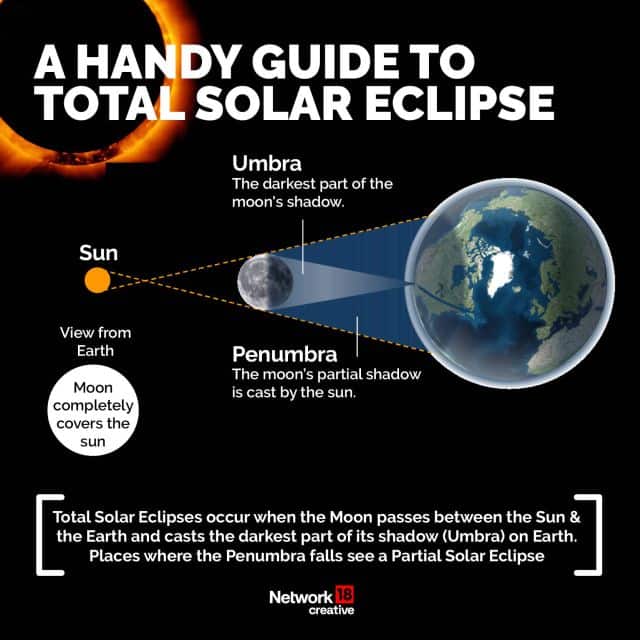
It is a phenomenon when the moon aligns precisely between the Sun and Earth, casting a sweeping shadow across the landscape. This year's eclipse will traverse around 15 US states, Mexico, and parts of eastern Canada, offering millions a mesmerising sight. This one is special as it won’t be visible for most of North America again until 2044 today.
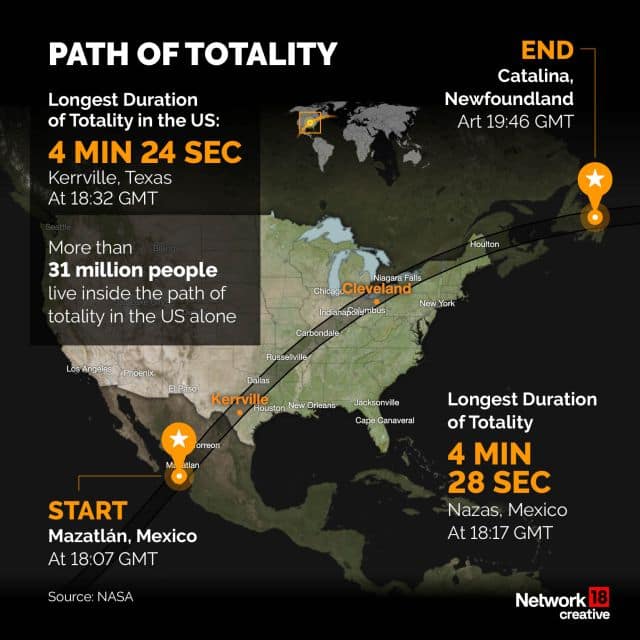
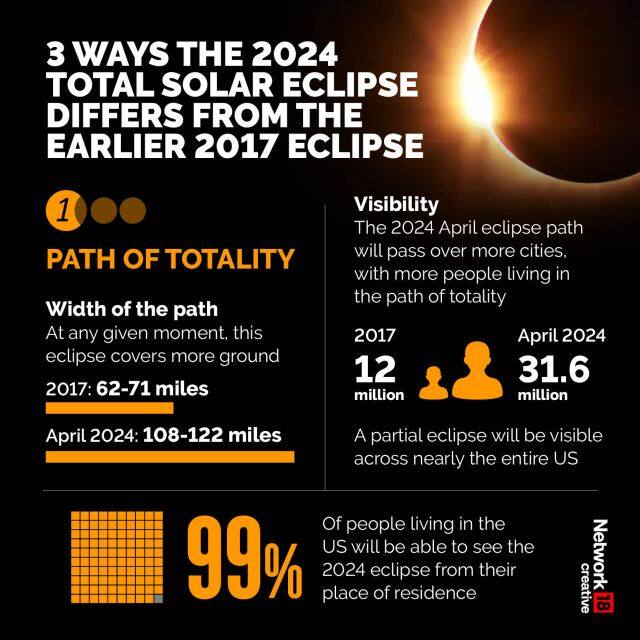
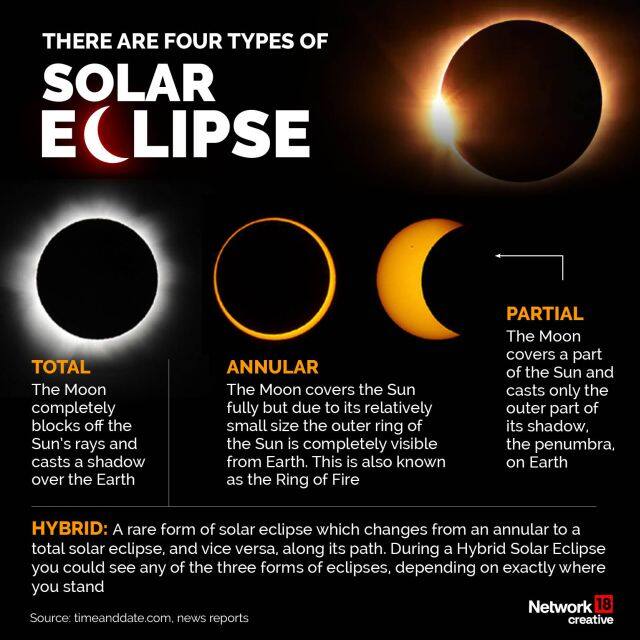
Those fortunate enough to be in the path of totality, where the Sun is completely obscured, will experience moments of midday darkness. Even outside this path, viewers across the continent can see a partial eclipse, marked by the Moon creating a captivating crescent shape as it partially covers the sun. According to NASA, around 31.6 million people live within what’s known as the path of totality, where the total solar eclipse will be visible, with an additional 150 million people living within 200 miles of the path.
 More from Explainers
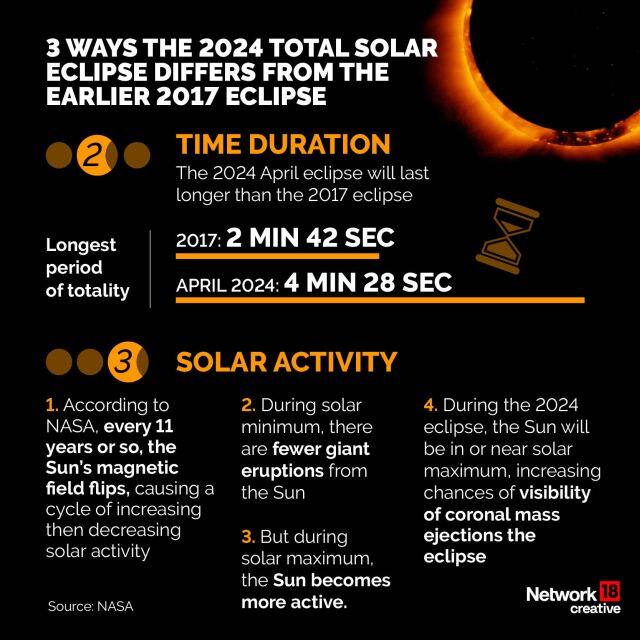
While the duration varies by location, some areas will see the moon fully eclipse the sun for up to four minutes and 28 seconds.
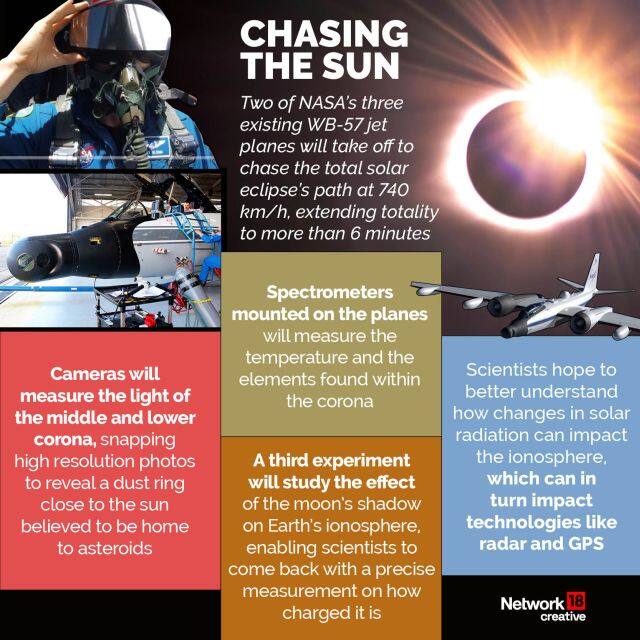
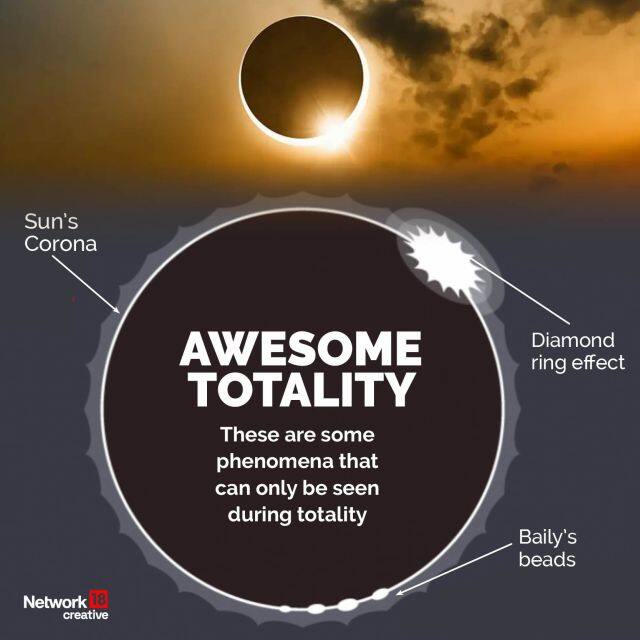
We provide a visual guide to tell you everything about this remarkable phenomenon.

Tags

Military drones & police check-ups: How Sri Lanka is fighting against worst dengue outbreak in a decade
How Facebook job ad lured 2 Karnataka men into Myanmar cyber scam camp
Why is India seeing 95% cloud cover despite a Super El Niño?
What is CJP’s fourth demand to the government as protests in Delhi intensify?
The new geography of war: Why the Houthis can no longer be ignored