


In 1877, a super El Niño killed millions. How deadly will it be this year?
Scientists have warned that a super El Niño is slowly approaching, reviving fears of 1877. A similar weather phenomenon had occurred 150 years ago, killing tens of millions across the world

By now, most of us are familiar with El Niño.
This is a warming of the central and eastern Pacific Ocean which alters atmospheric circulation and weakens monsoon winds over the Indian subcontinent. It arrives every few years.
However, scientists say that this year a super El Niño appears to be in the offing. A previous such weather phenomenon that occurred in 1877 left tens of millions dead across the world.
But what do we know? What can we expect?
Let’s take a closer look:
A brief look at El Niño and super El Niño
El Niño is part of a larger weather pattern known as the El Niño-Southern Oscillation (ENSO) that also comprises La Niña. The term has its origins in the 19th century. It was the fishermen of northern Peru who coined it. In Spanish, it means ‘little boy’ or ‘Christ child’ (when capitalised), whereas La Niña means ‘little girl’.
 More from Explainers
El Niño occurs on average every two years and usually lasts around a year. It is the opposite of La Niña, which cools the tropical eastern Pacific, and occurs more frequently. El Niño impacts everything from ocean temperatures to the speed and strength of ocean currents, the health of coastal fisheries, and weather from Australia to South America and Asia. The Oceanic Niño Index (ONI) is used to monitor how far the temperature exceeds normal sea surface temperatures.
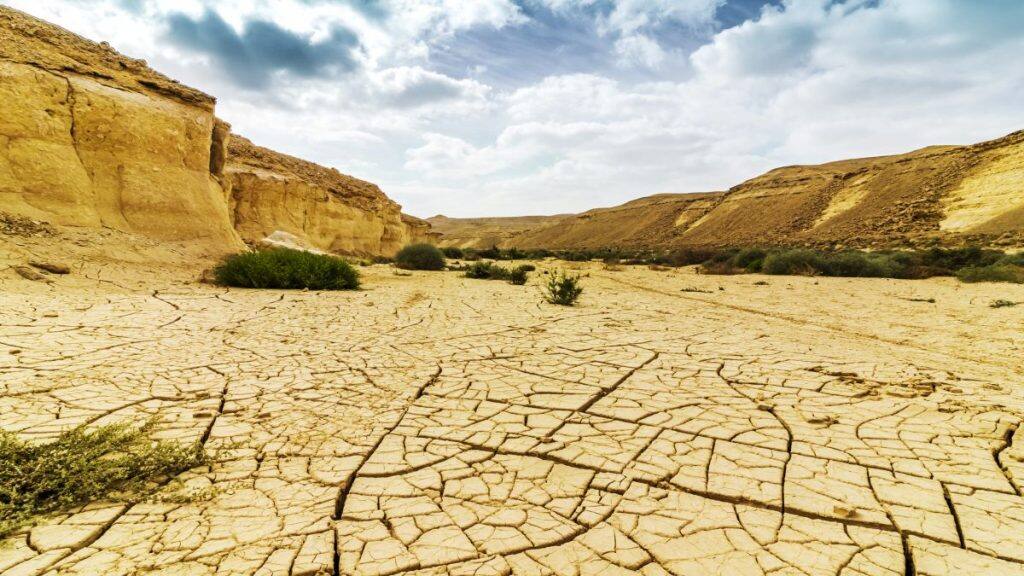
In the past, India has seen below-average rainfall in most El Niño years, at times triggering severe droughts that ravaged crops and prompted export curbs on certain grains.
A ‘super’ El Niño refers to a far stronger version of this event. This occurs when sea surface temperatures increase at least 2 degrees Celsius above normal, as per Matthew Sittel, assistant state climatologist at Kansas State University. This is a rare event. One of the biggest such phenomena occurred 149 years ago.
What happened in 1877
A historic super El Niño occurred from 1877 to 1878. A NOAA paper found that the 1877/78 super El Niño may have been one of the strongest such events on record.
According to The Week, this resulted in droughts and mass famine across the world. At least 50 million people were left dead – around three to four per cent of the world’s population – in the Great Drought.
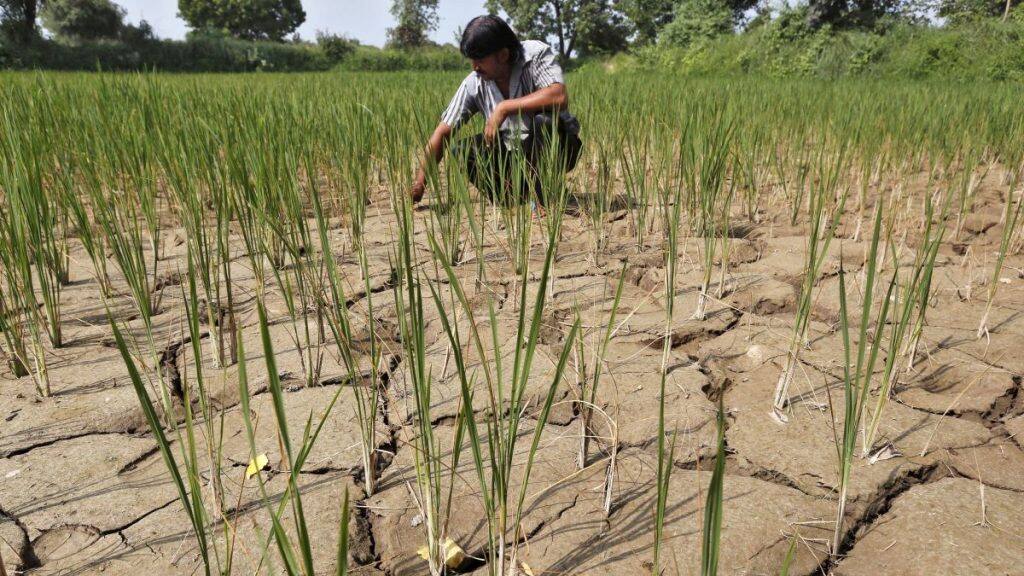
Research published in the American Meteorological Society estimated that between 12.2 and 29.3 million died in India, between 19.5 and 30 million in China, and around 2 million in Brazil. Countries such as Egypt, India and China suffered heavily and also witnessed outbreaks of “malaria, plague, dysentery, smallpox and cholera”, which ravaged “famine-weakened populations”.
The research described the historic super El Niño as “arguably the worst environmental disaster to ever befall humanity”. They compared the toll of the super El Niño to both World Wars and the 1918–1919 influenza epidemic.
What can we expect
The Washington Post quoted the latest data from the European Centre for Medium-Range Weather Forecasts (ECMWF) as showing that water temperatures in a key region of the central equatorial Pacific Ocean could potentially exceed 3 degrees Celsius above average late in 2026. This means that this super El Niño could be even more powerful than the one in 1877.
State University of New York at Albany’s Paul Roundy told the newspaper that this year could be “potentially the biggest El Niño event” since 1877. “Confidence is clearly shifting higher on potentially the biggest El Niño event since the 1870s,” Roundy said.
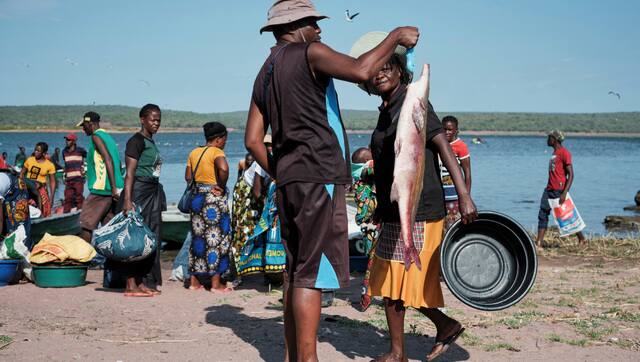
The outlet said that this could see the equatorial Pacific Ocean waters “shift patterns of droughts, floods, heat, humidity and sea ice across the planet” and result in a “higher frequency of heatwaves” across much of the United States. Climate scientist Katharine Hayhoe told the newspaper it could have a “profound impact on human society and human well-being”.
Inside Climate News says the super El Niño could “lock Earth into a hotter climate” and leave “lasting changes in heat, rainfall and drought patterns” around the world. More disturbingly, it could “permanently push” the planet past the long-dreaded 1.5 degrees Celsius mark that could see the world suffer “potentially irreversible climate impacts”.
David Wallace-Wells, sounding an ominous note, told The New York Times that the world is about to learn “how much climate disruption we can manage at the moment”. Wells said that while the super El Niño may not “produce nearly as much human suffering as the one of 150 years ago”, it will “almost certainly” make 2027 the “hottest year on record by some margin”.
India’s weather office has forecast a below-average monsoon in 2026, with an El Niño expected to develop and weigh on rainfall in the latter half of the June to September season. While El Niño is strongly linked to weaker monsoons, India has still seen average or above-average rains in at least five of 17 such events over the past seven decades.
However, in the last six El Niño years, India has received below-average rains. The monsoon delivers nearly 70% of India’s rainfall and is vital for the agricultural sector, which accounts for about 18% of the nearly $4 trillion (Rs. ~3,32,00,000 crore) economy and employs nearly half of India’s 1.5 billion people.
Below-normal rainfall could mean smaller harvests of crops such as rice, cotton and soyabeans, while also weighing on winter crops like wheat and rapeseed due to lower soil moisture. It may prompt New Delhi to restrict exports of some farm goods, as it did during the 2023 El Niño year. It could also force India to increase imports of edible oils, particularly palm oil and soya oil. A weaker monsoon could also hit power generation by reducing hydropower output, which accounts for about 6 per cent of the mix.
FAQs
1. What is a super El Niño?
A super El Niño is an unusually strong El Niño event where sea surface temperatures in the Pacific rise at least 2°C above normal.
2. Why was the 1877–78 El Niño so devastating?
It triggered widespread droughts across multiple continents, leading to crop failures, disease outbreaks and famines that left at least 50 million dead across the world.
3. How could a super El Niño affect India?
An El Niño usually weakens the monsoon, leading to below-average rainfall, reduced agricultural output, higher food prices and potential stress on power generation and water resources. A super El Niño could make things far worse.
With inputs from agencies
Tags

Delhi Police asks personnel to wear uniform: What the law says on cops in plainclothes during protests
Military drones & police check-ups: How Sri Lanka is fighting against worst dengue outbreak in a decade
How Facebook job ad lured 2 Karnataka men into Myanmar cyber scam camp
Why is India seeing 95% cloud cover despite a Super El Niño?
What is CJP’s fourth demand to the government as protests in Delhi intensify?