


History Today: How Windsor Castle was left in shambles after a deadly fire
November 20 marks 33 years of the nightmare that began at 11 am when Windsor Castle, the largest inhabited castle in Europe, caught fire. It’s also on this day, twenty-four high-ranking Nazis went on trial in Nuremberg, Germany, for atrocities committed during World War II

Thirty-three years ago, a tragedy struck Windsor Castle. A blaze broke out at Queen Victoria’s private chapel, sending shockwaves and making headlines across the world.Home to late Queen Elizabeth, it was first constructed in the 11th century by William the Conqueror. The castle, which was also the historic royal residence, was engulfed in flames; later, 1992 was termed “the horrible year.”
The intensity of the fire was so uncontrollable that it not only destroyed the room the fire ignited in, but it also spread across the castle.
In this edition of Firstpost’s ongoing series of History Today, we recall the extensive damage the massive fire caused at Windsor Castle and more.
 More from Explainers
The 1992 Windsor Castle Fire
A devastating tragedy occurred on November 20, 1992. The fire broke out in Queen Victoria's Private Chapel around 11:30 am.
It was caused by a faulty spotlight that set fire to a curtain next to the altar in Queen Victoria's Private chapel. In a matter of minutes, the blaze spread to St. George's Hall next door, Brunswick Tower, as well as the surrounding private apartments.
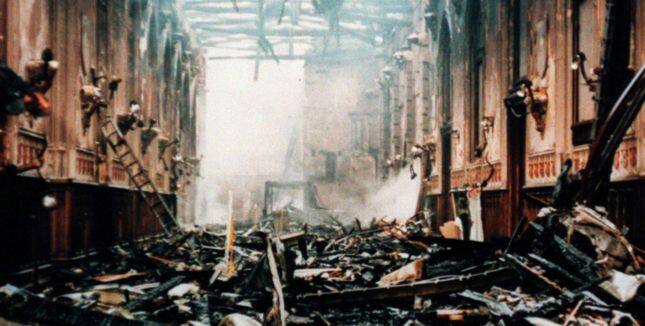
When the blaze began, Queen Elizabeth II was not inside the castle, but her son, Prince Andrew, was present when it caught fire. Andrew was not in the private chapel room; however, he found himself horrified while looking at the smoky scene.
Speaking to the reporter at the time, he asserted, “I heard the fire alarm, and when I came out of the room, I could see the smoke. My reaction was shock and horror at the fact that it took hold so quickly.”
Queen Elizabeth was not present at the site when the incident took place, however, she rushed from Buckingham Palace in London to Windsor Castle to remove priceless paintings from the 900-year-old palace.
More than 220 firemen from seven counties rushed to the spot, trying to put out the blaze. According to the Royal Collection Trust, 36 pumps were used to spray 1.5 million gallons of water, and the firemen worked nonstop for 15 hours.
Despite several attempts to remove all of the prized possessions from the Castle, far more damage was done to the building as a whole.
The fire damaged 115 rooms in the Windsor, including the nine official staterooms, and St. George's Hall’s soaring gallery collapsed completely.
Back then, experts estimated that repairs would cost up to $90 million and might take 10 years to complete.
A major controversy erupted after then-Prime Minister John Major suggested that the British Parliament should pay for the restoration of the castle.
It was then that Queen Elizabeth opened the doors of Buckingham Palace to visitors for the first time in history, using the admission fees to fund most of the reconstruction of Windsor Castle.
On November 20, 1997, five years to the day after the fire, the castle was officially restored.
The Los Angeles Times reported the total restoration cost, which was approximately $60 million.
The Nuremberg Trials
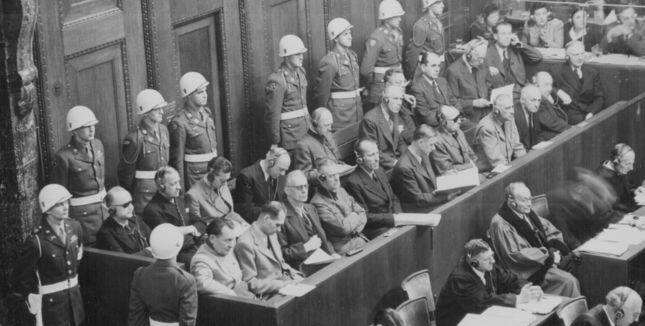
On this day, a series of trials was held in Germany’s Nuremberg, in which former Nazi leaders were indicted for committing atrocities during World War II.
An International Military Tribunal conducted the trial, comprising representatives from the United States, the Soviet Union, France and Great Britain.
The defendants faced charges including crimes against peace, crimes against humanity, violations of the laws of war, etc.
On October 1, 1946, three were acquitted, and seven others were sentenced to prison. Among 24 defendants, one, Robert Ley, committed suicide while in prison.
Ten of the architects of Nazi policy were hanged on October 16, 1946. Hermann Göring, the highest-ranking of all Nazi officials, called as the “leading war aggressor and an oppressive program creator against the Jews,” poisoned himself a day before his execution was scheduled.
Rejecting defenses from the defendants, the International Military Tribunal rejected the contention that only a state, and not individuals, could be found guilty of war crimes.
With inputs from agencies

Military drones & police check-ups: How Sri Lanka is fighting against worst dengue outbreak in a decade
How Facebook job ad lured 2 Karnataka men into Myanmar cyber scam camp
Why is India seeing 95% cloud cover despite a Super El Niño?
What is CJP’s fourth demand to the government as protests in Delhi intensify?
The new geography of war: Why the Houthis can no longer be ignored