


History Today: How India's Babri Masjid was demolished 33 years ago
December 6 marks the 33rd anniversary of the Babri Masjid demolition, a day that marked a pivotal moment in India's history. It's also on this day that Dr Adrian Kantrowitz undertook the first paediatric heart transplant at Maimonides Hospital in Brooklyn, New York

It was a seminal moment. The Babri Masjid demolition marked a pivotal moment in India's history, fueling religious debate and politics. A sea of karsevaks converged from across the country, brought down the sixteenth-century mosque Babri Masjid in Ayodhya on December 6, 1992. The claim was that it is built on the site of a temple destroyed by Muslim rulers.
It was a long-planned campaign spearheaded by rightwingers, believing that this mosque was the birthplace of Lord Ram.
In this edition of Firstpost’s ongoing series of History Today, we reflect on the anniversary of this event and more.
The demolition of Babri Masjid
It was a moment that shook India's foundation. Hindu devotees with Ram inscribed on their heads, raising slogans, climbed and demolished the Babri Mosque.
 More from Explainers
On December 6, 1992, Vishwa Hindu Parishad (VHP) declared a kar seva at Ayodhya. LK Advani, Murli Manohar Joshi, Uma Bharti, and others were among the top brass present during that time in Ayodhya.
The then Chief Minister of Uttar Pradesh, Kalyan Singh, filed an affidavit in the Supreme Court, assuring that the structure would not be harmed.
According to the reports, between 70,000 and 150,000 gathered near the dispute site.
Speeches were delivered at the dais, slogans were raised. Minutes after that, the security breach and demolition occurred.
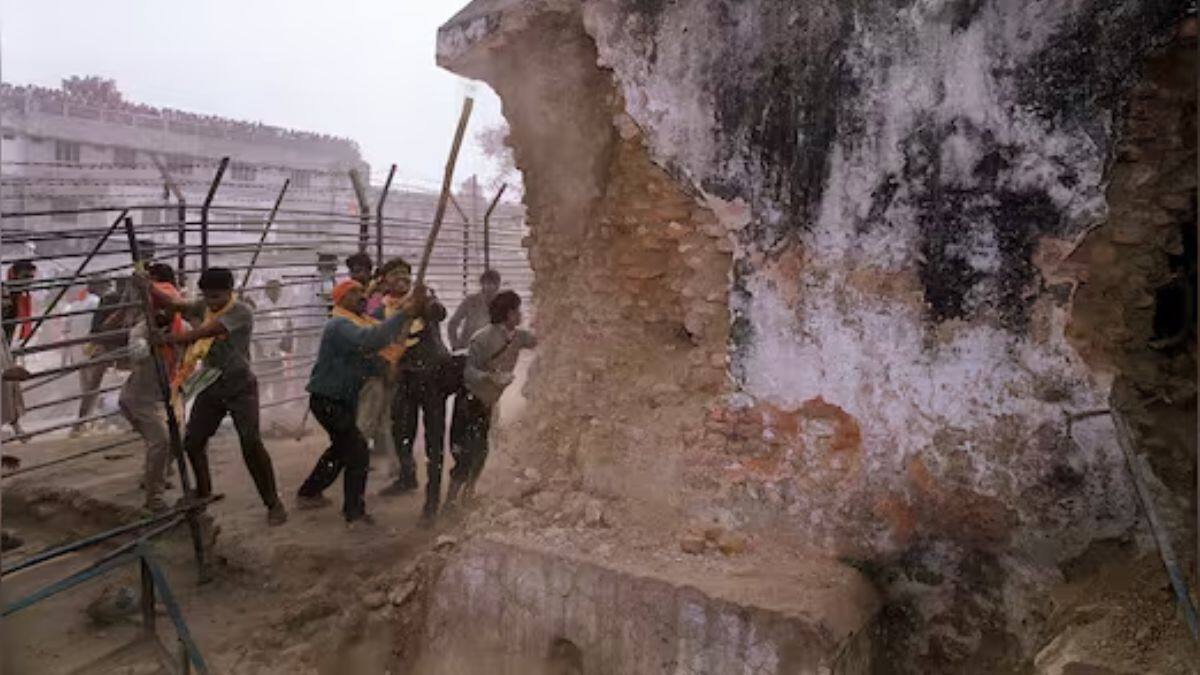
At first, a group of people breached the first police area and moved towards the building. As per several press reports, stones were thrown in the direction of cops, and minutes after that, people climbed on the domes of Babri Masjid.
Tools like hammers, pickaxes, iron rods, and ropes were used.
The first dome collapsed around 2:55 pm, while the second dome collapsed between 3:50 and 4:45 pm. The structure was completely brought down after the collapse of the third dome, as per reports.
Several reporters’ cameras, equipment were damaged following the incident. A flurry of FIRs was registered against unidentified kar sevaks.
In its aftermath, demolition led to widespread communal violence across India, and the scale of mobilisation altered Ayodhya’s socio-political landscape permanently.
Following the incident, a series of legal and political battles ensued. The Allahabad High Court, in 2010, ruled in favour of a three-way division of the disputed land. The division was offered between the Sunni Waqf Board, the Nirmohi Akhara, and the Ram Lalla deity.
However, the same verdict was challenged in India’s Supreme Court, leading to a landmark judgment in 2019.
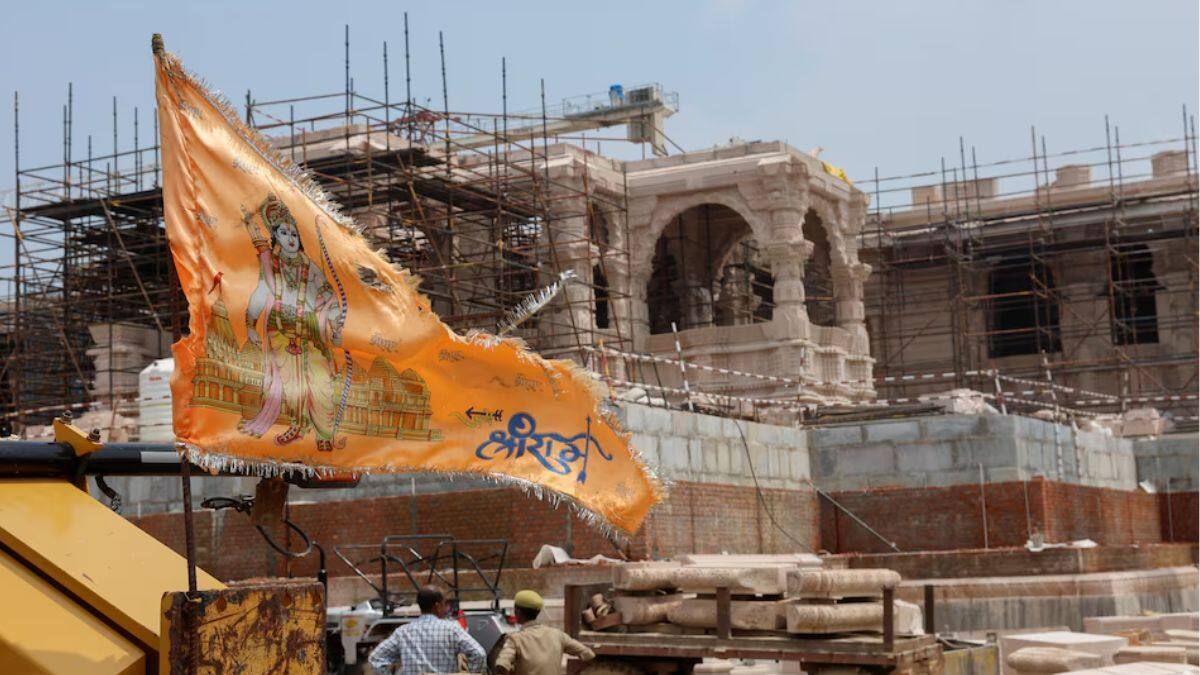
Unanimously, the Supreme Court, in 2019, awarded the entire 2.77-acre disputed land to the Ram Janmabhoomi Trust for the construction of the Ram temple.
The court also directed the ruling government to allot five acres of land to the Sunni Waqf Board for a mosque, somewhere else in Ayodhya.
When world's first heart transplant occurred
On this day, the first paediatric heart transplant was undertaken by Dr Adrian Kantrowitz and his associates, on a 17-day-old infant with Ebstein anomaly.
It took place three days after Dr Christian Barnard’s first human-to-human transplant occurred on December 3, 1967, in South Africa.
Nearly 20 years later, in 1984, Dr Denton Cooley and his colleagues performed the first successful infant heart transplant on an 8-month-old girl at Texas Children’s Hospital (TCH)
More than 6,000 pediatric heart transplants have been performed since 1982, and a positive and consistent improvement in survival rates.
With inputs from agencies

Why India may not witness a medal rush at 2026 Commonwealth Games
Delhi Police asks personnel to wear uniform: What the law says on cops in plainclothes during protests
Military drones & police check-ups: How Sri Lanka is fighting against worst dengue outbreak in a decade
How Facebook job ad lured 2 Karnataka men into Myanmar cyber scam camp
Why is India seeing 95% cloud cover despite a Super El Niño?