
Advertisement


Sections
Nijjar vs Pannun: Why India’s response to Canada and US probes is so different
There has been a difference in the way India has reacted to allegations of being involved in the murder of Khalistani Hardeep Singh Nijjar in Canada and the attempted assassination of Gurpatwant Singh Pannun on US soil. One of the reasons for the contrast is the evidence shared by both nations

Five days ago, the Financial Times published a report stating that the United States had foiled an assassination bid against Khalistan advocate and leader of the Sikhs for Justice (SFJ) group, Gurpatwant Singh Pannun, and additionally issued a warning to India over concerns that it was involved in the plot.Reacting to the report, New Delhi said it had received “some inputs” from the US during recent discussions on security matters, with Ministry of External Affairs (MEA) spokesperson Arindam Bagchi saying that these inputs pertained to a “nexus” between organised criminals, terrorists and others, but did not specify where. The statement made no mention of Pannun.Further, Bagchi said, “On its part, India takes such inputs seriously since it impinges on our own national security interests as well. Issues in the context of US inputs are already being examined by relevant departments.”Notably, New Delhi’s response to the attempted assassination attempt on Pannun is far different from its reaction to Canada’s allegation that India had a role in the June killing of Hardeep Singh Nijjar, a Khalistani separatist.But why is there a difference in reactions?Nijjar killing vs Pannun assassination attemptOn 19 June, Khalistani leader Hardeep Singh Nijjar was shot dead in Vancouver, British Columbia. According to investigators, he was exiting the Guru Nanak Sikh Gurdwara in Surrey, Vancouver around 8.30 pm when unknown assailants shot at him multiple times.A Washington Post report citing video footage from the site of the shooting had said that Nijjar was killed in a coordinated attack by at least six men who arrived in two vehicles. It further reported that the attackers – two of them in hooded sweatshirts – fired roughly 50 bullets, of which 34 hit Nijjar.Notably, Nijjar was a wanted man in India for his anti-India activities. In 2016, he was suspected of masterminding a bombing in the Sikh-majority state of Punjab and training terrorists in a small city southeast of Vancouver. He denied the allegations.In 2020, Indian authorities claimed Nijjar was a member of a banned group and designated him a terrorist. That year, they also filed a criminal case against him.[caption id="attachment_13439402" align="alignnone" width="640"]![]() A sign asking for an investigation on India's role in the killing of Hardeep Singh Nijjar is seen at the Guru Nanak Sikh Gurdwara temple, in Surrey, British Columbia, Canada. File image/Reuters[/caption]Following his killing, in September, Canada’s prime minister Justin Trudeau told his country’s Parliament that his government was investigating “credible allegations” that Indian government agents were linked to the June slaying and had also expelled an Indian diplomat.At the time, India had rejected these allegations, calling them “absurd and motivated” and in a tit-for-tat move expelled a Canadian diplomat. Later, ties worsened when India suspended visa services for Canadians – a move they have reversed for some since then – and also asked for the withdrawal of 41 diplomats.On the other hand, the Financial Times reported on the assassination attempt on Gurpatwant Singh Pannun earlier this month. However, the British daily didn’t give any details about the attempt, or how US officials became aware of the plot or how the alleged assassination was thwarted. It, however, stated that US president Joe Biden had raised the issue in a discussion with Prime Minister Narendra Modi during a G20 Summit in New Delhi.Following the FT report, the White House confirmed that it had raised the issue with senior Indian officials and it was being treated with utmost seriousness. “It has been raised by the US government with the Indian government, including at the senior-most levels,” said Adrienne Watson, a spokeswoman for the White House National Security Council.India’s contrasting responsesIt’s interesting to note that New Delhi has had two very contrasting ways in responding to Washington and Ottawa in the Nijjar and Pannun incidents respectively.In the case of Nijjar’s killing and Canada’s subsequent allegation, India first angrily refuted the claims, calling it “absurd and motivated”. After Canada expelled an Indian diplomat posted in Ottawa, Delhi expelled a Canadian diplomat based in New Delhi.India then issued a travel advisory for Indian nationals travelling to Canada and cautioned students, professionals and tourists. It suspended visa services in Canada and also stopped e-visa services; e-visas were resumed last Wednesday.India also forced Canada to withdraw 41 of its diplomats from its High Commission in New Delhi.The Ministry of External Affairs had then described Canada as a “safe haven” for “terrorists, extremists and organised crime” — its sharpest rebuke for a Western country in recent years.In early November, India’s high commissioner to Canada Sanjay Kumar Verma had said that Canadian authorities had not provided India with concrete evidence of Indian involvement in Hardeep Singh Nijjar’s death. “There is no specific or relevant information provided in this case for us to assist them in the investigation,” Verma was quoted as saying.He added: “Where is the evidence? Where is the conclusion of the investigation?… I would go a step further and say now the investigation has already been tainted. A direction has come from someone at a high level to say India or Indian agents are behind it.”However, in the Pannun matter, New Delhi’s reaction has been very different. Hours after the report was published, Arindam Bagchi, spokesperson for MEA, said, “During the course of recent discussions on India-US security cooperation, the US side shared some inputs pertaining to the nexus between organised criminals, gun-runners, terrorists and others. The inputs are a cause of concern for both countries and they decided to take necessary follow-up action.”“On its part, India takes such inputs seriously since it impinges on our own national security interests as well. Issues in the context of US inputs are already being examined by relevant departments,” he said.Why the contrast in responsesSo, why is it that there’s such a contrast to New Delhi’s responses to Washington and Ottawa? The Indian high commissioner to Canada has an answer to it. Sanjay Kumar Verma told CTV’s Question Period that India was co-operating with the American investigation into an alleged thwarted assassination attempt, but not Canada’s investigation into the June killing of a Sikh leader, because of a disparity between the information both countries have shared in their probes.He told the host of the show that his understanding was that the US authorities have shared more specific information with India over the course of an investigation than Canada has, and that is likely the differentiating factor in the level of India’s cooperation in both cases.He was quoted as saying, “One is that the investigation in the case of the US, as far as I know and understand, because again, I don't oversee India-US relations is at a much advanced stage. And therefore, I presume that there would be better information shared within India.”“Those inputs are a nexus between gangsters, drug peddlers, terrorists, and gun runners in the US, and there is a belief that some of the Indian connections – now when I say Indian connections, I don’t mean Government of India connections, there’s 1.4 billion people. Because we have got inputs, which are legally presentable,” he said.When asked why New Delhi was choosing not to cooperate on the probe pertaining to Nijjar’s killing, he countered that there were reasons to it. Outlining them, he said: “If you look at the typical criminal terminology, when someone asks us to cooperate, which means that you have already been convicted, and you better cooperate. So we took it in a very different interpretation. But we always said that if there is anything specific and relevant, and communicated to us, we will look into it.”[caption id="attachment_13439432" align="alignnone" width="640"]
A sign asking for an investigation on India's role in the killing of Hardeep Singh Nijjar is seen at the Guru Nanak Sikh Gurdwara temple, in Surrey, British Columbia, Canada. File image/Reuters[/caption]Following his killing, in September, Canada’s prime minister Justin Trudeau told his country’s Parliament that his government was investigating “credible allegations” that Indian government agents were linked to the June slaying and had also expelled an Indian diplomat.At the time, India had rejected these allegations, calling them “absurd and motivated” and in a tit-for-tat move expelled a Canadian diplomat. Later, ties worsened when India suspended visa services for Canadians – a move they have reversed for some since then – and also asked for the withdrawal of 41 diplomats.On the other hand, the Financial Times reported on the assassination attempt on Gurpatwant Singh Pannun earlier this month. However, the British daily didn’t give any details about the attempt, or how US officials became aware of the plot or how the alleged assassination was thwarted. It, however, stated that US president Joe Biden had raised the issue in a discussion with Prime Minister Narendra Modi during a G20 Summit in New Delhi.Following the FT report, the White House confirmed that it had raised the issue with senior Indian officials and it was being treated with utmost seriousness. “It has been raised by the US government with the Indian government, including at the senior-most levels,” said Adrienne Watson, a spokeswoman for the White House National Security Council.India’s contrasting responsesIt’s interesting to note that New Delhi has had two very contrasting ways in responding to Washington and Ottawa in the Nijjar and Pannun incidents respectively.In the case of Nijjar’s killing and Canada’s subsequent allegation, India first angrily refuted the claims, calling it “absurd and motivated”. After Canada expelled an Indian diplomat posted in Ottawa, Delhi expelled a Canadian diplomat based in New Delhi.India then issued a travel advisory for Indian nationals travelling to Canada and cautioned students, professionals and tourists. It suspended visa services in Canada and also stopped e-visa services; e-visas were resumed last Wednesday.India also forced Canada to withdraw 41 of its diplomats from its High Commission in New Delhi.The Ministry of External Affairs had then described Canada as a “safe haven” for “terrorists, extremists and organised crime” — its sharpest rebuke for a Western country in recent years.In early November, India’s high commissioner to Canada Sanjay Kumar Verma had said that Canadian authorities had not provided India with concrete evidence of Indian involvement in Hardeep Singh Nijjar’s death. “There is no specific or relevant information provided in this case for us to assist them in the investigation,” Verma was quoted as saying.He added: “Where is the evidence? Where is the conclusion of the investigation?… I would go a step further and say now the investigation has already been tainted. A direction has come from someone at a high level to say India or Indian agents are behind it.”However, in the Pannun matter, New Delhi’s reaction has been very different. Hours after the report was published, Arindam Bagchi, spokesperson for MEA, said, “During the course of recent discussions on India-US security cooperation, the US side shared some inputs pertaining to the nexus between organised criminals, gun-runners, terrorists and others. The inputs are a cause of concern for both countries and they decided to take necessary follow-up action.”“On its part, India takes such inputs seriously since it impinges on our own national security interests as well. Issues in the context of US inputs are already being examined by relevant departments,” he said.Why the contrast in responsesSo, why is it that there’s such a contrast to New Delhi’s responses to Washington and Ottawa? The Indian high commissioner to Canada has an answer to it. Sanjay Kumar Verma told CTV’s Question Period that India was co-operating with the American investigation into an alleged thwarted assassination attempt, but not Canada’s investigation into the June killing of a Sikh leader, because of a disparity between the information both countries have shared in their probes.He told the host of the show that his understanding was that the US authorities have shared more specific information with India over the course of an investigation than Canada has, and that is likely the differentiating factor in the level of India’s cooperation in both cases.He was quoted as saying, “One is that the investigation in the case of the US, as far as I know and understand, because again, I don't oversee India-US relations is at a much advanced stage. And therefore, I presume that there would be better information shared within India.”“Those inputs are a nexus between gangsters, drug peddlers, terrorists, and gun runners in the US, and there is a belief that some of the Indian connections – now when I say Indian connections, I don’t mean Government of India connections, there’s 1.4 billion people. Because we have got inputs, which are legally presentable,” he said.When asked why New Delhi was choosing not to cooperate on the probe pertaining to Nijjar’s killing, he countered that there were reasons to it. Outlining them, he said: “If you look at the typical criminal terminology, when someone asks us to cooperate, which means that you have already been convicted, and you better cooperate. So we took it in a very different interpretation. But we always said that if there is anything specific and relevant, and communicated to us, we will look into it.”[caption id="attachment_13439432" align="alignnone" width="640"]![]() Demonstrators holding flags and signs protest outside India's consulate, a week after Canada's Prime Minister Justin Trudeau raised the prospect of New Delhi's involvement in the murder of Sikh separatist leader Hardeep Singh Nijjar, in Vancouver, British Columbia, Canada. File image/Reuters[/caption]Further he stated that until Canada shared “something specific and relevant”, it would not be able to move forward.While this is the reason provided by the envoy, analysts do believe that there are other reasons at play too. Firstly, the two offences are different – one is a murder investigation and the other is an assassination attempt and the target remains unharmed to date.Moreover, the ties between India and the US and India and Canada are very different. While Ind-Canada ties are mostly economic and people-to-people, the India-US ties are perhaps the most strategic and are much more comprehensive in nature. Apart from the economics, New Delhi has ties with Washington in sectors of space, defence, education, health and much more. For these reasons, India can’t be dismissive towards the US and its concerns.With inputs from agencies
Demonstrators holding flags and signs protest outside India's consulate, a week after Canada's Prime Minister Justin Trudeau raised the prospect of New Delhi's involvement in the murder of Sikh separatist leader Hardeep Singh Nijjar, in Vancouver, British Columbia, Canada. File image/Reuters[/caption]Further he stated that until Canada shared “something specific and relevant”, it would not be able to move forward.While this is the reason provided by the envoy, analysts do believe that there are other reasons at play too. Firstly, the two offences are different – one is a murder investigation and the other is an assassination attempt and the target remains unharmed to date.Moreover, the ties between India and the US and India and Canada are very different. While Ind-Canada ties are mostly economic and people-to-people, the India-US ties are perhaps the most strategic and are much more comprehensive in nature. Apart from the economics, New Delhi has ties with Washington in sectors of space, defence, education, health and much more. For these reasons, India can’t be dismissive towards the US and its concerns.With inputs from agencies
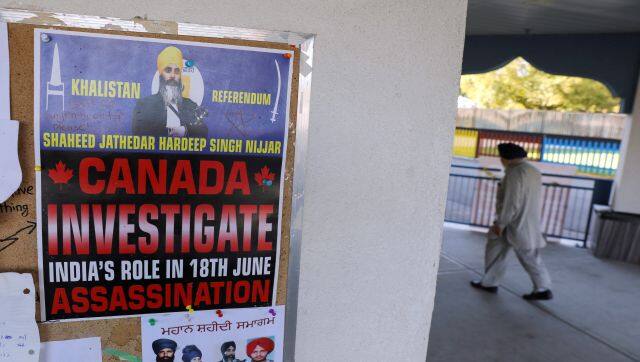 A sign asking for an investigation on India's role in the killing of Hardeep Singh Nijjar is seen at the Guru Nanak Sikh Gurdwara temple, in Surrey, British Columbia, Canada. File image/Reuters[/caption]Following his killing, in September, Canada’s prime minister Justin Trudeau told his country’s Parliament that his government was investigating “credible allegations” that Indian government agents were linked to the June slaying and had also expelled an Indian diplomat.At the time, India had rejected these allegations, calling them “absurd and motivated” and in a tit-for-tat move expelled a Canadian diplomat. Later, ties worsened when India suspended visa services for Canadians – a move they have reversed for some since then – and also asked for the withdrawal of 41 diplomats.On the other hand, the Financial Times reported on the assassination attempt on Gurpatwant Singh Pannun earlier this month. However, the British daily didn’t give any details about the attempt, or how US officials became aware of the plot or how the alleged assassination was thwarted. It, however, stated that US president Joe Biden had raised the issue in a discussion with Prime Minister Narendra Modi during a G20 Summit in New Delhi.Following the FT report, the White House confirmed that it had raised the issue with senior Indian officials and it was being treated with utmost seriousness. “It has been raised by the US government with the Indian government, including at the senior-most levels,” said Adrienne Watson, a spokeswoman for the White House National Security Council.India’s contrasting responsesIt’s interesting to note that New Delhi has had two very contrasting ways in responding to Washington and Ottawa in the Nijjar and Pannun incidents respectively.In the case of Nijjar’s killing and Canada’s subsequent allegation, India first angrily refuted the claims, calling it “absurd and motivated”. After Canada expelled an Indian diplomat posted in Ottawa, Delhi expelled a Canadian diplomat based in New Delhi.
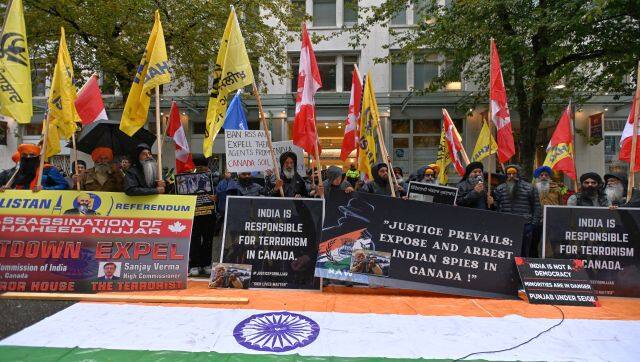 Demonstrators holding flags and signs protest outside India's consulate, a week after Canada's Prime Minister Justin Trudeau raised the prospect of New Delhi's involvement in the murder of Sikh separatist leader Hardeep Singh Nijjar, in Vancouver, British Columbia, Canada. File image/Reuters[/caption]Further he stated that until Canada shared “something specific and relevant”, it would not be able to move forward.While this is the reason provided by the envoy, analysts do believe that there are other reasons at play too. Firstly, the two offences are different – one is a murder investigation and the other is an assassination attempt and the target remains unharmed to date.Moreover, the ties between India and the US and India and Canada are very different. While Ind-Canada ties are mostly economic and people-to-people, the India-US ties are perhaps the most strategic and are much more comprehensive in nature. Apart from the economics, New Delhi has ties with Washington in sectors of space, defence, education, health and much more. For these reasons, India can’t be dismissive towards the US and its concerns.With inputs from agencies
Tags
First Published:Nov 28, 2023, 13:27:44 IST
Advertisement
Advertisement

Why India may not witness a medal rush at 2026 Commonwealth Games
A 125-strong Indian contingent is in Glasgow for the 2026 Commonwealth Games, starting today (July 23), chasing international glory. However, with a roster of sports such as badminton and wrestling being cut from the event, the country’s medal chances have been drastically reduced
4 min read
Delhi Police asks personnel to wear uniform: What the law says on cops in plainclothes during protests
The Delhi Police has instructed all its personnel to wear uniforms when they report for duty at Jantar Mantar for crowd control. This comes after outrage grew over videos of men in civilian clothes or without name tags hitting protesters in the Capital. Is it legal for the police to ditch uniforms during protests?
4 min read
Military drones & police check-ups: How Sri Lanka is fighting against worst dengue outbreak in a decade
Sri Lanka is fighting its most severe dengue outbreak in nearly a decade, with infections rising sharply across the nation. Military drones have been deployed to tackle the outbreak, which has claimed 56 lives. Health officials said the outbreak is being driven primarily by the DENV-2 variant of the virus
3 min read
How Facebook job ad lured 2 Karnataka men into Myanmar cyber scam camp
The Karnataka Cyber Command has rescued two youths from a scam compound in Myanmar operated by Chinese fraudsters. The duo from Karnataka were lured on the pretext of data-entry jobs. They were asked to work for 16 hours a day and were expected to sleep for six hours daily
4 min read
Why is India seeing 95% cloud cover despite a Super El Niño?
India is witnessing nearly 95 per cent cloud cover despite a Super El Niño, a climate event usually linked to weaker monsoons. Regional weather systems, cyclonic circulations, the monsoon trough and moisture from two seas are temporarily overpowering one of the world's strongest climate phenomena
5 min read
Advertisement
Advertisement