


Hardeep Singh Nijjar: How Western media 'whitewashed' the Khalistani's crimes
From a ‘Sikh separatist activist’ to ‘Sikh independence advocate’, this is how Western media outlets have described Khalistan Tiger Force chief Hardeep Singh Nijjar. Such coverage of the 45-year-old, who was designated a ‘terrorist’ by India in 2020, has come into question

The chasm between India and Canada continues a week after Prime Minister Justin Trudeau alleged New Delhi’s role in the killing of Khalistani extremist Hardeep Singh Nijjar in British Columbia in June. India has rebuffed the allegations, calling them “absurd” and “motivated”.
Being one of the most important news last week, Trudeau’s allegations were extensively covered by media across the globe. However, some Western publications’ coverage of the incident has come into question in India, with some accusing it of “whitewashing” Nijjar’s crimes.
Let’s take a look at the Western media’s reporting and India’s charges against Nijjar.
Western media’s coverage
A Washington Post report published in Canada’s National Post referred to Nijjar as a “Canadian citizen”.
“Indian authorities, who said Nijjar headed a group called the Khalistan Tiger Force, sought his extradition from Canada in 2022,” the report said.
 More from Explainers
It also mentioned that the 45-year-old was “designated a terrorist by Indian security agencies in 2020 and accused of supporting attacks in India’s Punjab state”.
The report went on to say that months before Nijjar was killed, India “ratcheted up a campaign to pressure countries” to crack down on the pro-Khalistan movement.
Many media outlets, including BBC, referred to Nijjar as a "Sikh separatist activist". In a profile of Nijjar, the American news agency Associated Press (AP) called him a “Sikh independence advocate”.
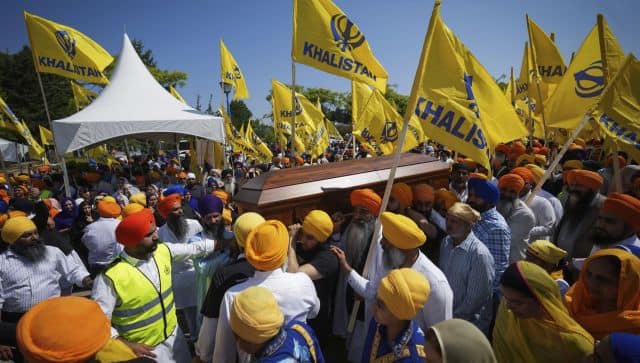
The AP reported that Nijjar “owned a plumbing business and served as president of a Sikh temple or gurdwara in suburban Vancouver”. While it laid out India’s charges against the “wanted man”, it also mentioned how about 200 protesters from the Canadian Sikh community had assembled outside the Indian Consulate in Vancouver after his “slaying”.
A report in New York Times, titled ‘Justin Trudeau Accuses India of a Killing on Canadian Soil’, called Nijjar a Sikh community leader who "advocated separatism".
A CNN article described Nijjar as "a prominent Sikh leader in western Canada".
An op-ed in Canada’s Global and Mail said, “There are tensions, because the Indian government has for decades accused Canada of being soft on Khalistani terrorists.” However, it further claimed that India has “often conflated non-violent Sikh separatist advocates with terrorists and extremists”.
Western media faces flak in India
Hitting out at a BBC analysis titled ‘Hardeep Singh Nijjar: Why Western nations fear India-Canada row’, Congress MP Shashi Tharoor said that Western media was “so quick to judge other countries, so blind to their own”.
He also highlighted the BBC report, which said: “In the past, Western nations have condemned alleged extraterritorial assassinations carried out by countries such as Russia or Iran or Saudi Arabia. They will not want India to join that list.”
To this, Tharoor retorted, “Hello? The two foremost practitioners of extra-territorial assassinations in the last 25 years have been Israel and the US! Any mirrors available in the West?”
An opinion piece in News18 also chided Western media for “humanising Nijjar and whitewashing his crimes.”
“The Western media has gone to agonising lengths to exonerate Nijjar, glossing over a ghastly track record that this supposedly virtuous, devoid-of-all-things-foul individual just happened to be tainted with,” the piece said.
ALSO READ: What intel reveals about Gurpatwant Singh Pannun's big plan to divide India
Nijjar’s many crimes
Nijjar, the Khalistan Tiger Force (KTF) chief, was designated a “terrorist” by the Indian government in July 2020.
An Interpol red notice was reportedly issued against him in November 2014. After the Indian government shared details of more than a dozen criminal cases of alleged murder and other terrorist activities against Nijjar with Canada, the Trudeau government simply put him on the ‘no-fly list’ in 2017-18, Times of India (TOI) reported citing a dossier on the Khalistani extremist compiled by India’s intelligence establishment.
Nijjar, who became the president of the Guru Nanak Sikh Gurdwara in Surrey in 2021, used his credentials to turn the Sikh temple into a “prominent centre of Khalistani activities and build a community of radically-inclined Canadian Sikhs”, as per the TOI report.
He reportedly met Babbar Khalsa International (BKI) terrorist, who later became KTF chief, Jagtar Singh Tara during a visit to Pakistan in April 2012.
According to Hindustan Times (HT), Nijjar met Tara and Pakistan’s Inter-Services Intelligence (ISI) officials in 2013 and 2014 to “strengthen KTF and organise terror activities” in India’s Punjab.
In 2014, Nijjar had planned a terror attack on Dera Sacha Sauda headquarters in Haryana’s Sirsa. However, he could not carry out the attack as he was denied an Indian visa, reported TOI.
He directed Punjab-based gangster Arshdeep Singh Gill to murder a priest in Jalandhar’s Bhar Singh Pura village in 2021. However, the priest survived, the newspaper cited the intelligence dossier as saying.
Nijjar was also accused of organising an arms training camp in Canada in 2015.
With inputs from agencies

Why India may not witness a medal rush at 2026 Commonwealth Games
Delhi Police asks personnel to wear uniform: What the law says on cops in plainclothes during protests
Military drones & police check-ups: How Sri Lanka is fighting against worst dengue outbreak in a decade
How Facebook job ad lured 2 Karnataka men into Myanmar cyber scam camp
Why is India seeing 95% cloud cover despite a Super El Niño?