


From 'phase out' to 'transitioning away': The COP28's new proposal on fossil fuels
The new proposal doesn't specifically use the language of calling for a ‘phase-out’ of fossil fuels, which more than 100 nations had pleaded for. Instead, it calls for ‘transitioning away from fossil fuels’ in a way that gets the world to net zero greenhouse gas emissions in 2050

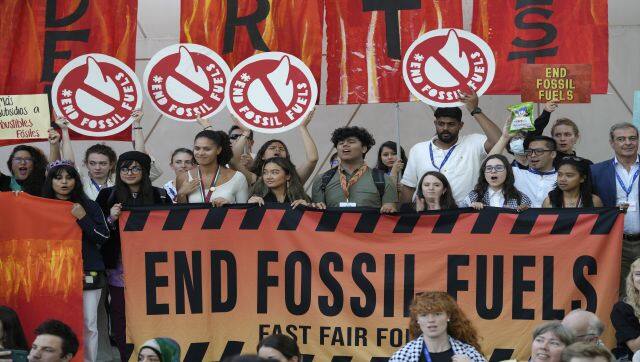
Some of the language that most upset nations calling for dramatic action to address climate change was altered in the new draft. AP[/caption]Other documents presented before sunrise Wednesday addressed, somewhat, the sticky issues of money to help poorer nations adapt to global warming and emit less carbon and how countries should adapt. Many financial issues are supposed to be hammered out over the next two years at upcoming climate conferences in Azerbaijan and Brazil. The United Nations Environment Programme estimates that developing nations need $194-366 billion (Rs 1.61- 3.05 lakh crore) per year to help adapt to a warmer and wilder world."Overall, I think this is a stronger text than the prior versions we have seen," said UN Foundation senior adaptation adviser Cristina Rumbaitis del Rio. "But it falls short in mobilising the financing needed to meet those targets.""If we can't agree on a strong signal on adaptation, where do we go from here?" said Emilie Beauchamp of the International Institute for Sustainable Development, adding that the text on adaptation didn't meet its goal."Instead adaptation has been relegated to the broom close of these negotiations."The annual conference was supposed to end Tuesday after nearly two weeks of work and speech-making. Instead, negotiators were in closed meetings as they reworked the cornerstone document that flopped a day earlier.Also Read: Who is Licypriya Kangujam, the 12-year-old Indian activist who protested at COP28?Oil, gas and coal are the major drivers of warming that pushed Earth to what will be its hottest year ever recorded, scientists say, with weather extremes like flooding, hurricanes and drought becoming more frequent and deadly. Activists, experts and many nations argued that aggressively curbing fossil fuels is critical to limit warming to the 1.5 degrees Celsius (2.7 Fahrenheit) called for in the Paris agreement.The key for the summit is finding language that won't make someone block a deal because a final agreement has to be by consensus. But consensus doesn't require unanimity, and past climate summits have pushed through an agreement over the objections of a nation or two, climate negotiations historian Joanna Depledge of Cambridge University said."Overruling is not impossible, just politically very, very risky," she said.With inputs from AP

Military drones & police check-ups: How Sri Lanka is fighting against worst dengue outbreak in a decade
How Facebook job ad lured 2 Karnataka men into Myanmar cyber scam camp
Why is India seeing 95% cloud cover despite a Super El Niño?
What is CJP’s fourth demand to the government as protests in Delhi intensify?
The new geography of war: Why the Houthis can no longer be ignored