


Why Qatar is a controversial host for the 2022 World Cup tournament
From its treatment of migrant workers to restrictive social laws and LGBTQ rights, the 2022 Qatar World Cup has been mired in controversy ever since its host nation won its 2010 bid

Sepp Blatter, the ex-president of FIFA, in an interview has called the decision to award Qatar the 2022 World Cup a ‘mistake’.
“It was a mistake,” Blatter said in an interview with AFP’s German sports subsidiary SID. “It was based on a decision when I was president, and therefore I bear part of the responsibility for it.”
The FIFA ex-president’s comments come in the backdrop of the fast-approaching Qatar World Cup – the first to be held in the West Asia and the first during the Northern Hemisphere winter – slated to occur from 20 November to 18 December.
The host country has come under intense pressure over its treatment of foreign workers, restrictive social laws and LGBTIQ rights, leading to many teams participating raising concerns, although the country has denied claims that workers were exploited.
 More from Explainers
Let’s take a closer look:
‘Homosexuality is damage of mind’
This little gem came from a Qatar World Cup ambassador no less.
In an interview filmed in Doha slated to be screened, former Qatari international Khalid Salman addressing, the issue of homosexuality, which is illegal in the conservative Muslim country, told German television broadcaster ZDF that homosexuality was "damage in the mind".
In Qatar, homosexuality is punishable by several years in prison and even death by stoning.
Qatari law prescribes a penalty of 1-3 years in prison for “leading, instigating or seducing a male . . . to commit sodomy." Separate laws prescribe up to seven years for anyone who “copulates” with a man or woman over the age of 16 "without compulsion, duress or ruse.”
"They have to accept our rules here," Salman said, in an excerpt of the interview. "(Homosexuality) is haram. You know what haram (forbidden) means?".
When asked why it was haram, Salman said: "I am not a strict Muslim but why is it haram? Because it is damage in the mind."
The interview was then immediately stopped by an accompanying official.
Qatar's World Cup organisers, when contacted by Reuters, declined to comment.
World soccer's ruling body FIFA did not immediately respond to a request for a comment.
BBC quoted Qatar 2022 chief executive Nasser al Khater as saying that the government will not change its laws on homosexuality
Khater also asked visitors to "respect our culture".
A recent report by Human Rights Watch stated gay, lesbian and trans citizens are still facing arrest and even being forced to undergo conversion therapy – an allegation the government has denied.
Women, LGBTQ issues
While organisers have repeatedly said everyone is welcome in Qatar during the World Cup, some soccer players have raised concerns over the rights of fans travelling to the event, especially LGBT+ individuals and women, whom rights groups say Qatari laws discriminate against.
The country expects more than one million visitors for the World Cup.
Few expect those laws to be enforced against visiting soccer fans, but it's unclear how authorities would handle public displays of affection — taboo even for straight couples — or public advocacy for LGBTQ rights.
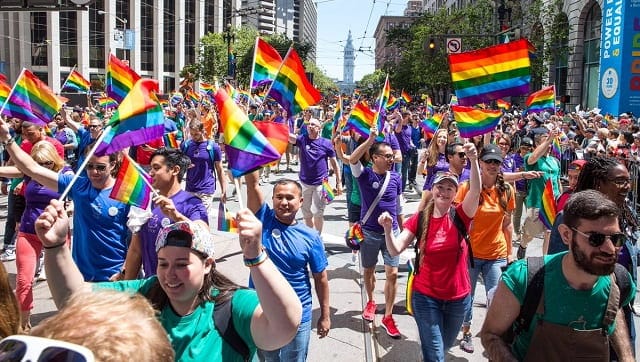
“Reserve the room together, sleep together -- this is something that’s not in our concern,” Maj. Gen. Abdulaziz Abdullah Al Ansari, a senior leader overseeing security preparations, told The Associated Press in April. But he sparked controversy in the same interview by saying rainbow flags could be taken from fans to protect them from being attacked.
“Watch the game. That’s good. But don’t really come in and insult the whole society because of this," he said.
Qatar has already faced criticism in public forums over its criminalization of homosexuality.
Eight of the 13 European teams said last month their captains will wear an armband with a heart-shaped, multi-colored design at games to support the “One Love” campaign against discrimination.
Treatment of migrant workers
The World Cup has already shined a light on what rights groups describe as exploitative conditions endured by many foreign laborers, including the construction workers who built stadiums and other infrastructure.
As per Forbes, Qatar relied on 30,0000 labourers from Bangladesh, India, Pakistan, Sri Lanka, Nepal and the Philippines to build its infrastructure.
In 2016, Amnesty International reported that migrant workers were being abused by having their salaries withheld, forced to fork over recruitment fees, had their passports taken and were living in squalor.
Qatar then passed laws protecting migrants from working in oppressive heat, cutting back on their working hours, and improving living conditions.
But that wasn’t enough.
Human Rights Watch in 2021 yet again reported that migrant workers were still facing the same issues, as per the website.
Then came the blockbuster February 2021 report from The Guardian.
The newspaper revealed that 6,500 migrant workers from India, Pakistan, Nepal, Bangladesh and Sri Lanka had died died in Qatar since it won its bid to host the tournament.
That’s on average 12 migrant workers per week since December 2010.

As per BBC, Qatar has called those statistics misleading.
The country claimed there were only 37 deaths between 2014 and 2020 among labourers at World Cup stadium construction sites.
Of these, just three were related to work, the country claims.
But the International Labour Organisation has pointed out that Qatar doesn't count deaths from heart attacks and respiratory failure as work-related – which can occur from working in high temperatures.
It says 50 foreign labourers died and more than 500 others were seriously injured in Qatar in just 2021 alone, and a further 37,600 suffered mild to moderate injuries.
In summer, the temperature rises above 40 degrees Celsius (104 degrees Fahrenheit) with high humidity. In fact that’s one of the reasons the World Cup is being played in November and December.
Qatar has overhauled its labour laws in recent years, dismantling much of its traditional kafala system, which tied workers to their employers. It has also mandated a minimum monthly wage of some $275. But activists say more needs to be done to ensure that workers are paid on time and protected from other abuses.
Foreign workers are barred from forming unions and have no political rights.
At least 60 workers were arrested in August for staging a protest over unpaid wages. A Kenyan security guard who wrote anonymously about the plight of foreign workers was detained for months and fined last year before leaving the country.
Several soccer federations are pressing Qatar on labour rights, and the English Football Association said its players would meet with migrant workers who will be invited to their training camp.
In October, the United States Soccer Federation joined six European federations in backing calls by rights advocates to create a compensation fund for workers, many from south Asia, who have been killed or injured.
“With the World Cup looming, the job of protecting migrant workers from exploitation is only half done, while that of compensating those who have suffered abuses has barely started,” said Steve Cockburn, the head of economic and social justice at Amnesty International.
The country's human rights record has led to calls for teams and officials to boycott the tournament.
Furore over decision of choosing host country
Even the decision of choosing the host country was mired in allegations of corruption.
The FIFA executive committee in 2010 decided to choose Qatar over the US – the final vote stood at 14-8.
Twenty-one of the 24 men on that executive committee were variously convicted in criminal or ethics cases, indicted, acquitted at trial or implicated in wrongdoing.
Qatar itself was cleared of corruption allegations after an inquiry, however, the report noted "certain indications of potentially problematic conduct of specific individuals," as per BBC.
Blatter, speaking of this vote, claimed he voted for the United States to host the 2022 tournament.
He blames then-UEFA president Michel Platini for swinging the vote in Qatar’s favour at the behest of then-French president Nicolas Sarkozy.
Sarkozy had recommended to Platini “that he and his people should vote for Qatar”, Blatter alleged.
The former FIFA president’s version of events has been denied by Platini.
Platini told French investigators that while he attended a lunch at the Elysee Palace with Sarkozy and then-Qatari crown prince Sheikh Tamim Bin Hamad Al-Thani shortly before the vote, “the president (Sarkozy) never asked me to vote for one country or another, but I got the impression that he supported Qatar.”
“I didn’t care if someone was influenced here or there,” Blatter said, adding that as the voting process went on, he realised that “other forces were at work”.
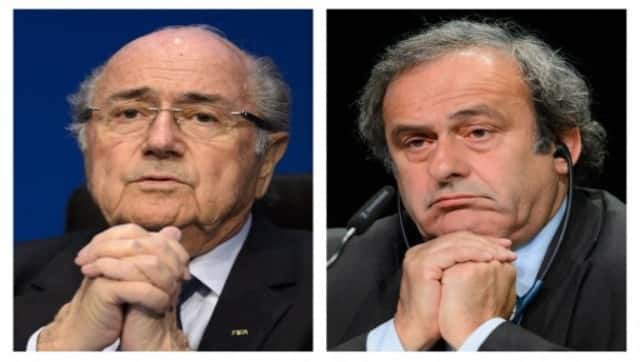
“The Qataris didn’t give gifts to the people who were voting, they gave them to their countries,” Blatter said.
Blatter was FIFA president for 17 years but was forced to step down in 2015 over allegations he unlawfully arranged a transfer of $2.2 million to Platini, who was also forced to resign from his position at FIFA.
FIFA initially banned Blatter from football for eight years, later reduced to six, over the payment to Platini.
Blatter’s ban was extended to 2028 for violations of FIFA’s code of ethics.
Blatter and Platini were found not guilty of fraud at a trial in Switzerland in July.
With inputs from agencies
Read all the Latest News, Trending News, Cricket News, Bollywood News,
India News and Entertainment News here. Follow us on Facebook, Twitter and Instagram.

Military drones & police check-ups: How Sri Lanka is fighting against worst dengue outbreak in a decade
How Facebook job ad lured 2 Karnataka men into Myanmar cyber scam camp
Why is India seeing 95% cloud cover despite a Super El Niño?
What is CJP’s fourth demand to the government as protests in Delhi intensify?
The new geography of war: Why the Houthis can no longer be ignored