
Advertisement


Sections
Explained: Why pacifist Japan wants to augment its arms capability and defence budget
In a huge turn from its postwar security policy, Japan has decided to possess ‘counterstrike capability’ to preempt enemy attacks. The country also aims to double its defence spending to about two per cent of its GDP

Japan this week adopted a new national security strategy that includes determination to possess “counterstrike" capability to preempt enemy attacks and double its spending to gain a more offensive footing and improve its resilience to protect itself from growing risks from China, North Korea and Russia.The new strategy marks a historic change to Japan's exclusively self-defence policy since the end of World War II.Here is a look at Japan's new security and defence strategies and how they will change the country's defence posture.Counterstrike capabilityThe biggest change in the National Security Strategy is possession of “counterstrike capability” that Japan calls “indispensable." Japan aims to achieve capabilities ”to disrupt and defeat invasions against its nation much earlier and at a further distance” within about 10 years.This puts an end to the 1956 government policy that shelved capability to strike enemy targets and only recognized the idea as a constitutional last-ditch defence.Japan says missile attacks against it have become "a palpable threat” and its current interceptor-reliant missile defense system is insufficient. North Korea launched missiles more than 30 times this year alone including one that overflew Japan, and China fired ballistic missiles into waters near southern Japanese islands.[caption id="attachment_11826621" align="alignnone" width="640"]![japan defence]() Japan's decision comes amid Russia and Ukraine war, as well as threats from China and North Korea. AP[/caption]Japan says the use of counterstrike capability is constitutional if it's in response to signs of an imminent enemy attack, but experts say it is extremely difficult to conduct such an attack without risking blame for striking first.
Japan's decision comes amid Russia and Ukraine war, as well as threats from China and North Korea. AP[/caption]Japan says the use of counterstrike capability is constitutional if it's in response to signs of an imminent enemy attack, but experts say it is extremely difficult to conduct such an attack without risking blame for striking first.![japan defense]() Japan will develop hypersonic weapons and unmanned and multi-role vehicles in the coming years. AP File Photo[/caption]Kishida said his government will need an extra four trillion yen ($30 billion) annually and proposed tax increases to fund a quarter of it. His tax-raise request backfired and the five-year defence buildup plan had to be released without full funding plans while the governing party continued discussing how to pay for the shortfall.Long-range missilesOver the next five years, Japan will spend about five trillion yen ($37 billion) on long-range missiles, whose planned deployment begins in 2026.Japan will purchase US-made Tomahawks and Joint Air-to-Surface Standoff Missiles, while Japan’s Mitsubishi Heavy Industry will improve and mass-produce a Type-12 surface-to-ship guided missile.Japanese defence officials said they are still finalizing Tomahawk purchase details.Japan will also develop other types of arsenals, such as hypersonic weapons and unmanned and multi-role vehicles for possible collaboration with the F-X next-generation fighter jet Japan is developing with Britain and Italy for deployment in 2035.Several standoff missile units are underway at undisclosed locations.Cybersecurity Japan, lacking sufficient cybersecurity and intelligence capability, will have to heavily rely on the United States in those areas in launching long-range cruise missiles at intended targets, experts say.“Without cybersecurity, Self-Defense Force superiority or Japan-US interoperatibility is difficult to achieve," according to the five-year defence program also adopted Friday, acknowledging the need to ensure cybersecurity at the SDF and Japanese defence industry.This is a welcome development for the United States as the Japanese government's weak cybersecurity has been “a critical impediment to deeper alliance cooperation and expanded information-sharing,” according to Christopher Johnstone, senior advisor and Japan Chair at the Center for Strategic and International Studies.Japan will spend eight trillion yen ($58 billion) over the next five years on cross-domain defence including cybersecurity and space.'Greatest strategic challenge'Fear of a regional security environment described as “the severest and most complicated” in the postwar era has been a driving force behind the revision to Japan's strategy.China, with its rapid arms buildup, increasingly assertive military activity and rivalry with the US, presents “an unprecedented and the greatest strategic challenge” to the peace and security of Japan and the international community, the strategy states.Russia’s war on Ukraine sparked fears of a Taiwan emergency, accelerating the move to bolster Japan’s deterrence within the next five years. While North Korea keeps advancing its nuclear and missile capabilities, the main threat is still China, for which Japan has had to prepare “by using North Korea’s threat as a cover,” said Tomohisa Takei, a retired admiral in Japan’s navy.Pacifist JapanBecause of its wartime past as aggressor and devastation after its defeat, Japan’s postwar policy prioritized the economy over security by relying on American troops stationed in Japan under their bilateral security agreement, in a division of roles known as “shield and dagger.”Prospects for even closer operation with the US military under the new strategy has prompted concerns that Japan would take more offensive responsibility.Japan says it will keep its pacifist principle of high standards for arms equipment and technology transfer.But some easing is planned to allow currently restricted exports of offensive equipment and components, including those of the next-generation F-X fighter jet, as a way to strengthen the country’s defense equipment industry.Read all the Latest News, Trending News, Cricket News, Bollywood News,India News and Entertainment News here. Follow us on Facebook, Twitter and Instagram.
Japan will develop hypersonic weapons and unmanned and multi-role vehicles in the coming years. AP File Photo[/caption]Kishida said his government will need an extra four trillion yen ($30 billion) annually and proposed tax increases to fund a quarter of it. His tax-raise request backfired and the five-year defence buildup plan had to be released without full funding plans while the governing party continued discussing how to pay for the shortfall.Long-range missilesOver the next five years, Japan will spend about five trillion yen ($37 billion) on long-range missiles, whose planned deployment begins in 2026.Japan will purchase US-made Tomahawks and Joint Air-to-Surface Standoff Missiles, while Japan’s Mitsubishi Heavy Industry will improve and mass-produce a Type-12 surface-to-ship guided missile.Japanese defence officials said they are still finalizing Tomahawk purchase details.Japan will also develop other types of arsenals, such as hypersonic weapons and unmanned and multi-role vehicles for possible collaboration with the F-X next-generation fighter jet Japan is developing with Britain and Italy for deployment in 2035.Several standoff missile units are underway at undisclosed locations.Cybersecurity Japan, lacking sufficient cybersecurity and intelligence capability, will have to heavily rely on the United States in those areas in launching long-range cruise missiles at intended targets, experts say.“Without cybersecurity, Self-Defense Force superiority or Japan-US interoperatibility is difficult to achieve," according to the five-year defence program also adopted Friday, acknowledging the need to ensure cybersecurity at the SDF and Japanese defence industry.This is a welcome development for the United States as the Japanese government's weak cybersecurity has been “a critical impediment to deeper alliance cooperation and expanded information-sharing,” according to Christopher Johnstone, senior advisor and Japan Chair at the Center for Strategic and International Studies.Japan will spend eight trillion yen ($58 billion) over the next five years on cross-domain defence including cybersecurity and space.'Greatest strategic challenge'Fear of a regional security environment described as “the severest and most complicated” in the postwar era has been a driving force behind the revision to Japan's strategy.China, with its rapid arms buildup, increasingly assertive military activity and rivalry with the US, presents “an unprecedented and the greatest strategic challenge” to the peace and security of Japan and the international community, the strategy states.Russia’s war on Ukraine sparked fears of a Taiwan emergency, accelerating the move to bolster Japan’s deterrence within the next five years. While North Korea keeps advancing its nuclear and missile capabilities, the main threat is still China, for which Japan has had to prepare “by using North Korea’s threat as a cover,” said Tomohisa Takei, a retired admiral in Japan’s navy.Pacifist JapanBecause of its wartime past as aggressor and devastation after its defeat, Japan’s postwar policy prioritized the economy over security by relying on American troops stationed in Japan under their bilateral security agreement, in a division of roles known as “shield and dagger.”Prospects for even closer operation with the US military under the new strategy has prompted concerns that Japan would take more offensive responsibility.Japan says it will keep its pacifist principle of high standards for arms equipment and technology transfer.But some easing is planned to allow currently restricted exports of offensive equipment and components, including those of the next-generation F-X fighter jet, as a way to strengthen the country’s defense equipment industry.Read all the Latest News, Trending News, Cricket News, Bollywood News,India News and Entertainment News here. Follow us on Facebook, Twitter and Instagram.
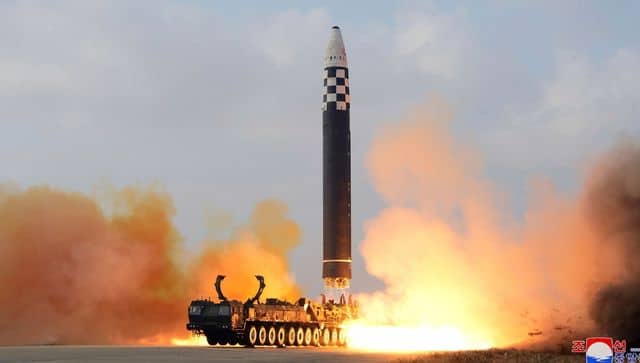 Japan's decision comes amid Russia and Ukraine war, as well as threats from China and North Korea. AP[/caption]Japan says the use of counterstrike capability is constitutional if it's in response to signs of an imminent enemy attack, but experts say it is extremely difficult to conduct such an attack without risking blame for striking first.
Opponents say strike capability goes beyond self-defence under Japan's pacifist constitution."(Japan's) exclusive self-defence policy is hollowed," the liberal-leaning Asahi newspaper said.Ramp up defence budgetJapan aims to double its defence spending to about 2 per cent of its GDP to a total of about 43 trillion yen ($320 billion) through 2027. The new spending target follows the NATO standard and will eventually push Japan’s annual budget to about 10 trillion yen ($73 billion), the world’s third biggest after the United States and China.[caption id="attachment_11826681" align="alignnone" width="640"]
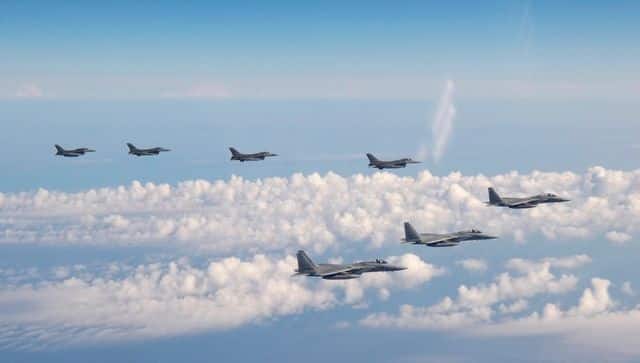 Japan will develop hypersonic weapons and unmanned and multi-role vehicles in the coming years. AP File Photo[/caption]Kishida said his government will need an extra four trillion yen ($30 billion) annually and proposed tax increases to fund a quarter of it. His tax-raise request backfired and the five-year defence buildup plan had to be released without full funding plans while the governing party continued discussing how to pay for the shortfall.Long-range missilesOver the next five years, Japan will spend about five trillion yen ($37 billion) on long-range missiles, whose planned deployment begins in 2026.Japan will purchase US-made Tomahawks and Joint Air-to-Surface Standoff Missiles, while Japan’s Mitsubishi Heavy Industry will improve and mass-produce a Type-12 surface-to-ship guided missile.Japanese defence officials said they are still finalizing Tomahawk purchase details.Japan will also develop other types of arsenals, such as hypersonic weapons and unmanned and multi-role vehicles for possible collaboration with the F-X next-generation fighter jet Japan is developing with Britain and Italy for deployment in 2035.Several standoff missile units are underway at undisclosed locations.Cybersecurity Japan, lacking sufficient cybersecurity and intelligence capability, will have to heavily rely on the United States in those areas in launching long-range cruise missiles at intended targets, experts say.“Without cybersecurity, Self-Defense Force superiority or Japan-US interoperatibility is difficult to achieve," according to the five-year defence program also adopted Friday, acknowledging the need to ensure cybersecurity at the SDF and Japanese defence industry.This is a welcome development for the United States as the Japanese government's weak cybersecurity has been “a critical impediment to deeper alliance cooperation and expanded information-sharing,” according to Christopher Johnstone, senior advisor and Japan Chair at the Center for Strategic and International Studies.Japan will spend eight trillion yen ($58 billion) over the next five years on cross-domain defence including cybersecurity and space.'Greatest strategic challenge'Fear of a regional security environment described as “the severest and most complicated” in the postwar era has been a driving force behind the revision to Japan's strategy.China, with its rapid arms buildup, increasingly assertive military activity and rivalry with the US, presents “an unprecedented and the greatest strategic challenge” to the peace and security of Japan and the international community, the strategy states.Russia’s war on Ukraine sparked fears of a Taiwan emergency, accelerating the move to bolster Japan’s deterrence within the next five years. While North Korea keeps advancing its nuclear and missile capabilities, the main threat is still China, for which Japan has had to prepare “by using North Korea’s threat as a cover,” said Tomohisa Takei, a retired admiral in Japan’s navy.Pacifist JapanBecause of its wartime past as aggressor and devastation after its defeat, Japan’s postwar policy prioritized the economy over security by relying on American troops stationed in Japan under their bilateral security agreement, in a division of roles known as “shield and dagger.”Prospects for even closer operation with the US military under the new strategy has prompted concerns that Japan would take more offensive responsibility.Japan says it will keep its pacifist principle of high standards for arms equipment and technology transfer.But some easing is planned to allow currently restricted exports of offensive equipment and components, including those of the next-generation F-X fighter jet, as a way to strengthen the country’s defense equipment industry.Read all the Latest News, Trending News, Cricket News, Bollywood News,India News and Entertainment News here. Follow us on Facebook, Twitter and Instagram.
First Published:Dec 17, 2022, 17:38:41 IST
Advertisement
Advertisement

Delhi Police asks personnel to wear uniform: What the law says on cops in plainclothes during protests
The Delhi Police has instructed all its personnel to wear uniforms when they report for duty at Jantar Mantar for crowd control. This comes after outrage grew over videos of men in civilian clothes or without name tags hitting protesters in the Capital. Is it legal for the police to ditch uniforms during protests?
4 min read
Military drones & police check-ups: How Sri Lanka is fighting against worst dengue outbreak in a decade
Sri Lanka is fighting its most severe dengue outbreak in nearly a decade, with infections rising sharply across the nation. Military drones have been deployed to tackle the outbreak, which has claimed 56 lives. Health officials said the outbreak is being driven primarily by the DENV-2 variant of the virus
3 min read
How Facebook job ad lured 2 Karnataka men into Myanmar cyber scam camp
The Karnataka Cyber Command has rescued two youths from a scam compound in Myanmar operated by Chinese fraudsters. The duo from Karnataka were lured on the pretext of data-entry jobs. They were asked to work for 16 hours a day and were expected to sleep for six hours daily
4 min read
Why is India seeing 95% cloud cover despite a Super El Niño?
India is witnessing nearly 95 per cent cloud cover despite a Super El Niño, a climate event usually linked to weaker monsoons. Regional weather systems, cyclonic circulations, the monsoon trough and moisture from two seas are temporarily overpowering one of the world's strongest climate phenomena
5 min read
What is CJP’s fourth demand to the government as protests in Delhi intensify?
The protest by the Cockroach Janta Party at Delhi’s Jantar Mantar refuses to die down. The group have made a fourth demand to the Centre, asking that no FIRs are filed against the agitators and that no legal action be taken. The government has expressed willingness to speak to the protesters, but refused to accede on the resignation of Education Minister Dharmandra Pradhan
5 min read
Advertisement
Advertisement