
Advertisement


Sections
Cats in the City: Why leopard attacks are not rare in Mumbai
Three people suffered injuries after a leopard strayed into a residential area near Mumbai’s Kalyan. There are 35 leopards living around the Sanjay Gandhi National Park, adjoining the city. While Mumbai and the big cat have peacefully existed together, the recent attacks have caused alarm

Three people were reportedly wounded in a leopard attack on Thursday (24 November) near Mumbai’s Kalyan area. Video of the leopard roaming the residential area in Kalyan emerged, with frightened residents witnessing the sight.As per India Today report, the leopard came from the Malanggarh forest and entered the Navrang society in Kalyan around 8.30 am."I saw the leopard on the first floor. People were screaming for help. A man went inside the building despite warning and was attacked by the leopard. Some of us with sticks in hand scared it away," a local told NDTV.Notably, leopard sighting in residential areas of Maharashtra’s capital is not rare.When were the leopard attacks reported in Mumbai recently? Why the big cat is common in the financial capital of India? We explain.Recent leopard attacksOn 11 November, a 34-year-old woman sustained wounds after she was attacked by a leopard at Aarey Colony in Goregaon, a suburb of Mumbai.In October, a 16-month-old girl was killed after a leopard attacked her in the Aarey Forest area of Goregaon. Following the incident, forest officials set up a cage and 12 cameras across the one-km radius of the forest.![leopard in aarey]() Aarey Colony is one of the dominant habitats of leopards in Mumbai. AP File Photo[/caption]Deccan Herald reports that Maharashtra’s indigenous Warli people worship the deity, Waghoba, who is believed to provide protection from the big cats.Waghoba temple in Aarey houses an idol resembling a tiger which is worshipped by the tribals.Prakash Bhoir, a tribal leader who resides in Keltipada, which is a settlement of 100 Warli homes in the Aarey colony, told Deccan Herald, “In this area, the leopard rules, and we have to respect Waghobar".ALSO READ: Leopard roams freely outside Mumbai colony, watch videos hereReasons behind leopard attacks There are several reasons believed to be behind the rise in attacks by leopards. One of them is the infrastructure projects that have reduced the natural habitat of the leopards, leading to them straying in residential areas.
Aarey Colony is one of the dominant habitats of leopards in Mumbai. AP File Photo[/caption]Deccan Herald reports that Maharashtra’s indigenous Warli people worship the deity, Waghoba, who is believed to provide protection from the big cats.Waghoba temple in Aarey houses an idol resembling a tiger which is worshipped by the tribals.Prakash Bhoir, a tribal leader who resides in Keltipada, which is a settlement of 100 Warli homes in the Aarey colony, told Deccan Herald, “In this area, the leopard rules, and we have to respect Waghobar".ALSO READ: Leopard roams freely outside Mumbai colony, watch videos hereReasons behind leopard attacks There are several reasons believed to be behind the rise in attacks by leopards. One of them is the infrastructure projects that have reduced the natural habitat of the leopards, leading to them straying in residential areas.![leopard]() In October, a 16-month-old girl was killed in a leopard attack in the Aarey Forest area. AFP (Representational Image)[/caption]Explaining the reason behind leopards straying to the residential colonies, Bhoir told Indian Express last year, “We should not blame the leopards. It is us, humans, who are increasingly moving towards its territory. The leopard has not reached our doorstep, but we have reached inside its house. Leopards’ hunting area has been squeezed and pushed closer to our villages, where there is access to food such as dogs, pigs, and poultry.”Lack of basic amenities which leads to people defecating in the open can also lead to leopard attacks. A leopard who is in search of prey can attack these people squatting outside.To counter this issue, Indian Express reported in November last year that new public toilets were being built, damaged solar street lights were being repaired and overgrown bushes and grasses on the pathways were being cleared in Aarey Milk Colony.According to Scroll, an increase in the number of dogs also lure leopards in residential areas, which are hunted by the big cat.In June this year, Free Press Journal reported citing BMC data that Mumbai has a population of an estimated 2,95,000 strays.After attacks in 2017, Hindustan Times had reported that stray dogs have been keeping guard in villages around Film City and Aarey Colony, and sometimes even confronting these felines.According to 2018 The Guardian report, the densities of dogs are lower around SGNP where leopards are often found.With inputs from agenciesRead all the Latest News, Trending News, Cricket News, Bollywood News,India News and Entertainment News here. Follow us on Facebook, Twitter and Instagram.
In October, a 16-month-old girl was killed in a leopard attack in the Aarey Forest area. AFP (Representational Image)[/caption]Explaining the reason behind leopards straying to the residential colonies, Bhoir told Indian Express last year, “We should not blame the leopards. It is us, humans, who are increasingly moving towards its territory. The leopard has not reached our doorstep, but we have reached inside its house. Leopards’ hunting area has been squeezed and pushed closer to our villages, where there is access to food such as dogs, pigs, and poultry.”Lack of basic amenities which leads to people defecating in the open can also lead to leopard attacks. A leopard who is in search of prey can attack these people squatting outside.To counter this issue, Indian Express reported in November last year that new public toilets were being built, damaged solar street lights were being repaired and overgrown bushes and grasses on the pathways were being cleared in Aarey Milk Colony.According to Scroll, an increase in the number of dogs also lure leopards in residential areas, which are hunted by the big cat.In June this year, Free Press Journal reported citing BMC data that Mumbai has a population of an estimated 2,95,000 strays.After attacks in 2017, Hindustan Times had reported that stray dogs have been keeping guard in villages around Film City and Aarey Colony, and sometimes even confronting these felines.According to 2018 The Guardian report, the densities of dogs are lower around SGNP where leopards are often found.With inputs from agenciesRead all the Latest News, Trending News, Cricket News, Bollywood News,India News and Entertainment News here. Follow us on Facebook, Twitter and Instagram.
Till 15 November, four leopards have been caught in over a month.Another incident was reported in October when a four-year-old boy was attacked by a leopard in Aarey Colony, Goregoan east.“In the past five years, the frequency of attacks has increased. It is mainly because of the changing demography of the entire area that the animals are coming out to areas of human habitation for their catch,” Puran Tarji, a 59-year-old resident of Unit 15 of Aarey Colony, told Indian Express.Indian Express has reported that over 10 animal attack incidents have been reported from the residential areas adjoining Aarey and Sanjay Gandhi National Park in the city.
In 2002, leopard attacks had peaked in Aarey, with 25 cases in six months.After these 2002 attacks, the then chief conservator of forests Sunil Limaye and his successors Vikas Gupta and Aarey CEO Anwar Ahmed launched programme called ‘Living with the Leopards’, which is considered a “role model for human-leopard coexistence”, reports Indian Express.The programme was successful in curbing the attacks by the big cat until 2017 when seven incidents were reported.Beast in the cityWhile leopards and humans have peacefully existed together in Mumbai, these recent attacks have once again raised questions about the safety of the residents.Aarey Milk Colony in Goregaon East, adjoining Sanjay Gandhi National Park (SGNP), spans 3,166 acres. It houses a dense forest as well as human settlements.As per Indian Express, about four to five adult leopards are always present in Aarey, along with the moving population that travels from the forest to SGNP. The big cat can also be found around Film City and Indian Institute of Technology-Bombay.Citing a 2015 survey conducted by SGNP, Indian Express notes that there are 35 leopards living around the national park, while Aarey is among their main habitats.[caption id="attachment_11690131" align="alignnone" width="640"]
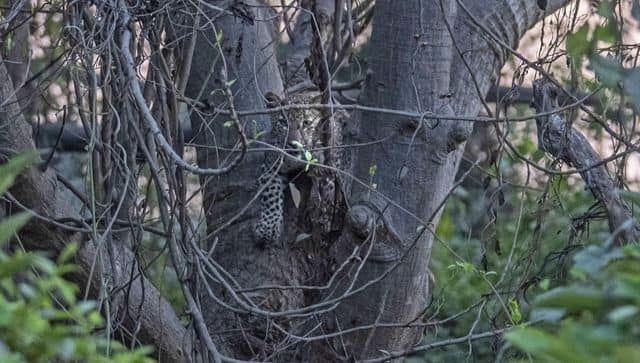 Aarey Colony is one of the dominant habitats of leopards in Mumbai. AP File Photo[/caption]Deccan Herald reports that Maharashtra’s indigenous Warli people worship the deity, Waghoba, who is believed to provide protection from the big cats.Waghoba temple in Aarey houses an idol resembling a tiger which is worshipped by the tribals.Prakash Bhoir, a tribal leader who resides in Keltipada, which is a settlement of 100 Warli homes in the Aarey colony, told Deccan Herald, “In this area, the leopard rules, and we have to respect Waghobar".ALSO READ: Leopard roams freely outside Mumbai colony, watch videos hereReasons behind leopard attacks There are several reasons believed to be behind the rise in attacks by leopards. One of them is the infrastructure projects that have reduced the natural habitat of the leopards, leading to them straying in residential areas.
Leopards, which are highly adaptive to their environment, enter the residential colonies in search of prey."The waste dumps attract feral dogs, pigs, and other small animals that feed on them. These animals are also food for leopards. And that is how the high population of leopards is surviving and continues to grow,” wildlife biologist Anand Pendharkar told Indiatimes.Pendharkar also points out that leopards have become “more stressed” due to loss of territory, internal conflicts and increasing human population, which can result in human-animal conflict.[caption id="attachment_11690141" align="alignnone" width="640"]
 In October, a 16-month-old girl was killed in a leopard attack in the Aarey Forest area. AFP (Representational Image)[/caption]Explaining the reason behind leopards straying to the residential colonies, Bhoir told Indian Express last year, “We should not blame the leopards. It is us, humans, who are increasingly moving towards its territory. The leopard has not reached our doorstep, but we have reached inside its house. Leopards’ hunting area has been squeezed and pushed closer to our villages, where there is access to food such as dogs, pigs, and poultry.”Lack of basic amenities which leads to people defecating in the open can also lead to leopard attacks. A leopard who is in search of prey can attack these people squatting outside.To counter this issue, Indian Express reported in November last year that new public toilets were being built, damaged solar street lights were being repaired and overgrown bushes and grasses on the pathways were being cleared in Aarey Milk Colony.According to Scroll, an increase in the number of dogs also lure leopards in residential areas, which are hunted by the big cat.In June this year, Free Press Journal reported citing BMC data that Mumbai has a population of an estimated 2,95,000 strays.After attacks in 2017, Hindustan Times had reported that stray dogs have been keeping guard in villages around Film City and Aarey Colony, and sometimes even confronting these felines.According to 2018 The Guardian report, the densities of dogs are lower around SGNP where leopards are often found.With inputs from agenciesRead all the Latest News, Trending News, Cricket News, Bollywood News,India News and Entertainment News here. Follow us on Facebook, Twitter and Instagram.
First Published:Nov 24, 2022, 17:42:23 IST
Advertisement
Advertisement

Military drones & police check-ups: How Sri Lanka is fighting against worst dengue outbreak in a decade
Sri Lanka is fighting its most severe dengue outbreak in nearly a decade, with infections rising sharply across the nation. Military drones have been deployed to tackle the outbreak, which has claimed 56 lives. Health officials said the outbreak is being driven primarily by the DENV-2 variant of the virus
3 min read
How Facebook job ad lured 2 Karnataka men into Myanmar cyber scam camp
The Karnataka Cyber Command has rescued two youths from a scam compound in Myanmar operated by Chinese fraudsters. The duo from Karnataka were lured on the pretext of data-entry jobs. They were asked to work for 16 hours a day and were expected to sleep for six hours daily
4 min read
Why is India seeing 95% cloud cover despite a Super El Niño?
India is witnessing nearly 95 per cent cloud cover despite a Super El Niño, a climate event usually linked to weaker monsoons. Regional weather systems, cyclonic circulations, the monsoon trough and moisture from two seas are temporarily overpowering one of the world's strongest climate phenomena
5 min read
What is CJP’s fourth demand to the government as protests in Delhi intensify?
The protest by the Cockroach Janta Party at Delhi’s Jantar Mantar refuses to die down. The group have made a fourth demand to the Centre, asking that no FIRs are filed against the agitators and that no legal action be taken. The government has expressed willingness to speak to the protesters, but refused to accede on the resignation of Education Minister Dharmandra Pradhan
5 min read
The new geography of war: Why the Houthis can no longer be ignored
The rise of the Houthis marks the emergence of a new geography of war — one in which influence flows not only from capitals and conventional armies, but also from rugged mountains overlooking vital sea lanes
6 min read
Advertisement
Advertisement