


Explained: Why Kosovo-Serbia tensions are on the rise yet again
Weeks of escalating tensions between Belgrade and Pristina have resulted in ethnic Serbs in Mitrovica putting up barricades and Serbia placing its border troops on ‘full state of combat readiness’

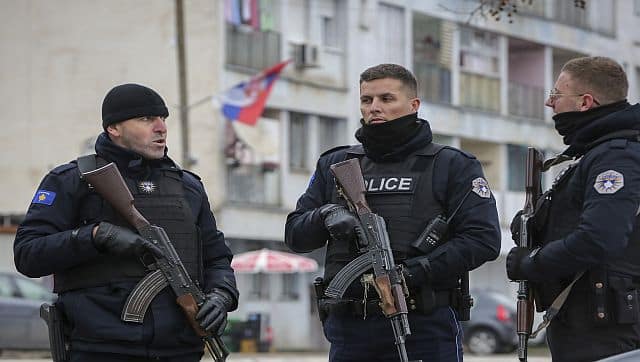
Kosovo police officers patrol in a mixed community neighbourhood in the ethnically divided town of Mitrovica, in northern Kosovo. AP[/caption]Serbs in Kosovo, who want to create an association of majority-Serb municipalities that would operate with greater autonomy, have resorted to refusing to pay their electricity bills and attacking police.Kosovo authorities, on the other hand, have accused Serbia of stirring up trouble within its borders.In 2013, Serbia and Kosovo committed to an EU-sponsored dialogue. But no progress has been made on this.The dispute over Kosovo itself goes back centuries.Serbia cherishes the region as the heart of its statehood and religion. Numerous medieval Serb Orthodox Christian monasteries are in Kosovo.Serb nationalists view a 1,389 battle against Ottoman Turks there as a symbol of its national struggle.So what happened recently?On Monday, NATO-led peacekeepers said they were investigating a shooting incident in a tense northern region of Kosovo.The peacekeepers, known as KFOR, said the incident happened near one of their patrols, involving unknown people. A statement said no one was injured and “we are working to establish all the facts.”Earlier in December, ethnic Serbs in the north put up roadblocks to protest the arrest of a former Serb police officer.Kosovo's government has asked NATO troops — which deployed in 1999 after the trans-Atlantic alliance bombed Serbia into leaving Kosovo — to remove the Serb roadblocks.
That tiff came after a lingering dispute over license plates.Kosovo has long since wanted the around 50,000 Serbs in the north to replace their Serbian license plates for ones from Pristina.In July, the government announced that ethnic Serbs with such license plates had two months to change them.Prime Minister Albin Kurti at the time said it was a reciprocal move since Belgrade requires the same from Kosovo citizens entering Serbia.The move was initially pushed back by a month following protests and a meeting with the US ambassador.In November, Ethnic Serb mayors in northern municipalities, along with local judges and some 600 police officers, resigned in protest.Now, Kosovo has agreed to hold off on the switch till next year.What happens next?No one can say.Fears of violence have soared since the start of Russia's war in Ukraine and Kosovo remains a potential flashpoint in the Balkans.The KFOR in a statement called for calm.“It is important for all involved to avoid any rhetoric or actions that can cause tensions and escalate the situation,” KFOR said in a statement.“We expect all actors to refrain from provocative shows of force and to seek the best solution to ensure the safety and security of all communities.”With inputs from agenciesRead all the Latest News, Trending News, Cricket News, Bollywood News,India News and Entertainment News here. Follow us on Facebook, Twitter and Instagram.

Delhi Police asks personnel to wear uniform: What the law says on cops in plainclothes during protests
Military drones & police check-ups: How Sri Lanka is fighting against worst dengue outbreak in a decade
How Facebook job ad lured 2 Karnataka men into Myanmar cyber scam camp
Why is India seeing 95% cloud cover despite a Super El Niño?
What is CJP’s fourth demand to the government as protests in Delhi intensify?