
Advertisement


Sections
Why has OPEC+ cut oil production? How will it impact crude prices and global economy?
While the Saudi-led OPEC+ called the cut a necessary response to rising interest rates and a weaker global economy, analysts warn of a limited long-term upside for oil prices. The move could inadvertently trigger a global recession

The Organisation of the Petroleum Exporting Countries and its allies (OPEC+), have announced a major cut in oil production, a move the US-led West has decried as ‘short-sighted’.Ministers from the 13-nation OPEC cartel and its 10 Russian-led allies in Vienna announced a two million barrels per day reduction in output from November – the biggest since the height of the COVID-19 pandemic in 2020, and despite concerns it could add to inflation and force central banks to further hike interest rates and therefore increase the chances of a global recession.So why has OPEC+ made this move? What is the likely outcome?Let’s take a closer look:First, let’s briefly examine the history of OPEC.OPEC was founded in Baghdad in September 1960 by Iran, Iraq, Kuwait, Saudi Arabia and Venezuela.It has since expanded to include Algeria, Angola, Congo, Equatorial Guinea, Gabon, Libya, Nigeria, and the United Arab EmiratesAccording to the website, its objective is to “coordinate and unify the petroleum policies of its Member Countries and ensure the stabilisation of oil markets in order to secure an efficient, economic and regular supply of petroleum to consumers, a steady income to producers and a fair return on capital for those investing in the petroleum industry.”![]() Crown Prince, Mohammed Bin Salman is the de facto rules of Saudi Arabia. AFP[/caption]Saudi Arabia has become one of the world’s fastest-growing economies on the back of soaring oil prices, as per the report.The New York Times also reported that Russia might be attempting to make the West pay a higher price for its sanctions.“To the extent that prices rise, it will make it that much more challenging for Europe to proceed with its sanctions on Russian oil in December,” Bhushan Bahree, an executive director of S&P Global Commodity Insights, was quoted as saying.However, Saudi Arabia, the de-facto leader of OPEC+, claimed to Reuters that the massive cut equal to two per cent of global supply is necessary to respond to rising interest rates in the West and a weaker global economy.The Kingdom rebuffed criticism it was colluding with Russia to drive prices higher and said the West was often driven by "wealth arrogance" when criticising the group.Saudi energy minister Abdulaziz bin Salman said OPEC+ had needed to be pro-active as central banks around the world moved to "belatedly" tackle soaring inflation with higher interest rates.What could be the impact?Oil prices, which have returned to the level of the days before the Ukraine war, could see a steep rise.
Crown Prince, Mohammed Bin Salman is the de facto rules of Saudi Arabia. AFP[/caption]Saudi Arabia has become one of the world’s fastest-growing economies on the back of soaring oil prices, as per the report.The New York Times also reported that Russia might be attempting to make the West pay a higher price for its sanctions.“To the extent that prices rise, it will make it that much more challenging for Europe to proceed with its sanctions on Russian oil in December,” Bhushan Bahree, an executive director of S&P Global Commodity Insights, was quoted as saying.However, Saudi Arabia, the de-facto leader of OPEC+, claimed to Reuters that the massive cut equal to two per cent of global supply is necessary to respond to rising interest rates in the West and a weaker global economy.The Kingdom rebuffed criticism it was colluding with Russia to drive prices higher and said the West was often driven by "wealth arrogance" when criticising the group.Saudi energy minister Abdulaziz bin Salman said OPEC+ had needed to be pro-active as central banks around the world moved to "belatedly" tackle soaring inflation with higher interest rates.What could be the impact?Oil prices, which have returned to the level of the days before the Ukraine war, could see a steep rise.![Representational image]() Representational image. Reuters[/caption]Swissquote analyst Ipek Ozkardeskaya warned that the big cut could "backfire" on OPEC+ if investors fear that it will push inflation higher and force central banks to hike interest rates so much that it will trigger a recession."The higher the energy prices, the sharper the central banks must kill demand to pull the prices lower," she said before the decision was announced."Therefore, a big cut in OPEC production could well backfire, and trigger profit taking and fall in oil prices today," she added.
Representational image. Reuters[/caption]Swissquote analyst Ipek Ozkardeskaya warned that the big cut could "backfire" on OPEC+ if investors fear that it will push inflation higher and force central banks to hike interest rates so much that it will trigger a recession."The higher the energy prices, the sharper the central banks must kill demand to pull the prices lower," she said before the decision was announced."Therefore, a big cut in OPEC production could well backfire, and trigger profit taking and fall in oil prices today," she added.
In simple terms, OPEC’s aim is to set the price of crude oil by regulating its supply to the world.To that end, OPEC in 2016 aligned with Russia and its 10 major oil-producing allies to form an even more powerful entity called OPEC+.OPEC+ controls over 50 per cent of global oil supplies and about 90 per cent of proven oil reserves.Meaning it can control the price of crude oil at least in the short term.Why OPEC+ cut productionWith Russia facing sanctions from the West, a price rise would benefit OPEC member states in West Asia, to whom Europe has turned to fill their shortfall.As per The Wall Street Journal, the cuts are meant to protect profits that could be otherwise threatened by a reduced demand for oil.[caption id="attachment_11237571" align="alignnone" width="640"]
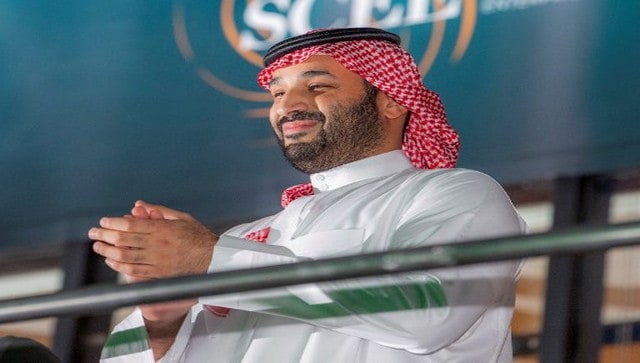 Crown Prince, Mohammed Bin Salman is the de facto rules of Saudi Arabia. AFP[/caption]Saudi Arabia has become one of the world’s fastest-growing economies on the back of soaring oil prices, as per the report.The New York Times also reported that Russia might be attempting to make the West pay a higher price for its sanctions.“To the extent that prices rise, it will make it that much more challenging for Europe to proceed with its sanctions on Russian oil in December,” Bhushan Bahree, an executive director of S&P Global Commodity Insights, was quoted as saying.However, Saudi Arabia, the de-facto leader of OPEC+, claimed to Reuters that the massive cut equal to two per cent of global supply is necessary to respond to rising interest rates in the West and a weaker global economy.The Kingdom rebuffed criticism it was colluding with Russia to drive prices higher and said the West was often driven by "wealth arrogance" when criticising the group.Saudi energy minister Abdulaziz bin Salman said OPEC+ had needed to be pro-active as central banks around the world moved to "belatedly" tackle soaring inflation with higher interest rates.What could be the impact?Oil prices, which have returned to the level of the days before the Ukraine war, could see a steep rise.
Already on Wednesday, the Benchmark Brent crude rose two percent – to over $93 per barrel.As per Mint, the global economy, already under facing multi-year high inflations and central banks battling consumer price through monetary policy tightening, could get another jolt.Analysts are warning of bad tidings ahead."Oil futures are expected to continue their rally in the short and medium term, but continued concerns over a global recession and rising inflation are likely to limit the long-term upside," said Srijan Katyal, Global Head of Strategy and Trading Services at the international brokerage ADSS.[caption id="attachment_11172951" align="alignnone" width="640"]
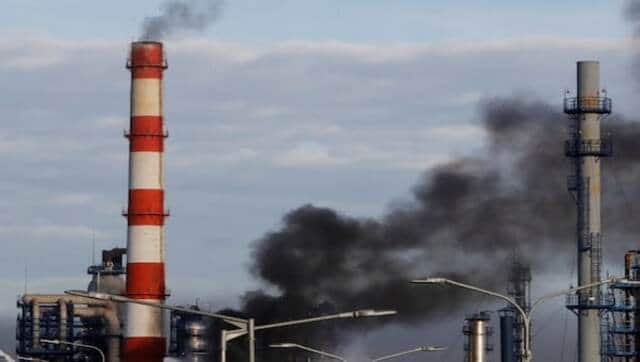 Representational image. Reuters[/caption]Swissquote analyst Ipek Ozkardeskaya warned that the big cut could "backfire" on OPEC+ if investors fear that it will push inflation higher and force central banks to hike interest rates so much that it will trigger a recession."The higher the energy prices, the sharper the central banks must kill demand to pull the prices lower," she said before the decision was announced."Therefore, a big cut in OPEC production could well backfire, and trigger profit taking and fall in oil prices today," she added.
The next OPEC+ meeting will take place on 4 December.OPEC+ will move to meeting every six months instead of monthly meetings.The White House said President Joe Biden would continue to assess whether to release further strategic oil stocks to lower prices."The President is disappointed by the short-sighted decision by OPEC+ to cut production quotas while the global economy is dealing with the continued negative impact of (Russian President Vladimir) Putin’s invasion of Ukraine," the White House said.Biden faces low approval ratings ahead of mid-term elections due to soaring inflation and has called on Saudi Arabia, a long-term US ally, to help lower prices.US officials have said part of the reason Washington wants lower oil prices is to deprive Moscow of oil revenue. Biden travelled to Riyadh this year but failed to secure any firm cooperation commitments on energy.Relations have been further strained as Saudi Arabia has not condemned Moscow's actions in Ukraine.With inputs from agenciesRead all the Latest News, Trending News, Cricket News, Bollywood News,India News and Entertainment News here. Follow us on Facebook, Twitter and Instagram.
First Published:Oct 06, 2022, 15:10:09 IST
Advertisement
Advertisement

Delhi Police asks personnel to wear uniform: What the law says on cops in plainclothes during protests
The Delhi Police has instructed all its personnel to wear uniforms when they report for duty at Jantar Mantar for crowd control. This comes after outrage grew over videos of men in civilian clothes or without name tags hitting protesters in the Capital. Is it legal for the police to ditch uniforms during protests?
4 min read
Military drones & police check-ups: How Sri Lanka is fighting against worst dengue outbreak in a decade
Sri Lanka is fighting its most severe dengue outbreak in nearly a decade, with infections rising sharply across the nation. Military drones have been deployed to tackle the outbreak, which has claimed 56 lives. Health officials said the outbreak is being driven primarily by the DENV-2 variant of the virus
3 min read
How Facebook job ad lured 2 Karnataka men into Myanmar cyber scam camp
The Karnataka Cyber Command has rescued two youths from a scam compound in Myanmar operated by Chinese fraudsters. The duo from Karnataka were lured on the pretext of data-entry jobs. They were asked to work for 16 hours a day and were expected to sleep for six hours daily
4 min read
Why is India seeing 95% cloud cover despite a Super El Niño?
India is witnessing nearly 95 per cent cloud cover despite a Super El Niño, a climate event usually linked to weaker monsoons. Regional weather systems, cyclonic circulations, the monsoon trough and moisture from two seas are temporarily overpowering one of the world's strongest climate phenomena
5 min read
What is CJP’s fourth demand to the government as protests in Delhi intensify?
The protest by the Cockroach Janta Party at Delhi’s Jantar Mantar refuses to die down. The group have made a fourth demand to the Centre, asking that no FIRs are filed against the agitators and that no legal action be taken. The government has expressed willingness to speak to the protesters, but refused to accede on the resignation of Education Minister Dharmandra Pradhan
5 min read
Advertisement
Advertisement