
Advertisement


Sections
What are zero FIRs? Why are state police forces at odds over them?
In contrast to an FIR, which is filed based on jurisdiction, a 'zero FIR' can be filed at any police station. While FIRs have serial numbers, ‘zero FIRs’ are assigned the number ‘0’ and hence their moniker

Zero FIRs are back in the news after a war of words broke out over the controversy at Jharkhand’s Deoghar airport where a BJP MP claimed he was threatened by the police and officials accused the lawmaker of violating safety standards.The spat has resulted in nine including BJP MPs Nishikant Dubey and Manoj Tiwari being booked, the Delhi Police filing a ‘zero FIR’ being filed against the deputy commissioner of Deoghar in Jharkhand and some police officials on the charge of sedition and under the Officials Secret Acts, and Civil Aviation Minister Jyotiraditya Scindia vowing a ‘thorough investigation’ into the matter.But what is a ‘zero FIR’? How is it different from a regular FIR? Why are states are at odds over them?Let’s take a closer look:What is an FIR?Legal Service India defines FIR as information given to a police officer in writing as per the provisions of Section 154 of the Code of Criminal Procedure (CrPC)As per Indian Express, the term first information report (FIR) is not defined in the Indian Penal Code (IPC), Code of Criminal Procedure (CrPC), 1973, or in any other law, but in police regulations or rules, information recorded under Section 154 of CrPC is known as First Information Report (FIR).Section 154 (“Information in cognisable cases”) says that “every information relating to the commission of a cognisable offence, if given orally to an officer in charge of a police station, shall be reduced to writing by him or under his direction, and be read over to the informant; and every such information, whether given in writing or reduced to writing as aforesaid, shall be signed by the person giving it, and the substance thereof shall be entered in a book to be kept by such officer in such form as the State Government may prescribe”.Also, “a copy of the information as recorded…shall be given forthwith, free of cost, to the informant”, as per the report.An FIR thus as three elements:![Police]() Representational image. ANI[/caption]Why are ‘zero FIRs’ filed?The objective is to allow authorities to act quickly.It is a relatively new concept which was introduced in the aftermath of the 2012 Nirbhaya gang rape case on the recommendation of the Justice Verma Committee.Speaking to Daily Pioneer, lawyer Subrat Kumar Nanda said the aim is to quickly obtain information regarding a potential crime so that police can begin investigating and gather evidence before it can be tampered with and, if required, take the accused into custody.“Generally people are not aware of jurisdictional technicalities related to crime reporting. They approach the nearest police station or one that is conveniently accessible to them. It is for police to ascertain the jurisdiction within which the crime has taken place. If people are turned away from police stations on grounds of jurisdiction, and if they are made to run from one place to another it would be demotivating,” Nanda said.For victims also this would be extremely frustrating and it would result in vital time being lost thereby giving the accused opportunity to flee, remove evidence or influence witnesses, Nanda added.As this piece in Daily Pioneer noted, “The logic is clear here, that in serious cases police should get on the job with utmost urgency and register a Zero FIR, instead of squabbling over territorial jurisdiction and wasting critical hours in which the worst of the crime can be prevented or lives saved.”
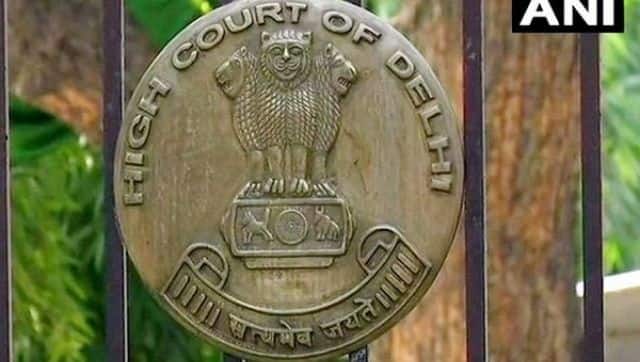
Representational image. ANI[/caption]Why are ‘zero FIRs’ filed?The objective is to allow authorities to act quickly.It is a relatively new concept which was introduced in the aftermath of the 2012 Nirbhaya gang rape case on the recommendation of the Justice Verma Committee.Speaking to Daily Pioneer, lawyer Subrat Kumar Nanda said the aim is to quickly obtain information regarding a potential crime so that police can begin investigating and gather evidence before it can be tampered with and, if required, take the accused into custody.“Generally people are not aware of jurisdictional technicalities related to crime reporting. They approach the nearest police station or one that is conveniently accessible to them. It is for police to ascertain the jurisdiction within which the crime has taken place. If people are turned away from police stations on grounds of jurisdiction, and if they are made to run from one place to another it would be demotivating,” Nanda said.For victims also this would be extremely frustrating and it would result in vital time being lost thereby giving the accused opportunity to flee, remove evidence or influence witnesses, Nanda added.As this piece in Daily Pioneer noted, “The logic is clear here, that in serious cases police should get on the job with utmost urgency and register a Zero FIR, instead of squabbling over territorial jurisdiction and wasting critical hours in which the worst of the crime can be prevented or lives saved.”![Delhi High Court]() Representational image. ANI[/caption]The Delhi High Court in 2018 noted several FIRs were registered in Delhi and not subsequently transferred “only because someone had influence or approach with Delhi Police”, even though no part of the crime was committed in Delhi.
Representational image. ANI[/caption]The Delhi High Court in 2018 noted several FIRs were registered in Delhi and not subsequently transferred “only because someone had influence or approach with Delhi Police”, even though no part of the crime was committed in Delhi.![]() File image of BJP MP Nishikant Dubey. News18[/caption]According to the Delhi Police’s ‘zero FIR’, which was filed at the North Avenue police station , Dubey said on 31 August he and Manoj Tiwari reached Deoghar airport to catch a flight to Delhi.“After checking in at the airport around 5:25 PM, I decided to meet and ask the airport director regarding the ongoing case at Jharkhand High Court over no ‘night take-off or landing facility’ of flights. I was stopped by the Jharkhand police officials and they even abused my two sons,” the FIR stated.“They also threatened to kill me and did this on the direction of Deoghar’s deputy commissioner Manjunath Bhajantri,” it alleged.Dubey and Tiwari had gone to Dumka to meet the family members of a minor girl who was burnt alive and got embroiled in a controversy on their way back to Delhi.The complaint against Dubey, his two sons, MP Manoj Tiwari, Deoghar Airport Director Sandeep Dhingra and others was lodged by Suman Anand, the security in charge of the airport at Kunda police station on 1 September.The complaint stated that all nine persons violated the safety standards by entering the ATC room at the Deogarh airport and forcibly taking clearance for the take-off, officials said.It has been alleged that permission was taken “forcibly” from the ATC despite no night take-off or landing facility at the airport that was inaugurated by Prime Minister Narendra Modi on 12 July.The FIR has resulted in a Twitter spat between Dubey and Deoghar Deputy Commissioner Manjunath Bhajantri charging each other for violating the norms by entering the ATC room.In a tweet, Dubey said, “This act is similar to that of a criminal that you (DC Bhajantri) entered the premises without permission. In what capacity did you enter the airport? Who gave you permission to see CCTV footage? You are frustrated. Continue to take orders from the CM.”Taking to Twitter, the IAS officer said, “Hon’ble MP Sir, I entered the Airport terminal after taking a legitimate entry pass. DC is also a Member on the Board of Directors of Deoghar Airport.”With inputs from agenciesRead all the Latest News, Trending News, Cricket News, Bollywood News,India News and Entertainment News here. Follow us on Facebook, Twitter and Instagram.
File image of BJP MP Nishikant Dubey. News18[/caption]According to the Delhi Police’s ‘zero FIR’, which was filed at the North Avenue police station , Dubey said on 31 August he and Manoj Tiwari reached Deoghar airport to catch a flight to Delhi.“After checking in at the airport around 5:25 PM, I decided to meet and ask the airport director regarding the ongoing case at Jharkhand High Court over no ‘night take-off or landing facility’ of flights. I was stopped by the Jharkhand police officials and they even abused my two sons,” the FIR stated.“They also threatened to kill me and did this on the direction of Deoghar’s deputy commissioner Manjunath Bhajantri,” it alleged.Dubey and Tiwari had gone to Dumka to meet the family members of a minor girl who was burnt alive and got embroiled in a controversy on their way back to Delhi.The complaint against Dubey, his two sons, MP Manoj Tiwari, Deoghar Airport Director Sandeep Dhingra and others was lodged by Suman Anand, the security in charge of the airport at Kunda police station on 1 September.The complaint stated that all nine persons violated the safety standards by entering the ATC room at the Deogarh airport and forcibly taking clearance for the take-off, officials said.It has been alleged that permission was taken “forcibly” from the ATC despite no night take-off or landing facility at the airport that was inaugurated by Prime Minister Narendra Modi on 12 July.The FIR has resulted in a Twitter spat between Dubey and Deoghar Deputy Commissioner Manjunath Bhajantri charging each other for violating the norms by entering the ATC room.In a tweet, Dubey said, “This act is similar to that of a criminal that you (DC Bhajantri) entered the premises without permission. In what capacity did you enter the airport? Who gave you permission to see CCTV footage? You are frustrated. Continue to take orders from the CM.”Taking to Twitter, the IAS officer said, “Hon’ble MP Sir, I entered the Airport terminal after taking a legitimate entry pass. DC is also a Member on the Board of Directors of Deoghar Airport.”With inputs from agenciesRead all the Latest News, Trending News, Cricket News, Bollywood News,India News and Entertainment News here. Follow us on Facebook, Twitter and Instagram.
- The information must relate to the commission of a cognisable offence
- It should be given in writing or orally to the head of the police station
- It must be written down and signed by the informant, and its key points should be recorded in a daily diary.
Where FIRs have serial numbers, ‘zero FIRs’ are assigned the number ‘0’ and hence their name.After a police station registers a ‘zero FIR’, it has to then transfer the complaint to a police station with the jurisdiction to investigate the alleged offence.Once a zero FIR is transferred, the police station with the appropriate jurisdiction assigns it a serial number, thereby converting it into a regular FIR, as per the report.[caption id="attachment_10984671" align="alignnone" width="640"]
 Representational image. ANI[/caption]Why are ‘zero FIRs’ filed?The objective is to allow authorities to act quickly.It is a relatively new concept which was introduced in the aftermath of the 2012 Nirbhaya gang rape case on the recommendation of the Justice Verma Committee.Speaking to Daily Pioneer, lawyer Subrat Kumar Nanda said the aim is to quickly obtain information regarding a potential crime so that police can begin investigating and gather evidence before it can be tampered with and, if required, take the accused into custody.“Generally people are not aware of jurisdictional technicalities related to crime reporting. They approach the nearest police station or one that is conveniently accessible to them. It is for police to ascertain the jurisdiction within which the crime has taken place. If people are turned away from police stations on grounds of jurisdiction, and if they are made to run from one place to another it would be demotivating,” Nanda said.For victims also this would be extremely frustrating and it would result in vital time being lost thereby giving the accused opportunity to flee, remove evidence or influence witnesses, Nanda added.As this piece in Daily Pioneer noted, “The logic is clear here, that in serious cases police should get on the job with utmost urgency and register a Zero FIR, instead of squabbling over territorial jurisdiction and wasting critical hours in which the worst of the crime can be prevented or lives saved.”
The piece noted two recent instances where police refused to file ‘zero FIRs’ – the cases of Kalahandi teacher Mamita Meher and cameraman Manas Swain.In both the cases, the victims’ families complaints were not registered initially by the Balangir police and the Airfield police, respectively under the plea of territorial jurisdiction, the piece noted.Why are state police forces at odds over ‘zero FIRs’?As per Scroll, zero FIRs have become a ‘political football’ for police and politicians.[caption id="attachment_10868501" align="alignnone" width="640"]
 Representational image. ANI[/caption]The Delhi High Court in 2018 noted several FIRs were registered in Delhi and not subsequently transferred “only because someone had influence or approach with Delhi Police”, even though no part of the crime was committed in Delhi.
There’s also that big word – jurisdiction.Scroll noted instances of state police forces battling over jurisdiction – the Mumbai Police and Bihar Police in the death of Sushant Singh Rajput; the Punjab Police registering an FIR and arrested Bharatiya Janata Party spokesperson Tajinder Pal Singh Bagga from his home in Delhi and the Delhi Police in turn booking their counterparts for kidnapping and robbery.The Punjab Police were even detained by the police of BJP-governed Haryana when escorting Bagga from Delhi, the piece noted.What does the SC say?The Supreme Court in Union of India Vs Ashok Kumar Sharma and others observed in 2020, “There is the practice of registering an FIR as a Zero FIR, when the police station at which FIR is registered, does not have territorial jurisdiction it is made over to the police station which has jurisdiction in the matter. Therefore, when information is given to a police officer, within the meaning of Section 154 of the CrPC, in relation to the commission of a cognisable offence, the police officer must register a FIR and then make it over to the Inspector.”What about the ‘zero FIR’ against Deoghar DC?The Deoghar police still haven’t received it from their Delhi counterparts.“We are yet to receive a hard copy of the FIR from Delhi Police. Only after we get the copy, can we register a case,” Subhash Chandra Jat, Superintendent of Police, Deoghar, told The Hindu.[caption id="attachment_11202531" align="alignnone" width="640"]
 File image of BJP MP Nishikant Dubey. News18[/caption]According to the Delhi Police’s ‘zero FIR’, which was filed at the North Avenue police station , Dubey said on 31 August he and Manoj Tiwari reached Deoghar airport to catch a flight to Delhi.“After checking in at the airport around 5:25 PM, I decided to meet and ask the airport director regarding the ongoing case at Jharkhand High Court over no ‘night take-off or landing facility’ of flights. I was stopped by the Jharkhand police officials and they even abused my two sons,” the FIR stated.“They also threatened to kill me and did this on the direction of Deoghar’s deputy commissioner Manjunath Bhajantri,” it alleged.Dubey and Tiwari had gone to Dumka to meet the family members of a minor girl who was burnt alive and got embroiled in a controversy on their way back to Delhi.The complaint against Dubey, his two sons, MP Manoj Tiwari, Deoghar Airport Director Sandeep Dhingra and others was lodged by Suman Anand, the security in charge of the airport at Kunda police station on 1 September.The complaint stated that all nine persons violated the safety standards by entering the ATC room at the Deogarh airport and forcibly taking clearance for the take-off, officials said.It has been alleged that permission was taken “forcibly” from the ATC despite no night take-off or landing facility at the airport that was inaugurated by Prime Minister Narendra Modi on 12 July.The FIR has resulted in a Twitter spat between Dubey and Deoghar Deputy Commissioner Manjunath Bhajantri charging each other for violating the norms by entering the ATC room.In a tweet, Dubey said, “This act is similar to that of a criminal that you (DC Bhajantri) entered the premises without permission. In what capacity did you enter the airport? Who gave you permission to see CCTV footage? You are frustrated. Continue to take orders from the CM.”Taking to Twitter, the IAS officer said, “Hon’ble MP Sir, I entered the Airport terminal after taking a legitimate entry pass. DC is also a Member on the Board of Directors of Deoghar Airport.”With inputs from agenciesRead all the Latest News, Trending News, Cricket News, Bollywood News,India News and Entertainment News here. Follow us on Facebook, Twitter and Instagram.
First Published:Sep 07, 2022, 15:58:23 IST
Advertisement
Advertisement

Delhi Police asks personnel to wear uniform: What the law says on cops in plainclothes during protests
The Delhi Police has instructed all its personnel to wear uniforms when they report for duty at Jantar Mantar for crowd control. This comes after outrage grew over videos of men in civilian clothes or without name tags hitting protesters in the Capital. Is it legal for the police to ditch uniforms during protests?
4 min read
Military drones & police check-ups: How Sri Lanka is fighting against worst dengue outbreak in a decade
Sri Lanka is fighting its most severe dengue outbreak in nearly a decade, with infections rising sharply across the nation. Military drones have been deployed to tackle the outbreak, which has claimed 56 lives. Health officials said the outbreak is being driven primarily by the DENV-2 variant of the virus
3 min read
How Facebook job ad lured 2 Karnataka men into Myanmar cyber scam camp
The Karnataka Cyber Command has rescued two youths from a scam compound in Myanmar operated by Chinese fraudsters. The duo from Karnataka were lured on the pretext of data-entry jobs. They were asked to work for 16 hours a day and were expected to sleep for six hours daily
4 min read
Why is India seeing 95% cloud cover despite a Super El Niño?
India is witnessing nearly 95 per cent cloud cover despite a Super El Niño, a climate event usually linked to weaker monsoons. Regional weather systems, cyclonic circulations, the monsoon trough and moisture from two seas are temporarily overpowering one of the world's strongest climate phenomena
5 min read
What is CJP’s fourth demand to the government as protests in Delhi intensify?
The protest by the Cockroach Janta Party at Delhi’s Jantar Mantar refuses to die down. The group have made a fourth demand to the Centre, asking that no FIRs are filed against the agitators and that no legal action be taken. The government has expressed willingness to speak to the protesters, but refused to accede on the resignation of Education Minister Dharmandra Pradhan
5 min read
Advertisement
Advertisement