
Advertisement


Sections
Explained: The 'mascara' trend and how people are using codes to talk about sex on TikTok
Having code words or language to refer to sex is not new. Now, TikTok users are using the term ‘mascara’ and other metaphors to discuss sex, relationships and even assault

Social media has long been a place for makeup enthusiasts and beauty gurus to discuss trends, but that’s not why TikTok users are currently talking about mascara. Young people are using “mascara” as a code word for talking about sex, relationships and assault.Posts tagged with #mascaratrend generally feature young women using the term “mascara” and associated metaphors to refer to romantic or sexual partners. For example:"I found the best mascara ever but it changed and made my lashes completely fall apart and now I don’t know if I’ll ever trust any other mascara."Some posts make more direct references to sex, using “(mascara) wand” as a code word for penis: I love mascara but anything involving the wand terrifies me.At the time of writing, the hashtag #mascaratrend has generated more than 122.7 million views on TikTok and a wave of social commentary. In part, it is a response to TikTok’s moderation policies – users have criticised its strict moderation of content about sex. Talking about “mascara” allows them to side-step moderation. In this way, the trend reflects longer histories of sex codes designed to get around censors.Media standards have often constrained how explicitly sex can be discussed and presented in public. Under Hollywood’s “Hays Code”, films produced between 1930 and 1967 could not show “excessive and lustful kissing, lustful embraces, [and] suggestive postures and gestures”.Instead, filmmakers used visual cues and metaphors to reference sexual activity. Famous examples include a crashing wave in From Here To Eternity, and a lighthouse in Casablanca plus lots of post-coital cigarettes.More recently, contestants on reality romance show Love Island have used a colourful set of codes to describe the extent of their sexual activity.Sex codes throughout historyThese codes are doing more than simply avoiding censors. Put in historical perspective, the mascara trend is the latest in a long line of secretive ways young people have found to talk about sex.The language – whether technical or sentimental – that adults use to discuss sex often doesn’t fit the conversations young people want to have. For example, they may not have words to describe acts such mutual masturbation – so code has been their only language for discussing their experiences.In postwar Britain, young people ranked sexual activities and referred to these by numbers. This is similar to the American “base” system of sex activity, in which “first base” referred to kissing with tongues, building up to “fourth base/home run” which described penetrative sex.![mascara]() The mascara trend has prompted many young people to share stories of sexual assault. Pixabay (Representational Image)[/caption]But this dynamic is complicated. Some sexual trauma professionals have celebrated this trend for how it has encouraged some people to seek support in the wake of assault.But others have raised concerns that the “banter” aspect of the trend, the vagueness of the code, and the disembodied way in which it presents sexual activity and assault trivialises the issue.Getting the jokeCodes are, by their nature, exclusionary to those who aren’t in on the joke. This can lead to confusion and negativity, especially on social media. Actress Julia Fox became an example of this when she had to apologise for leaving an insensitive comment on a “mascara” video about sexual assault.But codes’ ability to separate those “in the know” from those who aren’t is crucial to how they function. Particularly for young people, codes allow them to distinguish their sexual cultures from those of adults and authorities.In recent years, the use of terms such as “v-card” to refer to virginity and initial systems (such as “p in v” to refer to penis in vagina sex) are one example. The initial system reflects a more diverse sexual culture, and can be used to talk about LGBTQ+ sexual activity in a more inclusive way.[caption id="attachment_12140832" align="alignnone" width="640"]
The mascara trend has prompted many young people to share stories of sexual assault. Pixabay (Representational Image)[/caption]But this dynamic is complicated. Some sexual trauma professionals have celebrated this trend for how it has encouraged some people to seek support in the wake of assault.But others have raised concerns that the “banter” aspect of the trend, the vagueness of the code, and the disembodied way in which it presents sexual activity and assault trivialises the issue.Getting the jokeCodes are, by their nature, exclusionary to those who aren’t in on the joke. This can lead to confusion and negativity, especially on social media. Actress Julia Fox became an example of this when she had to apologise for leaving an insensitive comment on a “mascara” video about sexual assault.But codes’ ability to separate those “in the know” from those who aren’t is crucial to how they function. Particularly for young people, codes allow them to distinguish their sexual cultures from those of adults and authorities.In recent years, the use of terms such as “v-card” to refer to virginity and initial systems (such as “p in v” to refer to penis in vagina sex) are one example. The initial system reflects a more diverse sexual culture, and can be used to talk about LGBTQ+ sexual activity in a more inclusive way.[caption id="attachment_12140832" align="alignnone" width="640"]![mascara trend on TikTok]() The mascara trend has also allowed young people to make sex funny. Pixabay (Representational Image)[/caption]At a time when discussions about sexual culture are fraught, the mascara trend has also allowed young people to make sex funny. While the trend has a serious side, many of the posts are tongue-in-cheek. There is kudos to be gained by finding ways to play with the code, for example by extending the “makeup as sex” metaphor.In addition to side-stepping censors and talking about aspects of sex that are otherwise hidden, codes like the mascara trend give young people new ways of talking about and imagining sex. It allows them to define sex and sexuality in their own terms.This article is republished from The Conversation under a Creative Commons license. Read the original article.Read all the Latest News, Trending News, Cricket News, Bollywood News,India News and Entertainment News here. Follow us on Facebook, Twitter and Instagram.
The mascara trend has also allowed young people to make sex funny. Pixabay (Representational Image)[/caption]At a time when discussions about sexual culture are fraught, the mascara trend has also allowed young people to make sex funny. While the trend has a serious side, many of the posts are tongue-in-cheek. There is kudos to be gained by finding ways to play with the code, for example by extending the “makeup as sex” metaphor.In addition to side-stepping censors and talking about aspects of sex that are otherwise hidden, codes like the mascara trend give young people new ways of talking about and imagining sex. It allows them to define sex and sexuality in their own terms.This article is republished from The Conversation under a Creative Commons license. Read the original article.Read all the Latest News, Trending News, Cricket News, Bollywood News,India News and Entertainment News here. Follow us on Facebook, Twitter and Instagram.
Mainstream language is especially limited when it comes to talking about women’s bodies and female sexual experience.While young people today are more likely to know the anatomical terms for their genitalia than their predecessors, the language of vulvas, vaginas and penetrative sex can feel awkward and out of place in teenagers’ interactions with one another.While codes enable young people to make reference to these body parts, it is possible that reliance on euphemisms exacerbates the taboo.This question of whether codes are helpful or harmful has also been raised in relation to discussions of sexual assault. The mascara trend has prompted many young people to share stories of sexual assault.For many survivors, it appears that being able to speak in code enables them to disclose experiences that they wouldn’t otherwise.[caption id="attachment_12140822" align="alignnone" width="640"]
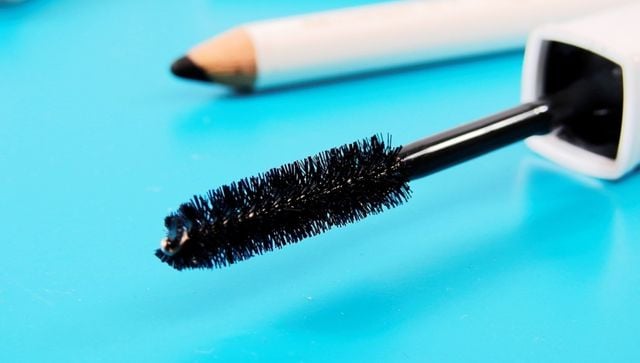 The mascara trend has prompted many young people to share stories of sexual assault. Pixabay (Representational Image)[/caption]But this dynamic is complicated. Some sexual trauma professionals have celebrated this trend for how it has encouraged some people to seek support in the wake of assault.But others have raised concerns that the “banter” aspect of the trend, the vagueness of the code, and the disembodied way in which it presents sexual activity and assault trivialises the issue.Getting the jokeCodes are, by their nature, exclusionary to those who aren’t in on the joke. This can lead to confusion and negativity, especially on social media. Actress Julia Fox became an example of this when she had to apologise for leaving an insensitive comment on a “mascara” video about sexual assault.But codes’ ability to separate those “in the know” from those who aren’t is crucial to how they function. Particularly for young people, codes allow them to distinguish their sexual cultures from those of adults and authorities.In recent years, the use of terms such as “v-card” to refer to virginity and initial systems (such as “p in v” to refer to penis in vagina sex) are one example. The initial system reflects a more diverse sexual culture, and can be used to talk about LGBTQ+ sexual activity in a more inclusive way.[caption id="attachment_12140832" align="alignnone" width="640"]
 The mascara trend has also allowed young people to make sex funny. Pixabay (Representational Image)[/caption]At a time when discussions about sexual culture are fraught, the mascara trend has also allowed young people to make sex funny. While the trend has a serious side, many of the posts are tongue-in-cheek. There is kudos to be gained by finding ways to play with the code, for example by extending the “makeup as sex” metaphor.In addition to side-stepping censors and talking about aspects of sex that are otherwise hidden, codes like the mascara trend give young people new ways of talking about and imagining sex. It allows them to define sex and sexuality in their own terms.This article is republished from The Conversation under a Creative Commons license. Read the original article.Read all the Latest News, Trending News, Cricket News, Bollywood News,India News and Entertainment News here. Follow us on Facebook, Twitter and Instagram.
First Published:Feb 11, 2023, 17:53:38 IST
Advertisement
Advertisement

Military drones & police check-ups: How Sri Lanka is fighting against worst dengue outbreak in a decade
Sri Lanka is fighting its most severe dengue outbreak in nearly a decade, with infections rising sharply across the nation. Military drones have been deployed to tackle the outbreak, which has claimed 56 lives. Health officials said the outbreak is being driven primarily by the DENV-2 variant of the virus
3 min read
How Facebook job ad lured 2 Karnataka men into Myanmar cyber scam camp
The Karnataka Cyber Command has rescued two youths from a scam compound in Myanmar operated by Chinese fraudsters. The duo from Karnataka were lured on the pretext of data-entry jobs. They were asked to work for 16 hours a day and were expected to sleep for six hours daily
4 min read
Why is India seeing 95% cloud cover despite a Super El Niño?
India is witnessing nearly 95 per cent cloud cover despite a Super El Niño, a climate event usually linked to weaker monsoons. Regional weather systems, cyclonic circulations, the monsoon trough and moisture from two seas are temporarily overpowering one of the world's strongest climate phenomena
5 min read
What is CJP’s fourth demand to the government as protests in Delhi intensify?
The protest by the Cockroach Janta Party at Delhi’s Jantar Mantar refuses to die down. The group have made a fourth demand to the Centre, asking that no FIRs are filed against the agitators and that no legal action be taken. The government has expressed willingness to speak to the protesters, but refused to accede on the resignation of Education Minister Dharmandra Pradhan
5 min read
The new geography of war: Why the Houthis can no longer be ignored
The rise of the Houthis marks the emergence of a new geography of war — one in which influence flows not only from capitals and conventional armies, but also from rugged mountains overlooking vital sea lanes
6 min read
Advertisement
Advertisement