


Explained: How Pakistan is following Sri Lanka's footsteps in China's debt trap
China, which is Pakistan's single-largest creditor — owning 30 per cent of its total external debt — is set to grant a $700 million loan through its China Development Bank. But experts say further borrowing from Beijing could cause trouble ahead
When it comes to bilateral loans, China also charges increased interest rates at a shorter tenure.Germany, Japan and France offer loans at an interest rate of less than one percent, while China charges 3 to 3.5 per cent, as per Indian Express.In the fiscal year 2021-2022, Pakistan paid around $150 million towards interest to China for using a $4.5 billion Chinese trade finance facility.In the financial year 2019-2020, Pakistan paid $120 million towards interest on $3 billion in loans.The Chinese demand for the Lahore Line payment was made in the first week of April 2022 when the new political dispensation under PM Shehbaz Sharif had just stepped into office. Earlier, at the beginning of March 2022, China acceded to Pakistan's request to roll over a whopping $4.2 billion debt repayment to provide a major relief for its all-weather ally, reported Osservatorio Globalizzazione.Meanwhile, Beijing has lent Pakistan a huge chunk of money for the China-Pakistan Economic Corridor (CPEC).China stringent on recovering moneyWhen it comes to recovering money from Pakistan, China has been ready and willing to crack the whip.Take Pakistan's energy sector for instance, where Chinese investors have repeatedly insisted on resolving issues relating to existing project sponsors in order to attract fresh investment.Some Chinese projects in Pakistan are facing problems in securing insurance for their loans in China due to Pakistan's massive energy sector circular debt of about $14 billion.Pakistan has to pay around $1.3 billion to Chinese power producers.Thus far, is has only paid $280 million.Another example of hard bargaining by China over monetary dealings vis-a-vis Pakistan is well documented in the case of the Dasu Dam Project.Last year, China demanded $38 million towards compensation for the families of 36 engineers who had died in the Dasu Dam terror attack.Compensation was made a precondition for resumption of work on the project. To placate China, Pakistan subsequently agreed to pay $11.6 million as compensation.This strategy has not paid dividends and is only making Pakistan sink deeper into debt.Could Pakistan follow Sri Lanka?Some are worried that Pakistan could go the Sri Lanka way.Osservatorio Globalizzazione reported that Islamabad could follow Colombo in facing the consequences of bad economic policies and heavy debt burdens.Uzair Younus, director of the Pakistan Initiative at the Atlantic Council’s South Asia Center, told The Print that more borrowing from China could cause trouble ahead.[caption id="attachment_12187302" align="alignnone" width="640"]
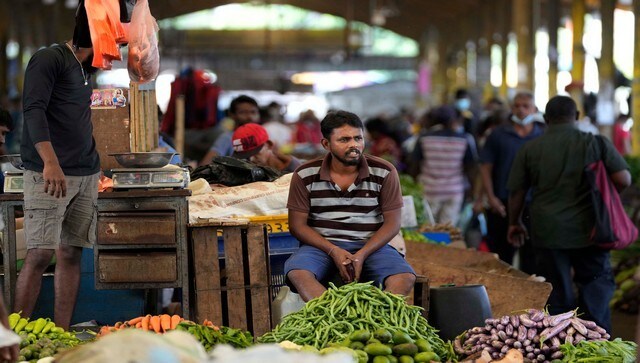
A vendor waits for customers at a vegetable market place in Colombo, Sri Lanka. AP[/caption]“Without reforming and restructuring its economy, additional debt taken on for infrastructure projects, whether from China or anyone else, is likely to exacerbate the challenges Pakistan is facing. Let’s say 4-5 years from now there’s another need for an IMF bailout. Then, such debts will be a sticking point,” Younus told the outlet.“The concerns about a Sri Lanka-type default are valid, given the liquidity crisis in Pakistan. But I think the Chinese are not going to move forward on a major project until broader macroeconomic risks are dealt with within Pakistan.”Karachi-based business journalist Ariba Shahid told The Print, “Sri Lanka reached a default situation because they were not in an IMF programme, unlike Pakistan which is part of one. That said, there are similarities with regard to both countries having a history of poor borrowing techniques,” she said.How China’s debt diplomacy hurt Sri LankaAs per The Hong Kong Post, China has massively invested in over 150 countries with a majority of them being underdeveloped nations.
This, allows it to portray itself as a Good Samaritan.But this infrastructural investment gradually increases the debt of poor countries beyond repayment. This puts them in a phase of default ultimately compelling them to make strategic concessions to China.This debt trap diplomacy of China is a trend observed across the globe in nations with low GDPs. The China Communications Construction Company (CCCC), a state-owned multinational engineering and construction firm, builds infrastructural projects and further expands China's agenda with its 60 subsidiaries.The latest of these patterns was seen in Sri Lanka, which as quoted by the report is neck-deep in debt to China, amounting to approximately $6.8 billion. China's Export-Import Bank (EXIM) funded for construction of the 'Hambantota International Port' and the 'Mattala Rajapaksa International Airport' in Sri Lanka.Sri Lanka then fell into a financial crisis causing the government unable to cover the project's maintenance costs and interest despite the loan, and the country declared bankruptcy, defaulting on its sovereign debt, The Hong Kong Post reported.Now, reports are emerging about how Beijing is standing in the way of Sri Lanka getting an IMF loan.As this piece in The Diplomat noted, while Beijing has given Colombo relief from debt for two years, it has not agreed to provide financing.Sri Lankan Minister of Transport & Highways and Mass Media, Bandula Gunawardena was quoted as saying by Daijjiworld, “China has informed government-appointed agencies assigned for the debt restructuring process that they will extend a two-year moratorium on debt repayment.”
This is stopping the IMF from coming to Sri Lanka’s aid.Bradley Parks, the executive director of the AidData research group at William & Mary, told The Diplomat that countries for years “were getting to know China as the kind of benevolent financier of big-ticket infrastructure.”However, now China is playing a very different role – the world’s largest debt collector.India, meanwhile, has expressed solidarity with the debt-ridden Island nation by extending around $4 billion in terms of credits and rollovers to help Sri Lanka get through an economic crisis.“For us, it was an issue of the neighbourhood first and not leaving a partner to fend for themselves,” External Affairs Minister S Jaishankar said in January.“India decided not to wait on others, but to do what we believe is right. We extended financing assurances to the IMF to clear the way for Sri Lanka to move forward,” he added.“We extended financing assurances to the IMF to clear the way for Sri Lanka to move forward. Our expectation is that this will not only strengthen Sri Lanka’s position but ensure that all bilateral creditors are dealt with equally,” he added.‘Chinese only ones investing here’Still, some remain reticent to point the finger at Beijing.Economist Zubair Khan, a former IMF official, while describing Islamabad’s economy as being on a ‘suicidal path’ to The Guardian cast the blame on the government and the IMF.“Our government is pursuing the wrong policies and the IMF programme is aggravating the situation,” Khan said. “We owe a lot of money to the Chinese because they’re the only ones who have been investing here.”
China, meanwhile, has its own less than charitable reasons for continuing to support Pakistan.As Andrew Small, a senior fellow at the German Marshall Fund of the United States, told the newspaper, China “needs a strong, capable Pakistan, to continue to function as an effective counterbalance to India.“It’s important that they’re not seen to let Pakistan down, because if they let Pakistan down in this situation, then the message to everyone else is that they can’t be relied on.”Pakistan has a chronic balance of payments problem which was exacerbated in the last year, with the country's forex reserves declining to critical levels.As of 10 February, the central bank had only $3.2 billion in reserves, enough to cover barely three weeks of imports.To stem dollar outflows, the government has imposed restrictions, allowing imports of only essential food items and medicines until a bailout is agreed upon with the IMF, which is seen as essential for the country to stave off default.Pakistan has already fulfilled demands of the International Monetary Fund, including raising an additional ₹170 billion in revenues by June before releasing crucial $1.1 billion out of an already agreed $7 billion loan program.The government headed by Prime Minister Shehbaz Sharif has decided to implement measures to cut down on its expenditures by increasing taxes on the public and bringing down government expenses.The government has also ordered the Foreign Ministry to slash the number of missions abroad and reduce their offices, and staff and initiate other measures to cut down expenditures of the debt-ridden nation by 15 per cent.In November, finance minister Dar said that Pakistan has secured a $13 billion bailout from China and Saudi Arabia with $5.7 billion in fresh loans. Dar was confident that the cash would come before the IMF programme revival.However, it became clear with time that Islamabad's old allies refused to dole out more cash without the country first agreeing to the IMF's conditions. That was when Pakistan had to invite the IMF mission to negotiate the deal, The Express Tribune newspaper reported.With inputs from agenciesRead all the Latest News, Trending News, Cricket News, Bollywood News,India News and Entertainment News here. Follow us on Facebook, Twitter and Instagram.

Delhi Police asks personnel to wear uniform: What the law says on cops in plainclothes during protests
Military drones & police check-ups: How Sri Lanka is fighting against worst dengue outbreak in a decade
How Facebook job ad lured 2 Karnataka men into Myanmar cyber scam camp
Why is India seeing 95% cloud cover despite a Super El Niño?
What is CJP’s fourth demand to the government as protests in Delhi intensify?