
Advertisement


Sections
Explained: How Indian Army will recruit Nepali Gorkhas under Agnipath scheme and why it's a concern
The Indian Army takes in Nepalese soldiers under the tripartite treaty signed between Nepal, India and Britain in 1947. India currently has 43 Gorkha battalions serving in seven regiments

Even as India prepares to unroll its controversial Agnipath scheme, there comes news of a new development – that Nepali Gorkhas will be recruited under this scheme.Announced on 14 June, the scheme initially provided for the recruitment of youths in the age bracket of 17-and-half to 21 years for only four years with a provision to retain 25 per cent of them for 15 more years.However, the Centre extended the upper age limit to 23 years for recruitment in 2022.The personnel recruited under the new scheme would be known as Agniveers.Let’s take a look at the latest development, how Gorkhas are recruited in the Indian Army and why the development seems to have caused some consternation in some quarters:What’s the latest development?The Print reported that recruitment of Nepalis into the Indian Army’s seven Gorkha regiments will be done through the Agnipath scheme.Sources in the defence and security establishment told The Print Gorkhas were keen on the recruitment as per their feedback.Nepali Gorkhas would be recruited for a four-year term after which 25 per cent would be retained for a longer term – conditions similar to that of Indian soldiers under the scheme.The Indian Army and GorkhasThe Indian Army takes in Nepalese soldiers under the tripartite treaty signed between Nepal, India and Britain at time of Independence.India currently has 43 Gorkha battalions with soldiers from both Nepal and India in seven Gorkha regiments – 1st, 3rd, 4th, 5th, 8th, 9th and the 11th.Maj Gen Ashok K Mehta (retd) wrote in the Tribune that “Gorkhas still join Indian regiments for traditional ancestral bonding with the parent battalions.”The 1, 3, 4, 5 and 8 Gorkha regiments are mainly Magars and Gurungs; the 9th are Chhetris and Thakuris; and 11 Gorkhas consist of Rais and Limbus and are all part of the Indian Army, he noted.[caption id="attachment_11016591" align="alignnone" width="640"]![Representational image. News18]() Representational image. News18[/caption]The late CDS, Gen Bipin Rawat, commanded the 5th Battalion of 11 Gorkha Rifles, he added.Mehta wrote that recruitment into Gorkha regiments was initially done at Nautanwa, along the India-Nepal border near Bhairhawa.Later permanent locations such as the Gorkha Recruiting Depots in Kunraghat, Gorakhpur and Ghoom, near Darjeeling were selected.Recruiters from Nepal, called Galla Wallahs, used to bring young Gorkhas to the recruitment depots, trekking 20 to 24 days for bharti in Bharatiya fauj, Mehta wrote.
Representational image. News18[/caption]The late CDS, Gen Bipin Rawat, commanded the 5th Battalion of 11 Gorkha Rifles, he added.Mehta wrote that recruitment into Gorkha regiments was initially done at Nautanwa, along the India-Nepal border near Bhairhawa.Later permanent locations such as the Gorkha Recruiting Depots in Kunraghat, Gorakhpur and Ghoom, near Darjeeling were selected.Recruiters from Nepal, called Galla Wallahs, used to bring young Gorkhas to the recruitment depots, trekking 20 to 24 days for bharti in Bharatiya fauj, Mehta wrote.![Representational image. Reuters]() Representational image. Reuters[/caption]Nepali website MyRepublica said government officials maintain that any such provision violates the 1947 Tripartite Agreement that governs the recruitment of Nepali youths into the Indian Gorkhas and any change in the recruitment procedures must first be approved by the Nepal government.The Tripartite Agreement mentions that "subject to satisfactory performance and conduct, all soldiers should be allowed to serve for sufficient time in order to qualify for a pension", officials further told the newspaper.Senior government officials told the newspaper that though Indian media reported that Gorkhas will be recruited under this scheme “even the minimum courtesy required to inform Kathmandu authorities does not seem to have been observed.”Commentator Kanak Mani Dixit told the newspaper that the Agnipath scheme will impact both Nepali society and Nepal's foreign relations."In terms of Nepali society, the Gorkha recruitment is a legacy of Nepal's particular history, and has provided gainful employment and income to a large portion of the hill ethnic communities. It has been the hope that foreign recruitment will end as Nepal enters an era of prosperity, when citizens do not find it necessary to enter the military of another country. The Agnipath formula, however, would deprive Nepali citizens from a full career in the Indian Gorkha regiments. This is not the kind of employment conditions in mind when Nepal formally allows foreign recruitment, and so the Indian Government would be seen to be in breach of the Tripartite Agreement," Dixit warned.As per Indian Express, serving soldiers also send remittances home to the tune of Rs 1,000 crore every year.“That is a huge injection of money into Nepal’s economy,” Ranjit Rae, India’s former ambassador to Nepal, who has written extensively about India’s Gorkha connect with Nepal in his book ‘Kathmandu Dilemma: Resetting India-Nepal Ties’ told Indian Express.“There is massive unemployment in Nepal, and most young people leave to work in other countries. In the villages, only the old folks and women are left. It would be very difficult to assess the impact [of the new recruitment scheme] immediately. But as we saw in India, the first reaction in Nepal, too, was dismay.”Major-General Gopal Gurung (retd) of 5 Gorkha told Indian Express salaries, pensions and other benefits are a huge draw in Nepal for recruitment into the Indian Army.He added that the socioeconomic impact of Agnipath may take 10 or 15 years to become apparent, but that the historic Gorkha connection was at stake.“You had a system where you could join, not just for money but also because it is a family tradition,” Gurung, a third-generation soldier of the Indian Army and an alumnus of the National Defence Academy told the newspaper.His grandfather was a JCO, his father a captain, he said.Gurung cited Prime Minister Narendra Modi’s 2014 speech as an example: “He could have invoked any other aspect of India-Nepal ties — culture, religion, Buddhism, Hinduism — but he chose to invoke the Gorkha connection. That is the special relationship between India and the Gorkhas,” he said.Maj Gen Ashok K Mehta (retd), writing in The Tribune, warned, "Agnipath is seen as a big disappointment as in four years, the youth could earn a fortune in Dubai, Dublin and Durban, as they do, without putting their lives on the block along the LAC and LoC.""Over time, the BJP government is likely to end the Gorkha legend. Prime Minister Modi seems to have forgotten that on his first visit to Nepal in 2014, he had highlighted the sacrifices of the Gorkha soldiers. Agnipath will weaken that Gorkha bonding." With inputs from agenciesRead all the Latest News, Trending News, Cricket News, Bollywood News,India News and Entertainment News here. Follow us on Facebook, Twitter and Instagram.
Representational image. Reuters[/caption]Nepali website MyRepublica said government officials maintain that any such provision violates the 1947 Tripartite Agreement that governs the recruitment of Nepali youths into the Indian Gorkhas and any change in the recruitment procedures must first be approved by the Nepal government.The Tripartite Agreement mentions that "subject to satisfactory performance and conduct, all soldiers should be allowed to serve for sufficient time in order to qualify for a pension", officials further told the newspaper.Senior government officials told the newspaper that though Indian media reported that Gorkhas will be recruited under this scheme “even the minimum courtesy required to inform Kathmandu authorities does not seem to have been observed.”Commentator Kanak Mani Dixit told the newspaper that the Agnipath scheme will impact both Nepali society and Nepal's foreign relations."In terms of Nepali society, the Gorkha recruitment is a legacy of Nepal's particular history, and has provided gainful employment and income to a large portion of the hill ethnic communities. It has been the hope that foreign recruitment will end as Nepal enters an era of prosperity, when citizens do not find it necessary to enter the military of another country. The Agnipath formula, however, would deprive Nepali citizens from a full career in the Indian Gorkha regiments. This is not the kind of employment conditions in mind when Nepal formally allows foreign recruitment, and so the Indian Government would be seen to be in breach of the Tripartite Agreement," Dixit warned.As per Indian Express, serving soldiers also send remittances home to the tune of Rs 1,000 crore every year.“That is a huge injection of money into Nepal’s economy,” Ranjit Rae, India’s former ambassador to Nepal, who has written extensively about India’s Gorkha connect with Nepal in his book ‘Kathmandu Dilemma: Resetting India-Nepal Ties’ told Indian Express.“There is massive unemployment in Nepal, and most young people leave to work in other countries. In the villages, only the old folks and women are left. It would be very difficult to assess the impact [of the new recruitment scheme] immediately. But as we saw in India, the first reaction in Nepal, too, was dismay.”Major-General Gopal Gurung (retd) of 5 Gorkha told Indian Express salaries, pensions and other benefits are a huge draw in Nepal for recruitment into the Indian Army.He added that the socioeconomic impact of Agnipath may take 10 or 15 years to become apparent, but that the historic Gorkha connection was at stake.“You had a system where you could join, not just for money but also because it is a family tradition,” Gurung, a third-generation soldier of the Indian Army and an alumnus of the National Defence Academy told the newspaper.His grandfather was a JCO, his father a captain, he said.Gurung cited Prime Minister Narendra Modi’s 2014 speech as an example: “He could have invoked any other aspect of India-Nepal ties — culture, religion, Buddhism, Hinduism — but he chose to invoke the Gorkha connection. That is the special relationship between India and the Gorkhas,” he said.Maj Gen Ashok K Mehta (retd), writing in The Tribune, warned, "Agnipath is seen as a big disappointment as in four years, the youth could earn a fortune in Dubai, Dublin and Durban, as they do, without putting their lives on the block along the LAC and LoC.""Over time, the BJP government is likely to end the Gorkha legend. Prime Minister Modi seems to have forgotten that on his first visit to Nepal in 2014, he had highlighted the sacrifices of the Gorkha soldiers. Agnipath will weaken that Gorkha bonding." With inputs from agenciesRead all the Latest News, Trending News, Cricket News, Bollywood News,India News and Entertainment News here. Follow us on Facebook, Twitter and Instagram.
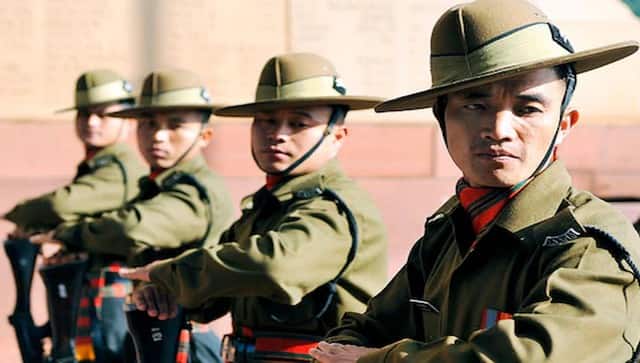 Representational image. News18[/caption]The late CDS, Gen Bipin Rawat, commanded the 5th Battalion of 11 Gorkha Rifles, he added.Mehta wrote that recruitment into Gorkha regiments was initially done at Nautanwa, along the India-Nepal border near Bhairhawa.Later permanent locations such as the Gorkha Recruiting Depots in Kunraghat, Gorakhpur and Ghoom, near Darjeeling were selected.Recruiters from Nepal, called Galla Wallahs, used to bring young Gorkhas to the recruitment depots, trekking 20 to 24 days for bharti in Bharatiya fauj, Mehta wrote.
After physical and medical tests, the few chosen were sent to the regimental training centres.The system changed when Indian recruiting teams went to Nepal to pluck hardy youth from inaccessible areas, he added.Recruitment rallies were held in Pokhara, Dharan and other places in west and east Nepal, he wrote.Sources said Nepalis constitute a fixed 60 percent while Indians make up the rest, as per The Print.Around 32,000-35,000 Nepal soldiers are serving in the Indian Army at any given time. The Indian Army ex-servicemen community in Nepal is about 1.32 lakh-strong, as per The Indian Express.How will Nepali Gorkhas be recruited?As per The Print, the recruitment would occur via two Gorkha Recruitment Depots (GRDs) – in West Bengal’s Darjeeling and Uttar Pradesh’s Gorakhpur.
Sources said the armies of India, Nepal and the UK first decide on a date for the recruitment rally.On that day, representatives from all three armies will hold a written and physical test at a chosen location in Nepal.“Let us say, 100 candidates have turned up at the rally and the British want 20, India 40 and the Nepal Army 50. The top 20 recruits are given the choice of joining the British Army, which offers the highest pay and allowances. The next lot is taken by India, which gives 2.5 times the pay and allowance of the Nepal Army,” a source told The Print.The dates for recruitment have not yet been fixed as talks between the Indian, Nepalese and British armies to fix dates for recruitment are ongoing, as per The Print.Indian Gorkhas are recruited from Uttarakhand, Himachal Pradesh, Darjeeling, Assam and Meghalaya through the Army Recruitment Office (ARO) in these states.Move raises concerns in some quartersThe impact of such a move has raised concern in some quarters in both India and Nepal.[caption id="attachment_8467981" align="alignnone" width="640"]
 Representational image. Reuters[/caption]Nepali website MyRepublica said government officials maintain that any such provision violates the 1947 Tripartite Agreement that governs the recruitment of Nepali youths into the Indian Gorkhas and any change in the recruitment procedures must first be approved by the Nepal government.The Tripartite Agreement mentions that "subject to satisfactory performance and conduct, all soldiers should be allowed to serve for sufficient time in order to qualify for a pension", officials further told the newspaper.Senior government officials told the newspaper that though Indian media reported that Gorkhas will be recruited under this scheme “even the minimum courtesy required to inform Kathmandu authorities does not seem to have been observed.”Commentator Kanak Mani Dixit told the newspaper that the Agnipath scheme will impact both Nepali society and Nepal's foreign relations."In terms of Nepali society, the Gorkha recruitment is a legacy of Nepal's particular history, and has provided gainful employment and income to a large portion of the hill ethnic communities. It has been the hope that foreign recruitment will end as Nepal enters an era of prosperity, when citizens do not find it necessary to enter the military of another country. The Agnipath formula, however, would deprive Nepali citizens from a full career in the Indian Gorkha regiments. This is not the kind of employment conditions in mind when Nepal formally allows foreign recruitment, and so the Indian Government would be seen to be in breach of the Tripartite Agreement," Dixit warned.As per Indian Express, serving soldiers also send remittances home to the tune of Rs 1,000 crore every year.“That is a huge injection of money into Nepal’s economy,” Ranjit Rae, India’s former ambassador to Nepal, who has written extensively about India’s Gorkha connect with Nepal in his book ‘Kathmandu Dilemma: Resetting India-Nepal Ties’ told Indian Express.“There is massive unemployment in Nepal, and most young people leave to work in other countries. In the villages, only the old folks and women are left. It would be very difficult to assess the impact [of the new recruitment scheme] immediately. But as we saw in India, the first reaction in Nepal, too, was dismay.”Major-General Gopal Gurung (retd) of 5 Gorkha told Indian Express salaries, pensions and other benefits are a huge draw in Nepal for recruitment into the Indian Army.He added that the socioeconomic impact of Agnipath may take 10 or 15 years to become apparent, but that the historic Gorkha connection was at stake.“You had a system where you could join, not just for money but also because it is a family tradition,” Gurung, a third-generation soldier of the Indian Army and an alumnus of the National Defence Academy told the newspaper.His grandfather was a JCO, his father a captain, he said.Gurung cited Prime Minister Narendra Modi’s 2014 speech as an example: “He could have invoked any other aspect of India-Nepal ties — culture, religion, Buddhism, Hinduism — but he chose to invoke the Gorkha connection. That is the special relationship between India and the Gorkhas,” he said.Maj Gen Ashok K Mehta (retd), writing in The Tribune, warned, "Agnipath is seen as a big disappointment as in four years, the youth could earn a fortune in Dubai, Dublin and Durban, as they do, without putting their lives on the block along the LAC and LoC.""Over time, the BJP government is likely to end the Gorkha legend. Prime Minister Modi seems to have forgotten that on his first visit to Nepal in 2014, he had highlighted the sacrifices of the Gorkha soldiers. Agnipath will weaken that Gorkha bonding." With inputs from agenciesRead all the Latest News, Trending News, Cricket News, Bollywood News,India News and Entertainment News here. Follow us on Facebook, Twitter and Instagram.
First Published:Aug 05, 2022, 17:08:11 IST
Advertisement
Advertisement

Why India may not witness a medal rush at 2026 Commonwealth Games
A 125-strong Indian contingent is in Glasgow for the 2026 Commonwealth Games, starting today (July 23), chasing international glory. However, with a roster of sports such as badminton and wrestling being cut from the event, the country’s medal chances have been drastically reduced
4 min read
Delhi Police asks personnel to wear uniform: What the law says on cops in plainclothes during protests
The Delhi Police has instructed all its personnel to wear uniforms when they report for duty at Jantar Mantar for crowd control. This comes after outrage grew over videos of men in civilian clothes or without name tags hitting protesters in the Capital. Is it legal for the police to ditch uniforms during protests?
4 min read
Military drones & police check-ups: How Sri Lanka is fighting against worst dengue outbreak in a decade
Sri Lanka is fighting its most severe dengue outbreak in nearly a decade, with infections rising sharply across the nation. Military drones have been deployed to tackle the outbreak, which has claimed 56 lives. Health officials said the outbreak is being driven primarily by the DENV-2 variant of the virus
3 min read
How Facebook job ad lured 2 Karnataka men into Myanmar cyber scam camp
The Karnataka Cyber Command has rescued two youths from a scam compound in Myanmar operated by Chinese fraudsters. The duo from Karnataka were lured on the pretext of data-entry jobs. They were asked to work for 16 hours a day and were expected to sleep for six hours daily
4 min read
Why is India seeing 95% cloud cover despite a Super El Niño?
India is witnessing nearly 95 per cent cloud cover despite a Super El Niño, a climate event usually linked to weaker monsoons. Regional weather systems, cyclonic circulations, the monsoon trough and moisture from two seas are temporarily overpowering one of the world's strongest climate phenomena
5 min read
Advertisement
Advertisement