
Advertisement


Sections
Explained: How a US debt default will affect everyday Americans
If the US treasury hits the debt ceiling and prioritises debt repayments, it will be forced to halt spending on federal programmes such as social security, Medicare, and Medicaid, which offer critical financial assistance to tens of millions of Americans

The White House and Congressional Republicans are still locked in crunch talks to try and avert the first debt default in the history of the United States, which treasury officials have warned could come as soon as 1 June.The US borrows more than it brings in through taxes, and so Congress periodically has to authorise an increase to the US debt limit, known as the debt ceiling, which currently sits at more than $31 trillion (Rs 2.56 lakh crore).While the probability that policymakers fail to lift or suspend the debt ceiling remains low, the risks of the United States stumbling into a situation where it cannot meet all its financial obligations — known as the "X-date", rises with every day that passes.If the US treasury hits the debt ceiling and — as many analysts predict — it prioritises debt repayments, it will be forced to pause spending on federal programs that provide crucial financial support to tens of millions of Americans."We would simply not have enough cash to meet all of our obligations," US Treasury Secretary Janet Yellen said earlier this month.Here's how things are likely to play out in such a scenario:Payments deferred?The Washington Post reported Tuesday that the treasury department has begun asking federal agencies to look into the feasibility of deferring scheduled payments if the US blows through the debt ceiling.A treasury spokesperson declined to comment on the reports.[caption id="attachment_12644032" align="alignnone" width="640"]![]() US president Joe Biden has not been able to reach an agreement yet with House speaker Kevin McCarthy. AFP[/caption]Deferring payments, even for a few days, could have severe consequences for social security, Medicare and Medicaid programmes which help tens of millions of people with pension and healthcare costs. The budgets for these programmes accounted for more than 45 per cent of the $6.27 trillion (Rs 51,879,860 crore) government budget last year.The impact on this chunk of federal spending would likely be immediate if the US runs out of money to meet its obligations in time.On 1 June, for instance, the treasury is due to make a payment of $47 billion (Rs 3.88 lakh crore) to Medicare providers, with $25 billion (Rs 2.06 lakh crore) in social security payments due the following day. More such payments are scheduled over the next few days.Also Read: US debt ceiling crisis: Why Joe Biden is wary of invoking the 14th AmendmentPast and present military personnel would also likely be hit if the US misses the X-date, as a large share of their pay and benefits are paid on the first of the month. The nonpartisan Congressional Budget Office estimated recently that around $25 billion in payments to military personnel, civil servants and others are due on 1 June.Unpalatable optionsPausing or delaying payments may help the US government survive a few days on the other side of the X-date, but it will only work for so long.If the tug-of-war between Republicans and Democrats continues, the federal government may need to consider an even less palatable scenario: choosing which bills to pay and which to skip.[caption id="attachment_12644042" align="alignnone" width="640"]
US president Joe Biden has not been able to reach an agreement yet with House speaker Kevin McCarthy. AFP[/caption]Deferring payments, even for a few days, could have severe consequences for social security, Medicare and Medicaid programmes which help tens of millions of people with pension and healthcare costs. The budgets for these programmes accounted for more than 45 per cent of the $6.27 trillion (Rs 51,879,860 crore) government budget last year.The impact on this chunk of federal spending would likely be immediate if the US runs out of money to meet its obligations in time.On 1 June, for instance, the treasury is due to make a payment of $47 billion (Rs 3.88 lakh crore) to Medicare providers, with $25 billion (Rs 2.06 lakh crore) in social security payments due the following day. More such payments are scheduled over the next few days.Also Read: US debt ceiling crisis: Why Joe Biden is wary of invoking the 14th AmendmentPast and present military personnel would also likely be hit if the US misses the X-date, as a large share of their pay and benefits are paid on the first of the month. The nonpartisan Congressional Budget Office estimated recently that around $25 billion in payments to military personnel, civil servants and others are due on 1 June.Unpalatable optionsPausing or delaying payments may help the US government survive a few days on the other side of the X-date, but it will only work for so long.If the tug-of-war between Republicans and Democrats continues, the federal government may need to consider an even less palatable scenario: choosing which bills to pay and which to skip.[caption id="attachment_12644042" align="alignnone" width="640"]![]() While the probability that policymakers fail to lift or suspend the debt ceiling remains low, the risk of the United States stumbling into a situation where it cannot meet all its financial obligations rises with every day. AFP[/caption]Such an eventuality could have severe knock-on effects for the most vulnerable Americans, including pensions going unpaid, healthcare providers refusing to take care of patients with Medicare or Medicaid, and insurance premiums rising.Another option available to the government would be to start selling government assets to ensure it can continue paying pensions and healthcare costs.According to treasury data, the social security administration had more than $2.8 trillion (Rs 23,161,600 crore) in assets at the end of April, making it the largest holder of Treasury bonds in the world.But such a solution would be fraught with political risk for Joe Biden, according to Robert Hockett, a law professor at Cornell University.Also Read: What will happen if the debt ceiling is not raised?In such a scenario, Republicans could attack Biden over his failure to control spending, he said.With many of the treasury's options after the X-date unpalatable to politicians on both sides of the aisle, both parties are backing the talks between Biden and McCarthy, and hoping negotiators can secure a deal before then.Read all the Latest News, Trending News, Cricket News, Bollywood News,India News and Entertainment News here. Follow us on Facebook, Twitter and Instagram.
While the probability that policymakers fail to lift or suspend the debt ceiling remains low, the risk of the United States stumbling into a situation where it cannot meet all its financial obligations rises with every day. AFP[/caption]Such an eventuality could have severe knock-on effects for the most vulnerable Americans, including pensions going unpaid, healthcare providers refusing to take care of patients with Medicare or Medicaid, and insurance premiums rising.Another option available to the government would be to start selling government assets to ensure it can continue paying pensions and healthcare costs.According to treasury data, the social security administration had more than $2.8 trillion (Rs 23,161,600 crore) in assets at the end of April, making it the largest holder of Treasury bonds in the world.But such a solution would be fraught with political risk for Joe Biden, according to Robert Hockett, a law professor at Cornell University.Also Read: What will happen if the debt ceiling is not raised?In such a scenario, Republicans could attack Biden over his failure to control spending, he said.With many of the treasury's options after the X-date unpalatable to politicians on both sides of the aisle, both parties are backing the talks between Biden and McCarthy, and hoping negotiators can secure a deal before then.Read all the Latest News, Trending News, Cricket News, Bollywood News,India News and Entertainment News here. Follow us on Facebook, Twitter and Instagram.
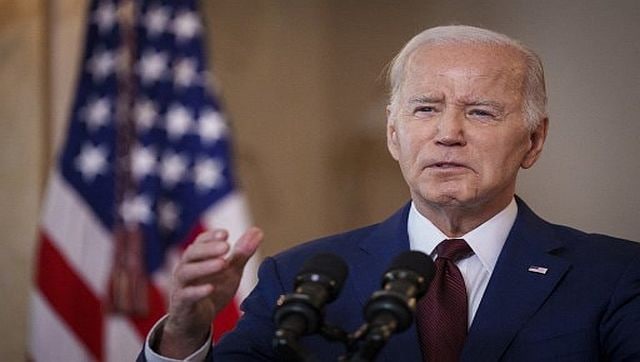 US president Joe Biden has not been able to reach an agreement yet with House speaker Kevin McCarthy. AFP[/caption]Deferring payments, even for a few days, could have severe consequences for social security, Medicare and Medicaid programmes which help tens of millions of people with pension and healthcare costs. The budgets for these programmes accounted for more than 45 per cent of the $6.27 trillion (Rs 51,879,860 crore) government budget last year.The impact on this chunk of federal spending would likely be immediate if the US runs out of money to meet its obligations in time.On 1 June, for instance, the treasury is due to make a payment of $47 billion (Rs 3.88 lakh crore) to Medicare providers, with $25 billion (Rs 2.06 lakh crore) in social security payments due the following day. More such payments are scheduled over the next few days.Also Read: US debt ceiling crisis: Why Joe Biden is wary of invoking the 14th AmendmentPast and present military personnel would also likely be hit if the US misses the X-date, as a large share of their pay and benefits are paid on the first of the month. The nonpartisan Congressional Budget Office estimated recently that around $25 billion in payments to military personnel, civil servants and others are due on 1 June.Unpalatable optionsPausing or delaying payments may help the US government survive a few days on the other side of the X-date, but it will only work for so long.If the tug-of-war between Republicans and Democrats continues, the federal government may need to consider an even less palatable scenario: choosing which bills to pay and which to skip.[caption id="attachment_12644042" align="alignnone" width="640"]
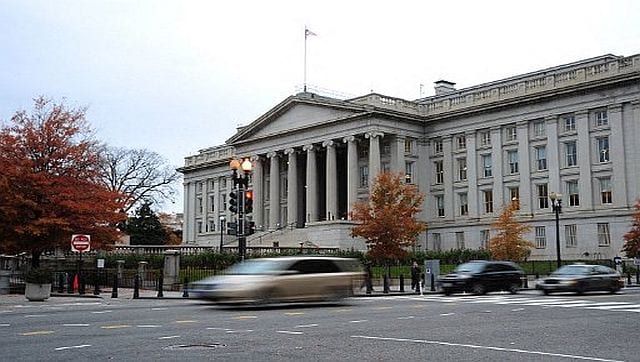 While the probability that policymakers fail to lift or suspend the debt ceiling remains low, the risk of the United States stumbling into a situation where it cannot meet all its financial obligations rises with every day. AFP[/caption]Such an eventuality could have severe knock-on effects for the most vulnerable Americans, including pensions going unpaid, healthcare providers refusing to take care of patients with Medicare or Medicaid, and insurance premiums rising.Another option available to the government would be to start selling government assets to ensure it can continue paying pensions and healthcare costs.According to treasury data, the social security administration had more than $2.8 trillion (Rs 23,161,600 crore) in assets at the end of April, making it the largest holder of Treasury bonds in the world.But such a solution would be fraught with political risk for Joe Biden, according to Robert Hockett, a law professor at Cornell University.Also Read: What will happen if the debt ceiling is not raised?In such a scenario, Republicans could attack Biden over his failure to control spending, he said.With many of the treasury's options after the X-date unpalatable to politicians on both sides of the aisle, both parties are backing the talks between Biden and McCarthy, and hoping negotiators can secure a deal before then.Read all the Latest News, Trending News, Cricket News, Bollywood News,India News and Entertainment News here. Follow us on Facebook, Twitter and Instagram.
First Published:May 25, 2023, 10:05:02 IST
Advertisement
Advertisement

Military drones & police check-ups: How Sri Lanka is fighting against worst dengue outbreak in a decade
Sri Lanka is fighting its most severe dengue outbreak in nearly a decade, with infections rising sharply across the nation. Military drones have been deployed to tackle the outbreak, which has claimed 56 lives. Health officials said the outbreak is being driven primarily by the DENV-2 variant of the virus
3 min read
How Facebook job ad lured 2 Karnataka men into Myanmar cyber scam camp
The Karnataka Cyber Command has rescued two youths from a scam compound in Myanmar operated by Chinese fraudsters. The duo from Karnataka were lured on the pretext of data-entry jobs. They were asked to work for 16 hours a day and were expected to sleep for six hours daily
4 min read
Why is India seeing 95% cloud cover despite a Super El Niño?
India is witnessing nearly 95 per cent cloud cover despite a Super El Niño, a climate event usually linked to weaker monsoons. Regional weather systems, cyclonic circulations, the monsoon trough and moisture from two seas are temporarily overpowering one of the world's strongest climate phenomena
5 min read
What is CJP’s fourth demand to the government as protests in Delhi intensify?
The protest by the Cockroach Janta Party at Delhi’s Jantar Mantar refuses to die down. The group have made a fourth demand to the Centre, asking that no FIRs are filed against the agitators and that no legal action be taken. The government has expressed willingness to speak to the protesters, but refused to accede on the resignation of Education Minister Dharmandra Pradhan
5 min read
The new geography of war: Why the Houthis can no longer be ignored
The rise of the Houthis marks the emergence of a new geography of war — one in which influence flows not only from capitals and conventional armies, but also from rugged mountains overlooking vital sea lanes
6 min read
Advertisement
Advertisement