
Advertisement


Sections
Cutting Costs: How rising inflation is threatening Egypt's age-old traditions
Egypt’s soaring inflation has pressured villagers to cut back costs on multi-day weddings as well as funeral customs. Stung hard by skyrocketing prices, the Arab country is trying hard to hold on to its tradition of Ramzan charity in cities

The soaring inflation in Egypt is posing a grave threat to its old traditions. Weddings spread across several days, feeding the bereaved and making homemade bread – all are gradually fading into the past in rural parts of the country amid rising costs.According to state-run statistics agency CAPMAS, the annual urban consumer inflation rate touched 32.7 per cent in March.Food and beverage prices rose by 62.9 per cent annually, driving the inflation rate up from 31.9 per cent in February, reported Bloomberg.Let’s take a closer look at how inflation is affecting centuries-old Egyptian traditions.Less spending on weddingsIt was common for grooms in the Nile Delta in northern Egypt to throw lavish bachelor parties before getting married. These parties would have large traditional tents and bands, with cattle being slaughtered to feed the guests, as per an AFP report.However, such festivities are becoming a rare sight now."Hardly anyone does it anymore," Mohamed Shedid, a 33-year-old engineer who resides in Quweisna in Menoufia, located 70 kilometres north of Cairo, told AFP."We used to blame it on COVID-19, but then immediately afterwards everyone was hit by the economic crisis," he added.Speaking to AFP, a teacher from another end of Egypt said that growing inflation has affected weddings as well as funerals.![egypt inflation]() Egypt has seen prices of even basic food items skyrocketing. AFP (Representational Image)[/caption]The skyrocketing prices of gold have also ensured that couples forego their gold rings for a less costly alternative. These rings have also become finer and lighter now.As per the AFP report, the highest Muslim authority in Egypt had given its nod to switch gold with cheaper alternatives such as silver last monthm saying there was no religious objection to do so.ALSO READ: Egypt is selling citizenship: How economic turmoil has left the Arab nation desperateScaling down funeralsAccording to AFP, funerals are a “communal affair” in the agricultural villages of Upper Egypt.Whenever someone dies, families flock to the house of the deceased with containers of food to feed the bereaved relatives.However, now "it's agreed that only the immediate family will cook for the bereaved", former parliamentarian Mohamed Refaat Abdel Aal from his village of Al-Adadiya in Qena told AFP."Some families are also suggesting that we limit ourselves to just the funeral, and forego the wake," the 68-year-old added.Egypt’s famous breadIn Upper Egypt, which spans southwards from Cairo along the Nile Valley’s narrow green strip, making traditional flatbread was a “source of pride” for households.According to Abdel Aal, it was “shameful” for families, who were considered “lazy and complacent”, in rural Egypt if they purchased bread from a bakery.But with grain prices in the country increasing 70 per cent in a year, "everyone is lining up outside bakeries" run by the government where they can get subsidised bread, reported AFP.Ramzan charity continuesWhile Egyptians have tried to cut back costs as even the prices of basic food items have surged, the Ramzan tradition of charity still continues to flourish.During this Islamic holy month, devotees break their day-long fast with special meals or iftar in the evening. Many Egyptians have tried to hold on to the tradition of providing these free iftar meals.After sunset, Egyptian city streets are filled with people gathering at charity tables to break their fast.[caption id="attachment_12450832" align="alignnone" width="640"]
Egypt has seen prices of even basic food items skyrocketing. AFP (Representational Image)[/caption]The skyrocketing prices of gold have also ensured that couples forego their gold rings for a less costly alternative. These rings have also become finer and lighter now.As per the AFP report, the highest Muslim authority in Egypt had given its nod to switch gold with cheaper alternatives such as silver last monthm saying there was no religious objection to do so.ALSO READ: Egypt is selling citizenship: How economic turmoil has left the Arab nation desperateScaling down funeralsAccording to AFP, funerals are a “communal affair” in the agricultural villages of Upper Egypt.Whenever someone dies, families flock to the house of the deceased with containers of food to feed the bereaved relatives.However, now "it's agreed that only the immediate family will cook for the bereaved", former parliamentarian Mohamed Refaat Abdel Aal from his village of Al-Adadiya in Qena told AFP."Some families are also suggesting that we limit ourselves to just the funeral, and forego the wake," the 68-year-old added.Egypt’s famous breadIn Upper Egypt, which spans southwards from Cairo along the Nile Valley’s narrow green strip, making traditional flatbread was a “source of pride” for households.According to Abdel Aal, it was “shameful” for families, who were considered “lazy and complacent”, in rural Egypt if they purchased bread from a bakery.But with grain prices in the country increasing 70 per cent in a year, "everyone is lining up outside bakeries" run by the government where they can get subsidised bread, reported AFP.Ramzan charity continuesWhile Egyptians have tried to cut back costs as even the prices of basic food items have surged, the Ramzan tradition of charity still continues to flourish.During this Islamic holy month, devotees break their day-long fast with special meals or iftar in the evening. Many Egyptians have tried to hold on to the tradition of providing these free iftar meals.After sunset, Egyptian city streets are filled with people gathering at charity tables to break their fast.[caption id="attachment_12450832" align="alignnone" width="640"]![egypt ramadan]() Egyptians have tried to hold on to Ramzan charity amid soaring inflation. AFP (Representational Image)[/caption]For many families, everyday charity iftar meals "are their only chance to eat meat or chicken," the founder of a small charity in the Cairo district of al-Marg, told AFP.Manal Saleh, the head of the Egyptian Clothing Bank, said that it is hard to set aside the habit of Ramzan charity even amid biting inflation."We've seen crises before, and people stick together," Saleh was quoted as saying by AFP. "I think that even if individuals can't give as much, you'll see more people lending a hand, volunteering, making meals for those around them, even if cash is tight."Egypt’s economic crisisEgypt’s deepening economic crisis has made it tough for people to feed their families. One of the reasons for its high food inflation is that the most populous Arab nation depends largely on imported food to feed its population of 104 million people.The uptick in costs of animal feed has rendered meals of chicken too expensive for most. Basic staples such as cooking oil and cheese are also now unaffordable.Even before the current economic crisis, around 30 per cent of Egyptians were living under the poverty line, according to the World Bank.The National News reported in March this year, that the prices of poultry, which has become a substitute for costlier red meat, rose by around 70 per cent in the last two months.The sharp increase in inflation can be attributed to several factors, including COVID-19 and the Egyptian pound’s around 50 per cent plunge against the US dollar since last March.Moreover, the Arab country’s foreign debt has more than tripled in the last decade to $157 billion.The Russian invasion of Ukraine has further exacerbated Egypt’s economic woes, which is the world's second-biggest importer of wheat. The war between the two European nations hit Egypt’s exports as they are its primary suppliers of the grain.Analysts have also blamed corruption, “government mismanagement” and political unrest in the country for the current crisis.With inputs from agenciesRead all the Latest News, Trending News, Cricket News, Bollywood News,India News and Entertainment News here. Follow us on Facebook, Twitter and Instagram.
Egyptians have tried to hold on to Ramzan charity amid soaring inflation. AFP (Representational Image)[/caption]For many families, everyday charity iftar meals "are their only chance to eat meat or chicken," the founder of a small charity in the Cairo district of al-Marg, told AFP.Manal Saleh, the head of the Egyptian Clothing Bank, said that it is hard to set aside the habit of Ramzan charity even amid biting inflation."We've seen crises before, and people stick together," Saleh was quoted as saying by AFP. "I think that even if individuals can't give as much, you'll see more people lending a hand, volunteering, making meals for those around them, even if cash is tight."Egypt’s economic crisisEgypt’s deepening economic crisis has made it tough for people to feed their families. One of the reasons for its high food inflation is that the most populous Arab nation depends largely on imported food to feed its population of 104 million people.The uptick in costs of animal feed has rendered meals of chicken too expensive for most. Basic staples such as cooking oil and cheese are also now unaffordable.Even before the current economic crisis, around 30 per cent of Egyptians were living under the poverty line, according to the World Bank.The National News reported in March this year, that the prices of poultry, which has become a substitute for costlier red meat, rose by around 70 per cent in the last two months.The sharp increase in inflation can be attributed to several factors, including COVID-19 and the Egyptian pound’s around 50 per cent plunge against the US dollar since last March.Moreover, the Arab country’s foreign debt has more than tripled in the last decade to $157 billion.The Russian invasion of Ukraine has further exacerbated Egypt’s economic woes, which is the world's second-biggest importer of wheat. The war between the two European nations hit Egypt’s exports as they are its primary suppliers of the grain.Analysts have also blamed corruption, “government mismanagement” and political unrest in the country for the current crisis.With inputs from agenciesRead all the Latest News, Trending News, Cricket News, Bollywood News,India News and Entertainment News here. Follow us on Facebook, Twitter and Instagram.
Known for their “three-day, nine-meal affairs” weddings, Nubian villages are stung hard by increasing prices."Soaring costs mean our weddings and funerals aren't what they once were", Omar Maghrabi, a 43-year-old Nubian language teacher in the Nubian south said.Earlier, wedding invitations were sent to the entire town in these villages."Things are really hard: families need the money we once spent on these events just to keep households running.""A few months ago, there was a kind of agreement among the villages to make weddings more affordable," Maghrabi was quoted as saying by AFP.He stated that now “the hosts only have to offer a light dinner".[caption id="attachment_12450842" align="alignnone" width="640"]
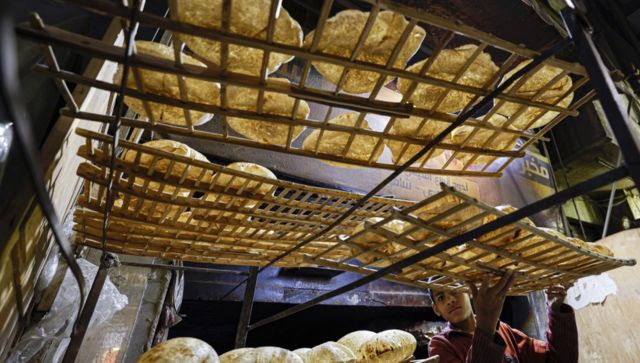 Egypt has seen prices of even basic food items skyrocketing. AFP (Representational Image)[/caption]The skyrocketing prices of gold have also ensured that couples forego their gold rings for a less costly alternative. These rings have also become finer and lighter now.As per the AFP report, the highest Muslim authority in Egypt had given its nod to switch gold with cheaper alternatives such as silver last monthm saying there was no religious objection to do so.ALSO READ: Egypt is selling citizenship: How economic turmoil has left the Arab nation desperateScaling down funeralsAccording to AFP, funerals are a “communal affair” in the agricultural villages of Upper Egypt.Whenever someone dies, families flock to the house of the deceased with containers of food to feed the bereaved relatives.However, now "it's agreed that only the immediate family will cook for the bereaved", former parliamentarian Mohamed Refaat Abdel Aal from his village of Al-Adadiya in Qena told AFP."Some families are also suggesting that we limit ourselves to just the funeral, and forego the wake," the 68-year-old added.Egypt’s famous breadIn Upper Egypt, which spans southwards from Cairo along the Nile Valley’s narrow green strip, making traditional flatbread was a “source of pride” for households.According to Abdel Aal, it was “shameful” for families, who were considered “lazy and complacent”, in rural Egypt if they purchased bread from a bakery.But with grain prices in the country increasing 70 per cent in a year, "everyone is lining up outside bakeries" run by the government where they can get subsidised bread, reported AFP.Ramzan charity continuesWhile Egyptians have tried to cut back costs as even the prices of basic food items have surged, the Ramzan tradition of charity still continues to flourish.During this Islamic holy month, devotees break their day-long fast with special meals or iftar in the evening. Many Egyptians have tried to hold on to the tradition of providing these free iftar meals.After sunset, Egyptian city streets are filled with people gathering at charity tables to break their fast.[caption id="attachment_12450832" align="alignnone" width="640"]
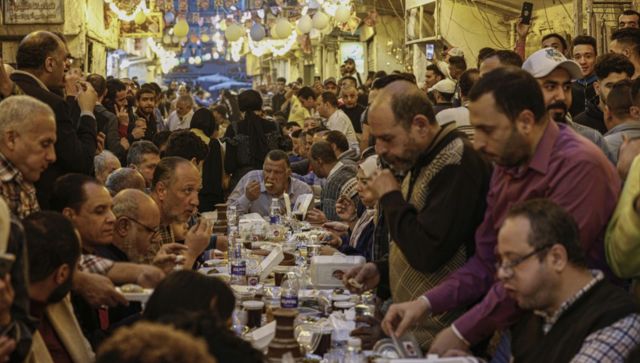 Egyptians have tried to hold on to Ramzan charity amid soaring inflation. AFP (Representational Image)[/caption]For many families, everyday charity iftar meals "are their only chance to eat meat or chicken," the founder of a small charity in the Cairo district of al-Marg, told AFP.Manal Saleh, the head of the Egyptian Clothing Bank, said that it is hard to set aside the habit of Ramzan charity even amid biting inflation."We've seen crises before, and people stick together," Saleh was quoted as saying by AFP. "I think that even if individuals can't give as much, you'll see more people lending a hand, volunteering, making meals for those around them, even if cash is tight."Egypt’s economic crisisEgypt’s deepening economic crisis has made it tough for people to feed their families. One of the reasons for its high food inflation is that the most populous Arab nation depends largely on imported food to feed its population of 104 million people.The uptick in costs of animal feed has rendered meals of chicken too expensive for most. Basic staples such as cooking oil and cheese are also now unaffordable.Even before the current economic crisis, around 30 per cent of Egyptians were living under the poverty line, according to the World Bank.The National News reported in March this year, that the prices of poultry, which has become a substitute for costlier red meat, rose by around 70 per cent in the last two months.The sharp increase in inflation can be attributed to several factors, including COVID-19 and the Egyptian pound’s around 50 per cent plunge against the US dollar since last March.Moreover, the Arab country’s foreign debt has more than tripled in the last decade to $157 billion.The Russian invasion of Ukraine has further exacerbated Egypt’s economic woes, which is the world's second-biggest importer of wheat. The war between the two European nations hit Egypt’s exports as they are its primary suppliers of the grain.Analysts have also blamed corruption, “government mismanagement” and political unrest in the country for the current crisis.With inputs from agenciesRead all the Latest News, Trending News, Cricket News, Bollywood News,India News and Entertainment News here. Follow us on Facebook, Twitter and Instagram.
First Published:Apr 13, 2023, 18:00:40 IST
Advertisement
Advertisement

Why India may not witness a medal rush at 2026 Commonwealth Games
A 125-strong Indian contingent is in Glasgow for the 2026 Commonwealth Games, starting today (July 23), chasing international glory. However, with a roster of sports such as badminton and wrestling being cut from the event, the country’s medal chances have been drastically reduced
4 min read
Delhi Police asks personnel to wear uniform: What the law says on cops in plainclothes during protests
The Delhi Police has instructed all its personnel to wear uniforms when they report for duty at Jantar Mantar for crowd control. This comes after outrage grew over videos of men in civilian clothes or without name tags hitting protesters in the Capital. Is it legal for the police to ditch uniforms during protests?
4 min read
Military drones & police check-ups: How Sri Lanka is fighting against worst dengue outbreak in a decade
Sri Lanka is fighting its most severe dengue outbreak in nearly a decade, with infections rising sharply across the nation. Military drones have been deployed to tackle the outbreak, which has claimed 56 lives. Health officials said the outbreak is being driven primarily by the DENV-2 variant of the virus
3 min read
How Facebook job ad lured 2 Karnataka men into Myanmar cyber scam camp
The Karnataka Cyber Command has rescued two youths from a scam compound in Myanmar operated by Chinese fraudsters. The duo from Karnataka were lured on the pretext of data-entry jobs. They were asked to work for 16 hours a day and were expected to sleep for six hours daily
4 min read
Why is India seeing 95% cloud cover despite a Super El Niño?
India is witnessing nearly 95 per cent cloud cover despite a Super El Niño, a climate event usually linked to weaker monsoons. Regional weather systems, cyclonic circulations, the monsoon trough and moisture from two seas are temporarily overpowering one of the world's strongest climate phenomena
5 min read
Advertisement
Advertisement