


Why Taiwan is nervous as Trump and Xi sit down for talks in Beijing
Donald Trump and Xi Jinping have begun their highly anticipated talks in China. The two leaders are likely to discuss many issues such as trade, technology and the Iran war. Taiwan watches on from afar with concern. Will the US president toe the line, or will he grant concessions to Beijing on the matter to secure a deal?

US President Donald Trump is in China, marking the first visit by an American president in nine years. The last time Trump was in Beijing was in 2017, when Beijing laid out a red carpet for the US president.
However, as Trump sits down with his Chinese counterpart, Xi Jinping, for a bilateral meeting, the tiny island nation of Taiwan will watch with hope and dread. Hope that the US president doesn’t reverse years-long US policy, and dread because the US president has already shown signs that he is willing to consider China’s stance on the island.
- Catch the live blog on the Trump-Xi summit here
Confused about the situation? We explain it all.
Trade, Taiwan, and Iran war on the table at Trump-Xi meet
Trump and Xi will discuss a vast array of topics as they meet today (May 14) for a formal greeting and a bilateral. The two will meet again on Friday (May 15) for a bilateral tea and lunch.
At their meetings, the two world leaders will discuss a vast array of topics, with trade being at the forefront. In fact, Trump has brought more than a dozen chief executives with him to Beijing, including Apple’s Tim Cook and Elon Musk, the CEO of SpaceX and Tesla. Nvidia CEO Jensen Huang joined Trump on the tarmac in Alaska for the second leg of the flight to China.
 More from Explainers
Beijing is keen to ensure that the sky-high tariffs that the US leader announced last year — which reached as high as 145 per cent before the two sides agreed a truce in October — do not return.
Trump and Xi are also expected to discuss creating a US-China Board of Trade and a US-China Board of Investment, which would allow both governments to manage the exchange of non-sensitive goods and establish a government-to-government forum on investment-related issues, according to White House principal deputy spokesperson Anna Kelly, who said deals touching on aerospace, agriculture, and energy are all on the agenda.
“These agreements will further rebalance trade with China, while putting American workers, farmers, and families first and safeguarding US economic strength and national security,” Kelly said.
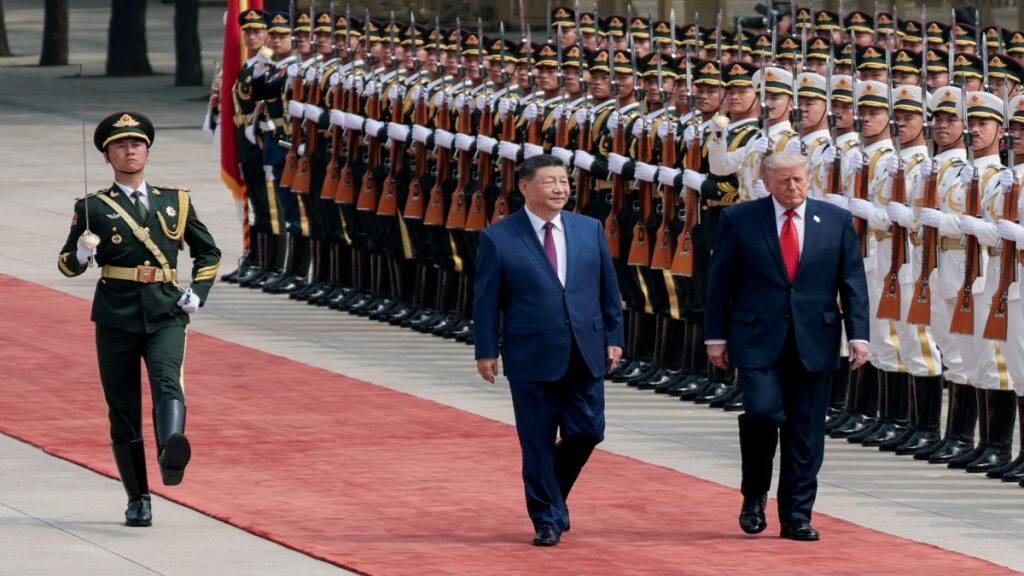
Trump will also raise the issue of the Iran war with Xi. Before he left Washington on Tuesday, Trump told reporters that he expected to have “a long talk” with Xi about the Iran war but that it was not an agenda item. The talks, “more than anything else,” he said, would be about trade. “I don’t think we need any help with Iran. We’ll win it one way or the other,” he said.
There’s also the looming shadow of Taiwan. Beijing would like Taiwan to be one of the main talking points when the two leaders sit down for discussions.
Taiwan — The conundrum for China and the US
For decades, China has considered the island of Taiwan as part of its own territory under the ‘One China’ policy. Beijing has even vowed to bring the island under its control by force, if necessary.
Meanwhile, the US follows a two-prong policy when it comes to Taiwan. The first is “strategic ambiguity”, which means that Washington declines to explicitly state whether it would actively use its military to defend Taiwan from attack by China. This policy is supposed to deter China while also discouraging Taiwan from formally declaring its independence from Beijing.
The second principle is the “One China policy”. According to this policy, the US recognises Beijing as the legitimate government of China, while opposing any violent solution to its dispute with Taiwan.
Notably, Washington retains robust informal links to the Taiwanese government in Taipei. It has also sold billions of dollars in advanced weapons to the island, with bipartisan approval.
Trump causes trepidation in Taiwan
But in recent times, there’s been a growing trepidation in Taiwan as Trump remains ambiguous over his support to the island. There are concerns that the American president may wittingly or unwittingly undermine Taiwan as he sits down for talks with China’s Xi Jinping. In fact, earlier, Beijing noted that Taiwan is a red line for them.
There are those in Taiwan who are worried that Trump, in his very improvisational stance, may state he opposes Taiwanese independence. Until now, American presidents have always maintained that they “do not support” Taiwanese independence.
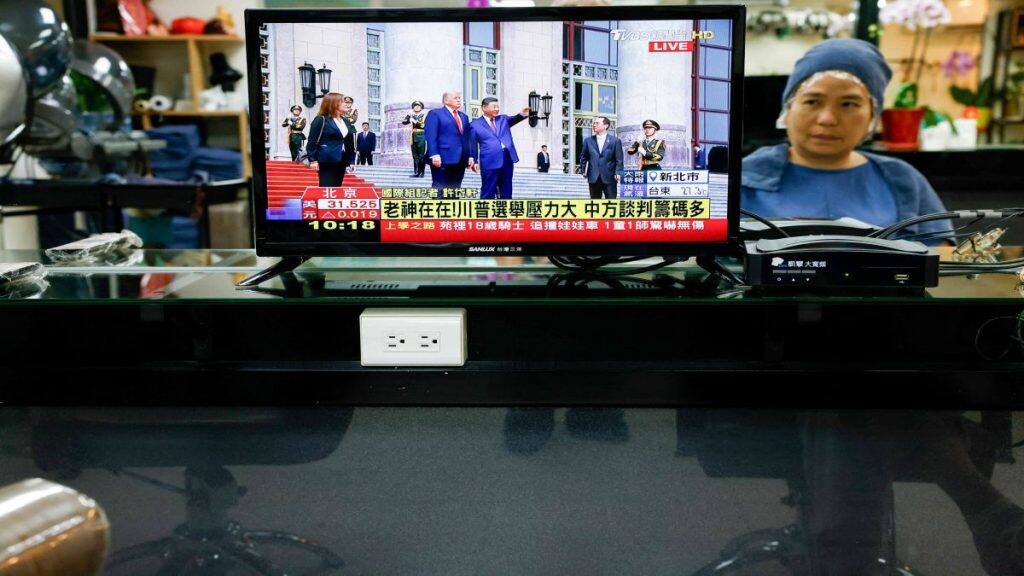
As the New York Times reported, while oppose and not support could be used interchangeably, in Taiwan policy, the distinction matters. “If you say that the United States opposes Taiwan independence, it puts all the onus on Taiwan, really as being the responsible party in this conflict, which is not the case,” Nicholas Burns, the US ambassador to Beijing under President Joe Biden, said in an interview with Foreign Affairs. Such a shift in words, he said, “would send shock waves, obviously through the Taiwan leadership, but also to our close allies in the region.”
Many fear that in hopes of securing a good trade deal with Xi, the American president will grant concessions when it comes to Taiwan, which could undermine the island’s position. There’s also concern that Trump may double down on previous comments he has made indicating that whether or not Xi invades Taiwan is “up to him”.
They point to Trump and his apparent support for Russia’s Vladimir Putin on the Ukraine war. Many suspect that just as the US president seems receptive to Putin’s argument that Ukraine belongs to Russia, he may also seem the same on China and Taiwan.
Another cause of concern in Taiwan is Trump’s announcement that he would discuss American arms sales to Taiwan with Xi Jinping. This breaks decades of US precedent on not consulting with Beijing on arms exports to Taiwan.
“President Xi would like us not to, and I’ll have that discussion,” Trump said earlier in the week before departing for the summit.
The arms deal refers to the $11.1 billion package that the US had agreed upon earlier. Moreover, the US is also compiling another package worth at least $14 billion.
Earlier, a bipartisan group of senators wrote to Trump, urging him to formally notify the US Congress that the arms sale to the island had been approved by the administration. “You should make clear to Beijing that as you seek to level the economic playing field, American support for Taiwan is not up for negotiation,” they wrote.
Taiwan Speaks
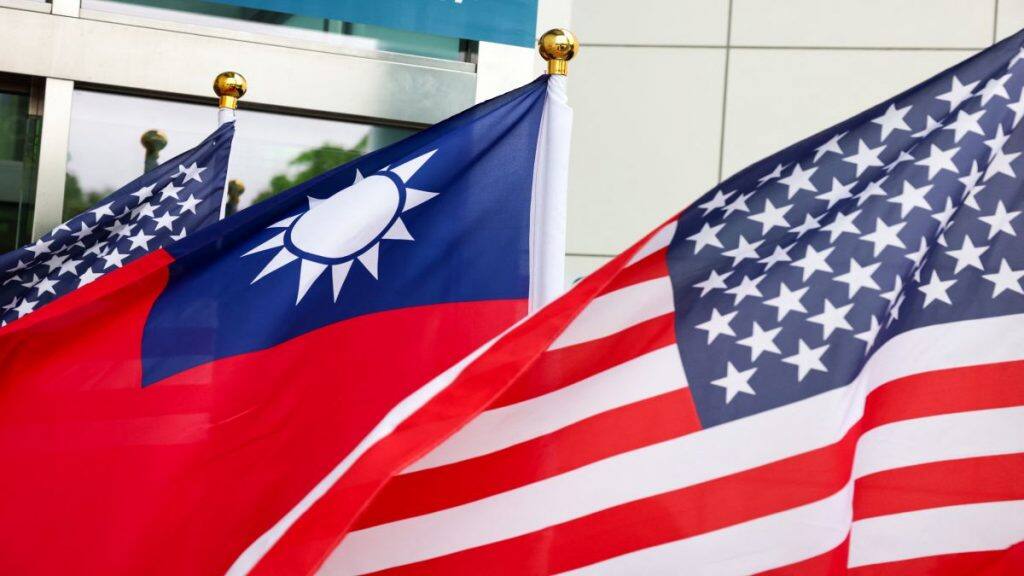
For now, Taiwan has expressed confidence in Trump and the United States. In fact, a Taiwan national security official told CNN they had received assurances ahead of Trump’s trip. “US officials have in recent days repeatedly reaffirmed their firm support for Taiwan,” said a source.
Some analysts also remain optimistic about US-Taiwan ties. As Piero Tozzi, senior director for China Policy at America First Policy Institute, told CNN, Trump “understands how important Taiwan is.”
“It’s really the front line of our defence, defence of the homeland,” Tozzi said. “I don’t think the Taiwanese have anything to worry about.
With inputs from agencies

Delhi Police asks personnel to wear uniform: What the law says on cops in plainclothes during protests
Military drones & police check-ups: How Sri Lanka is fighting against worst dengue outbreak in a decade
How Facebook job ad lured 2 Karnataka men into Myanmar cyber scam camp
Why is India seeing 95% cloud cover despite a Super El Niño?
What is CJP’s fourth demand to the government as protests in Delhi intensify?