


Did Pakistan overpromise and underdeliver on Iran-US peace deal?
Pakistan, in the early days of the Iran war, passed messages between Tehran and Washington. Its top officials, including Pakistani Army Chief Asim Munir, made repeated visits to Iran. However, as Donald Trump declares that the war has ended, Islamabad seems to be sidelined from the peace process

When the US-Iran war first broke out, Pakistan rushed to push itself forward as a mediator. Pakistan, in the early days of the conflict, along with Egypt and some other Gulf states, passed messages between Tehran and Washington.
Pakistan had even sent the United States and Iran terms to bring the conflict to an end and reopen the Strait of Hormuz. Meanwhile, a number of top Pakistani officials, including Pakistani Army Chief Asim Munir and Interior Minister Mohsin Naqvi, attempted to exert influence.
Munir, in particular, was in contact with US Vice President JD Vance, Special Envoy Steve Witkoff, and Iranian Foreign Minister Abbas Araghchi, while Naqvi made repeated trips to Tehran.
However, Iran has publicly rejected being part of talks brokered by Pakistan, and Islamabad's role has slowly diminished in the ceasefire attempts.
 More from Explainers
So, did Pakistan overpromise and under-deliver?
Let's take a closer look.
Initial Islamabad euphoria
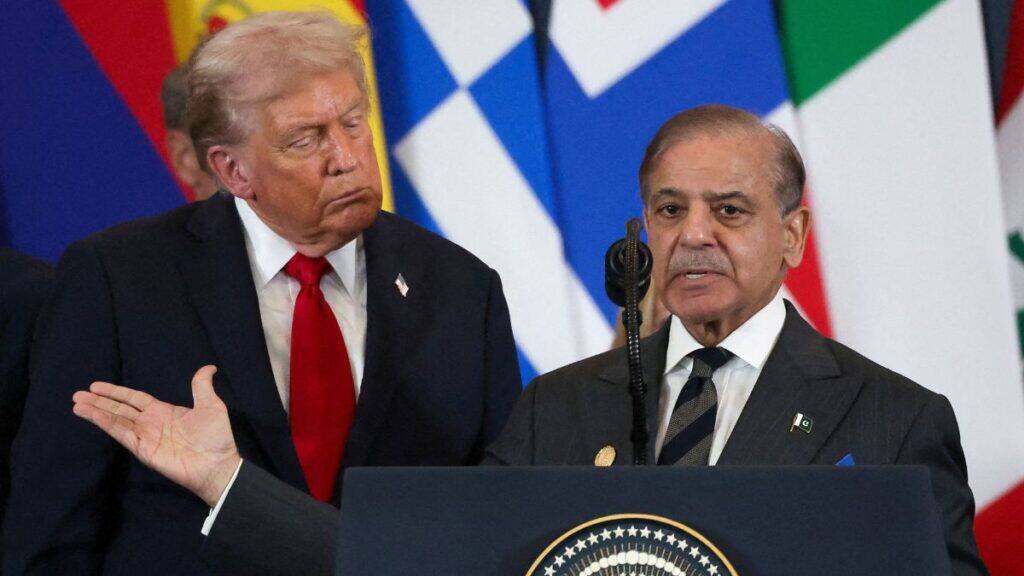
According to Vox, it was Munir who was the intermediary for the two-week ceasefire in early April. At the time, Pakistani Prime Minister Shehbaz Sharif took to social media to announce that the ceasefire was in effect. Islamabad then hosted the highest-level talks between the US and Iran since 1979, with US Vice President JD Vance in attendance to lead the first round of talks.
On April 21, Trump took to social media to announce the ceasefire with Iran ‘at Pakistan’s request’. “Based on the fact that the Government of Iran is seriously fractured, not unexpectedly so, and, upon the request of Field Marshal Asim Munir, and Prime Minister Shehbaz Sharif, of Pakistan, we have been asked to hold our attack on the country of Iran until such time as their leaders and representatives can come up with a unified proposal,” Trump wrote on Truth Social.
Shehbaz then thanked Trump in a statement on social media for "graciously accepting our request to extend the ceasefire to allow ongoing diplomatic efforts to take their course."
"I sincerely hope that both sides will continue to observe the ceasefire and be able to conclude a comprehensive 'peace deal' during the second round of talks scheduled in Islamabad for a permanent end to the conflict," Sharif wrote.
However, this didn’t pan out.
At the end of April, Iran was already claiming that Pakistan was not suited to serve as a go-between. As per NDTV, Ebrahim Rezaei, who represents Dashtestan and serves as spokesperson for Iran's National Security and Foreign Policy Commission, said Islamabad "is not a suitable intermediary" and that it was partial to America.
"Pakistan is a good friend and neighbour of ours, but it is not a suitable intermediary for negotiations and lacks the necessary credibility for mediation. They always take Trump's interests into account and do not say a word against the Americans' wishes," Rezaei said in a post on X.
According to Al Jazeera, Iranian officials then publicly rejected participating in any Pakistan-brokered framework, which essentially sidelined Islamabad in the peace process.
Mediation efforts fall apart
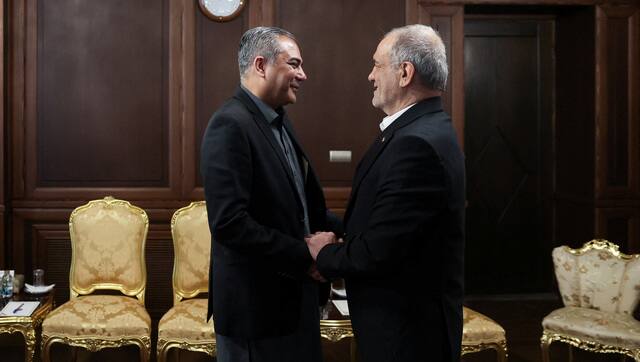
By May, talks between Iran and the United States had stalled, with Trump claiming the deal was ‘on life support’. This came despite multiple visits from Naqvi, whom Munir had designated his point person on the ceasefire deal, to Tehran to meet top Iranian officials.
During his trips, Naqvi met Iranian counterpart Eskandar Momeni, IRGC chief Brigadier General Ahmad Vahidi, Iranian President Masoud Pezeshkian, Foreign Minister Abbas Araghchi, and Parliament Speaker Mohammad Bagher Ghalibaf. It was reported that Munir had personally taken control of the peace process and delegated Naqvi as his intermediary, owing to their personal equation.
Meanwhile, as Pakistan was sidelined, other countries moved to pick up the slack. According to The New York Times, Qatar in May sent a team of officials to Iran to help try to broker a ceasefire. The outlet, quoting two diplomats in the know, said the team travelled between Washington and Tehran. The decision was made in consultation with the United States. Qatar previously served as a back channel between Iran and the US and had helped broker a ceasefire between the two nations last year.
By June, Trump was speaking to allies in the Gulf, including the Emir of Qatar, Sheikh Tamim bin Hamad Al Thani. According to the BBC, Trump had singled out Qatar as one of the mediators "involved" which had "approved" the peace negotiations. As of Thursday, a negotiating team from Qatar was holding meetings in Tehran into the early hours of the morning.
A Qatari official told CBS the team has now returned to Doha amid continued diplomatic efforts. Saudi Arabia is among the nations that has backed Qatar as an intermediary.
What Trump is saying
Trump, in his latest comments, only mentioned Pakistan in passing among several countries, rather than as a central player.
“Based on the fact that discussions with the Islamic Republic of Iran have been brought to the highest level of Iranian leadership and approved, I have, as President of the United States of America, cancelled the scheduled strikes and bombings against Iran this evening,” Trump wrote.
“Discussions and final points have been, in both concept and great detail, approved by all parties involved, including the United States, Israel, Saudi Arabia, UAE, Qatar, Turkey, Pakistan, Bahrain, Kuwait, Jordan, Egypt, and others.”
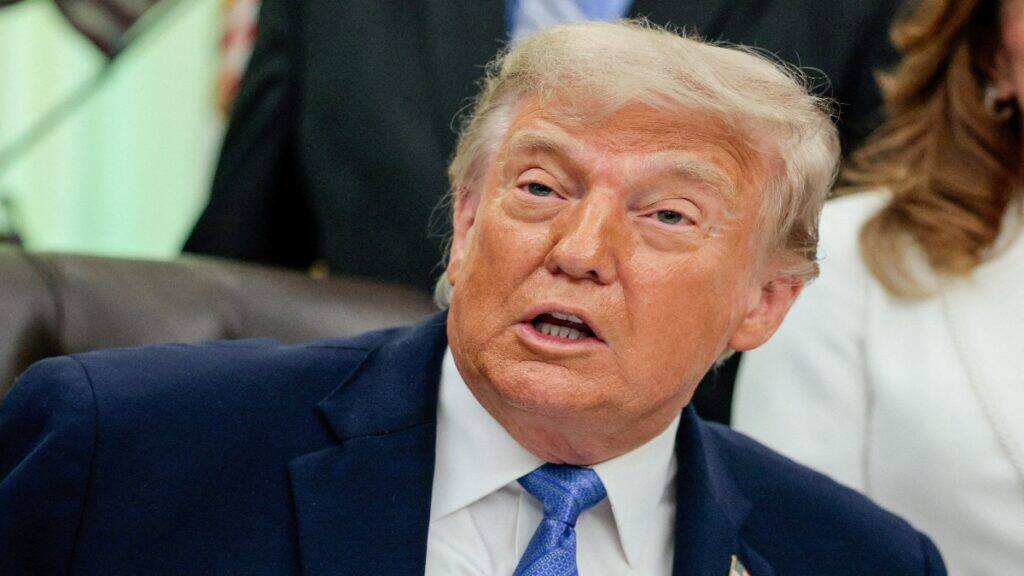
According to Al Jazeera, Trump also told reporters in the Oval Office that a “finalisation of documents” could occur in the coming days, possibly in Europe. This yet again signalled a clear shift away from Pakistan as the primary venue for negotiations.
The recent developments mark a sharp contrast from the initial euphoria in Islamabad, where officials had positioned the country as being critical to a breakthrough. All of this comes despite Trump continuing to heap praise on Munir, his ‘favourite Field Marshal’.
Ironically, experts warned at the time that Pakistan was on its way to being sidelined from the peace efforts.
Javad Heiran-Nia, an international relations analyst based in Tehran, told the outlet in May, “Pakistan is on the verge of shifting from being an indispensable channel to an option ignored by both sides. Once Iran and the US engage through other channels such as Oman or Qatar, or conclude that Pakistan is unable to impose its will on either side, Islamabad’s role will become marginal.”
While Pakistan may have played a role in early negotiations, its broader ambitions to shape or host a decisive peace deal have clearly fallen short. Islamabad, yet again, seems to have overpromised and underdelivered.
FAQs
1. Why did Iran reject Pakistan as a mediator?
Iranian officials argued that Pakistan lacked neutrality and credibility, claiming it was too aligned with US interests to serve as an effective intermediary.
2. Which country replaced Pakistan in mediation efforts?
Qatar emerged as a key mediator, leveraging its established diplomatic backchannels with both the US and Iran.
3. Did Pakistan play any role at all?
Yes, Pakistan was involved in initial ceasefire efforts, but its influence declined as talks progressed and other mediators took over.
With inputs from agencies

Why has Bangladesh’s choice of India spokespersons raised eyebrows?
Who is Sandeep Lamba, the Delhi cop removed from protest site duty after slapping female protester?
Explorers discover wreckage of plane 72 years later. Will this help in finding MH370?
Cruise missiles, drones and more... The deadly arsenal of the Houthis
Why India may not witness a medal rush at 2026 Commonwealth Games