


China blames India over journalists’ visa spat: What's the row about?
India and China are at loggerheads again, this time over visas for journalists. The foreign ministry in Beijing has accused New Delhi of ‘unfair treatment’ by denying visa renewals to scribes and ejecting all of them; China has done a tit for tat

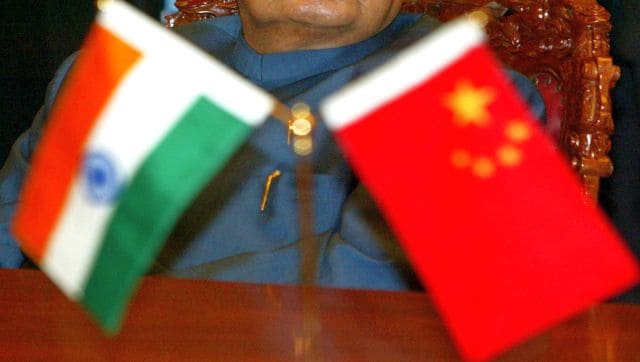
Relations between China and India have been strained since a deadly border clash in 2020. File image/Reuters[/caption]“What I can tell you is that for a long time Chinese media reporters have suffered unfair and discriminatory treatment in India,” she said during a regular press briefing. “Faced with this long-term unreasonable suppression by the Indian side, China has no choice but to take appropriate countermeasures to safeguard the legitimate rights and interests of Chinese media,” Mao said.However, it is important to note here that China has also expelled Indian journalists from their soil. Last month, reporters from The Hindu and New Delhi’s state-owned public broadcaster, Prasar Bharati, who were travelling outside China were barred from returning. Moreover, a Hindustan Times reporter was told in May that his press credentials were being invalidated.Ananth Krishnan of The Hindu also confirmed the news through a tweet he published on Wednesday, saying that India was down to only one “accredited reporter” on Chinese soil.
Interestingly, the Wall Street Journal’s report came out hours after the Chinese Embassy said that visas have been granted to 60,000 Indians this year “for purposes of business, study, tourist, work, family reunion, etc”.China has squarely blamed India for the actions, but said that it was willing to maintain communication with New Delhi “based on the principles of mutual respect, equality and mutual benefit”. “We also hope that the Indian side can meet us halfway, seriously respond to our legitimate concerns, and take practical action as soon as possible to create favourable conditions for the resumption of normal media exchanges between the two countries,” Mao Ning was quoted as saying.India-China worsening tiesIndia and China, two major players in Asia, have increasingly been at odds with each other. The Galwan clash in June 2020 has led to high tensions in the Ladakh area with both sides amassing tens of thousands of soldiers along the border, who remain there despite 18 rounds of talks between top military officials.In recent months, China has exacerbated the situation by renaming 11 places in Arunachal Pradesh in April this year. The changed names include that of mountain peaks, rivers and residential areas. This act, a third for Beijing, was promptly rejected by India, with New Delhi reiterating that the northeastern state will always remain an integral and “inseparable” part of India.
Delhi Police asks personnel to wear uniform: What the law says on cops in plainclothes during protests
Military drones & police check-ups: How Sri Lanka is fighting against worst dengue outbreak in a decade
How Facebook job ad lured 2 Karnataka men into Myanmar cyber scam camp
Why is India seeing 95% cloud cover despite a Super El Niño?
What is CJP’s fourth demand to the government as protests in Delhi intensify?