


China draws 4 red lines for Donald Trump's visit: What are they?
US President Donald Trump has landed in China. But ahead of his visit, Beijing had outlined four ‘red lines’ for Washington – Taiwan, democracy and human rights, paths and political system, and China’s right to development – that it says must not be challenged. Will Trump adhere to them?

US President Donald Trump has landed in China.
This is the first trip by a US president to China in nearly a decade. Trump is being accompanied by several top US CEOs including X’s Elon Musk, Nvidia’s Jensen Huang, and Apple’s Tim Cook. He is set to meet Chinese President Xi Jinping.
However, ahead of Trump’s arrival, Beijing drew four 'red lines' in the relationship with Washington that it says must not be crossed.
But what are they? What do we know?
Let’s take a closer look.
'The Taiwan Question'
China has long considered Taiwan, which is a self-governed island, its own territory. But first, a brief look at history is needed. In 1949, a civil war broke out between the Mao Zedong-led Communists and the Nationalists, led by Mao’s arch rival and chief of the Kuomintang (KMT) party, Chiang Kai-shek.
 More from Explainers
After the Communists under Mao emerged victorious, the Nationalists retreated to Taiwan (also known as the Republic of China). While the Communists began ruling the mainland (People’s Republic of China (PRC)), they left Taiwan in the hands of the Nationalists. For decades, the two sides have governed their own territories with a watchful eye. However, Beijing continues to view Taiwan as a Chinese province and has vowed to “unify” it with the mainland, if necessary by force.
Initially, only a few governments recognised Taiwan. However, the US was among those. Unfortunately for Taiwan, the US, beginning to see the importance of China, decided to derecognise Taipei in favour of the People’s Republic of China. This was done in 1979 under President Jimmy Carter. The US has also made this recognition, recognising Beijing’s ‘one-China’ policy without accepting it, one of the lynchpins of its strategy when it comes to ties between the two nations.
However, while the US has official ties with China, it also keeps an unofficial relationship going with Taiwan. In fact, it is a major source of arms and ammunition for Taiwan. More importantly, the US in 1979 passed the Taiwan Relations Act (TRA), which puts Washington under an obligation to help Taipei defend itself.
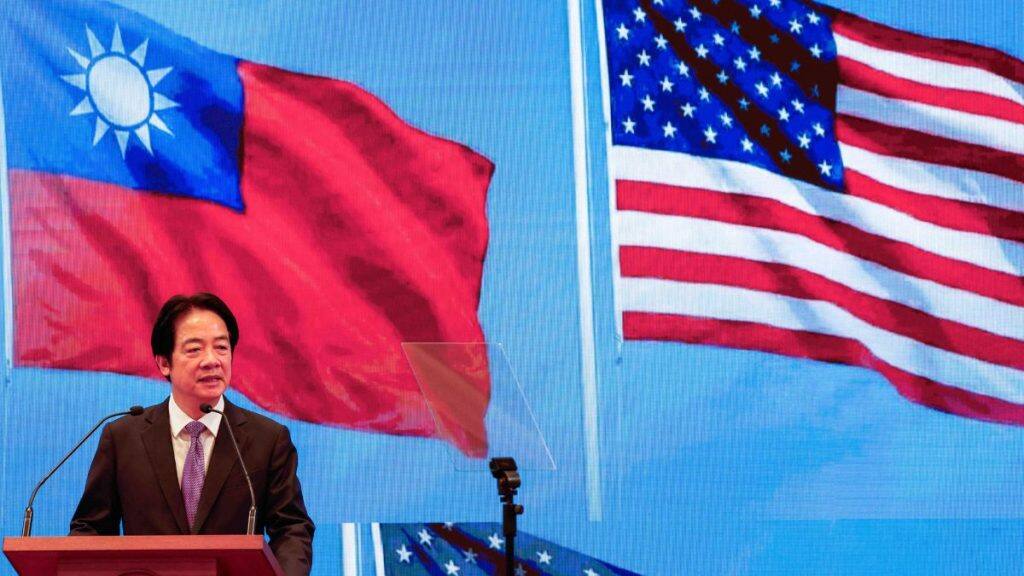
Naturally, this is seen by Beijing as two-faced. Over the years, the relationship between the United States and Taiwan – particularly when it comes to selling arms, which it has constantly opposed – has aroused its ire. For example, in 2023, when then House Speaker Nancy Pelosi visited Taipei – the first such visit by a senior US official to the island in over two decades – Beijing warned Washington that it was “playing with fire”. In a statement, Beijing said, “These moves, like playing with fire, are extremely dangerous. Those who play with fire will perish by it.”
More recently, the Trump administration in December announced an $11 billion (Rs 1.05 lakh crore) weapons package for Taiwan, the largest ever. Zhang Han, a spokesperson for China's Taiwan Affairs Office, said Taiwan is an internal issue and a matter for the Chinese people. “We firmly oppose the United States engaging in any form of military ties with China's Taiwan region, and firmly oppose the United States selling weapons to China's Taiwan region. This position is consistent and unequivocal,” she said in Beijing. The topic of Taiwan is sure to come up between Trump and Xi. Taiwan is the “core of China's core interests” and honouring the commitments made by successive US administrations are “international obligations that the US side is duty-bound to fulfil”, Zhang added.
'Democracy and Human Rights'
China in the past has also taken issue with the United States lecturing it when it comes to democracy and human rights, particularly when it comes to the Uyghurs. Mostly Muslims, around 12 million Uyghurs live in China’s Xinjiang, officially known as the Xinjiang Uyghur Autonomous Region (XUAR). They speak a language that is similar to Turkish and consider themselves close to Central Asian nations.
Human rights organisations and Western governments, including the United States and Canada, have repeatedly raised concerns about human rights violations against Uyghurs and other Muslim minority groups in Xinjiang. The US, in particular, has accused China of committing genocide in the region. Human rights groups have alleged that over 1 million Uyghurs have been detained and thousands have been sent to prison over the last few years. Many Uyghurs have also been lodged in what the state euphemistically calls “re-education camps”.
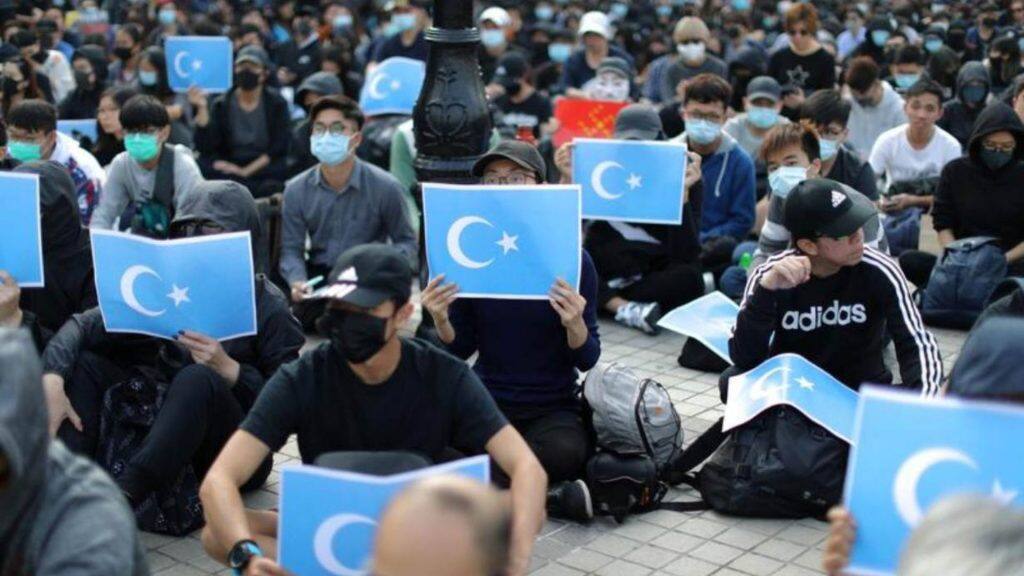
Beijing has constantly denied these allegations and tried to turn the tables on the United States and other democratic countries. “There is no universally applicable model of human rights… Each country should choose its own path,” China said in a white paper on Human Rights Development. Beijing has also repeatedly said that no country, including the US, has any right to act as a ‘teacher’ to anyone on human rights. Specifically speaking about the Uyghurs in Xinjiang, China has repeatedly claimed that issues related to Xinjiang are not about human rights but about “counter-terrorism and anti-extremism.”
Earlier this year, Chinese Foreign Minister Wang Yi cited the “golden rule” of non-interference in one another's internal affairs. He also said that he “firmly rejected” words and deeds that create double standards in the name of human rights.
“Only a path of human rights development rooted in a country's specific national conditions and responsive to the needs of its people can lead to broader prospects,” Wang said, as per Global Times.
'Paths and Political Systems'
China has over the years repeatedly asserted that it does not pursue the paths and political systems of other countries – a dig at the United States without specifically mentioning its name. Chinese President Xi Jinping, for example, in 2014 said that multi-party democracy “does not suit China” and would “lead to catastrophic consequences”.
“China cannot copy the political system or development model of other countries because it would not fit us and it might even lead to catastrophic consequences,” the state-run Xinhua news agency quoted Xi as saying. “Constitutional monarchy, imperial restoration, parliamentarism, a multi-party system, and a presidential system – we considered them, tried them, but none worked. The fruit may look the same, but the taste is quite different,” he added.
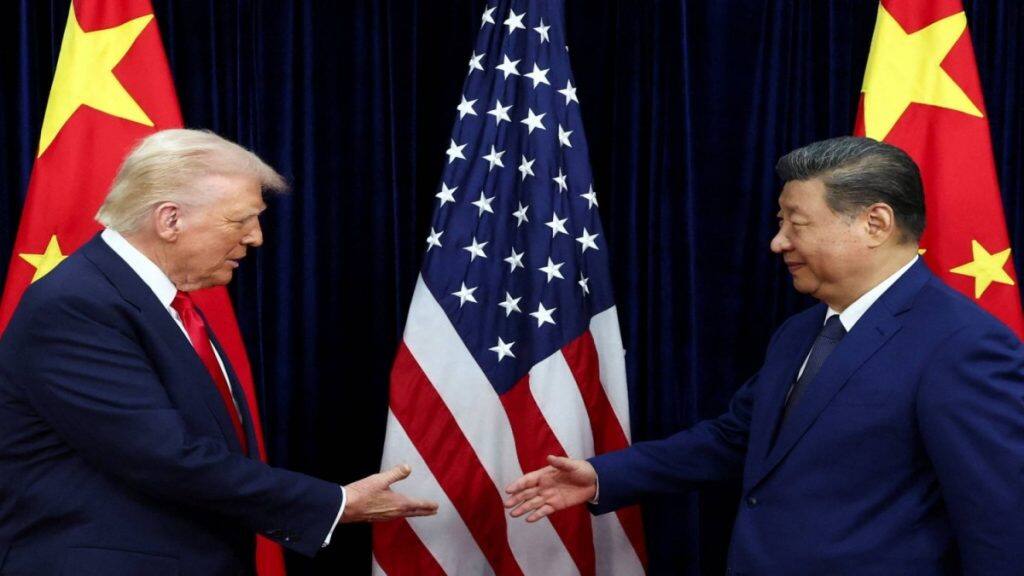
China has repeatedly touted its own version of democracy as superior to others. Xi in 2017 was quoted as saying that “no one political system should be regarded as the only choice and we should not just mechanically copy the political systems of other countries.” “The political system of socialism with Chinese characteristics is a great creation.”
Xi in a 2019 speech asserted that China's socialist democracy is “the broadest, most genuine, and most effective democracy to safeguard the fundamental interests of the people”. “The very purpose of developing socialist democracy is to give full expression to the will of the people, protect their rights and interests, spark their creativity, and provide systemic and institutional guarantees to ensure the people run the country,” Xi added.
'China's Development Right'
Some in the United States, including senior members of the Trump administration, have spoken openly about trying to stymie China’s rise on the global stage via tariffs and other measures. However, Beijing has over the years repeatedly asserted that its right to development cannot be stopped.
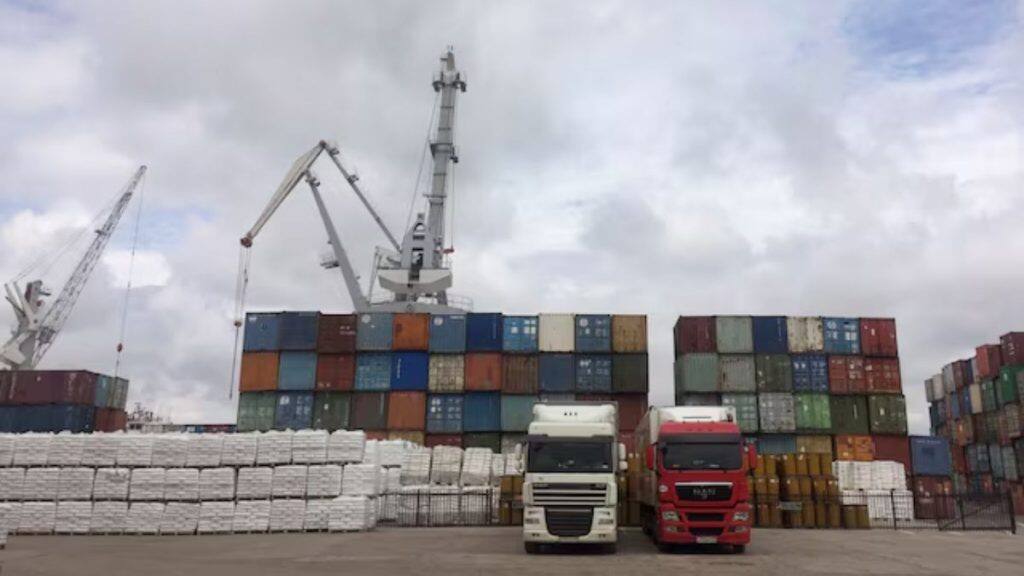
After Washington imposed a 104 per cent tariff on Beijing in April 2025, a Chinese Foreign Ministry spokesperson stated that the Chinese people's legitimate right to development cannot be deprived, and China's sovereignty, security, and development interests are inviolable. Here China has openly taken aim at the Trump administration, saying, “America First cannot take away the development rights of other countries; it can only become synonymous with ‘self-inflicted consequences’.”
China in 2024, amid a visit by then United States National Security Advisor Jake Sullivan, said in a statement, “China’s political system and development path must not be challenged; and the Chinese people's right to development must not be deprived of. Touching these red lines would take away the floor for China-US relations, and render the guardrails useless.”
The bottom line
China has repeatedly sought to draw a ‘red line’ across these four areas over the years. Trump publicly has appeared flippant ahead of the trip to Beijing, saying he does not need China’s help with the increasingly unpopular Iran war, which is sinking his poll numbers. It remains to be seen whether Trump and his administration – which can be belligerent at times – adhere to them or not, at least for the duration of this trip.
FAQs
1. What are China’s four ‘red lines’ in its relationship with the US?
China’s four red lines are Taiwan, democracy and human rights, political systems, and its right to development. Beijing says these core interests cannot be challenged.
2. Why is Taiwan such a sensitive issue for China?
China considers Taiwan a part of its territory and views any foreign involvement, especially US arms sales or political visits, as interference in its internal affairs.
3. Why does China reject Western criticism on human rights?
China argues that human rights standards should be based on each country’s conditions and rejects what it sees as Western attempts to impose their model or interfere in domestic matters.
With inputs from agencies

Delhi Police asks personnel to wear uniform: What the law says on cops in plainclothes during protests
Military drones & police check-ups: How Sri Lanka is fighting against worst dengue outbreak in a decade
How Facebook job ad lured 2 Karnataka men into Myanmar cyber scam camp
Why is India seeing 95% cloud cover despite a Super El Niño?
What is CJP’s fourth demand to the government as protests in Delhi intensify?