


Once the dream destination, Canada is losing appeal among Indian students. Here’s why
Once upon a time, Canada was the top destination for many Indian students. However, the share of Indians among the international student population in the North American country has dropped to eight per cent in 2025. Tighter visa and immigration norms, coupled with a higher cost of living, have driven this trend

Up until a few years ago, if you asked an Indian student where they would like to study, Canada would be among the top five. But this doesn’t seem to be the case anymore.
And it’s not just Indian students. Overall, the number of international students in Canada has dipped by 60 per cent — from 51.6 per cent in 2023 to just 8.1 per cent in September 2025.
In a press interaction, highlighting his administration’s achievements, Prime Minister Mark Carney said, “We’ve taken back control of immigration. Asylum claims are down by a third. Temporary foreign workers' arrivals down by half. And international student arrivals are down by 60 per cent. We can now carefully rebuild a sustainable immigration system consistent with Canadian values.”
 More from Explainers
But why are Indian students turning away from Canada? We find out.
Indians studying in Canada
Once upon a time, many Indians thronged to the North American nation to achieve their ‘Canadian Dream’. Ottawa used to be among the most preferred countries for Indian students right until 2023.
Data provided by Immigration, Refugees and Citizenship Canada showed that in 2015, a total of 184,300 international students applied for Canadian study permits, of which 38,400 were Indians. The following year, these numbers rose to 235,600 and 66,600, respectively.
In 2021, the number of foreign students rose to 556,900 and of this, 234,100 were Indians. In 2023, Indian students in Canada increased to 2,33,532, before dropping to 1,37,608 in 2024.
Last September, the share of Indians in the country’s incoming international student population was just 8.1 per cent, approximately 4,080 — a sharp drop from 51.6 per cent in 2023.
And new figures from this year continue to show a downward trend. The overall number of students entering Canada between January and June is 16,115, a drop from 99,435 in 2024.
Many note that Canada held a strong appeal for middle-class Indian families. Its private colleges offered a seemingly reliable pathway — even for average students — to study abroad and eventually settle there. The route was mostly straightforward: enrol in a two-or three-year vocational course, find a job after graduation, and, within a few years, apply for permanent residency. The process typically took around five years, according to experts.
Tighter visa and immigration regulations make entry tougher
Of the many factors driving this decline in Indian students, visa and immigration restrictions are perhaps the biggest reason.
In 2024, Canada announced a two-year restriction on how many international students could be admitted to its undergraduate and diploma programmes, capping it at around 350,000 study permits per year.
At the time, Canada’s Immigration Minister Marc Miller defended the move, saying, “This is about protecting students, protecting our housing market, and protecting our services.”
Canada also undertook other steps, making entry tougher for students. For instance, the Guaranteed Investment Certificate (GIC), which is the proof of funds required to study and live in Canada, was doubled from C$10,000 ($7,227) to more than C$20,000 in 2024.
Saurabh Arora, founder and CEO, University Living, also noted that Canada has made it tougher for foreign students, including Indians, to study there. “Over the past two years, Canada has introduced a series of structural changes to its international student programme. These include a national cap on study permits, which reduced overall intake by approximately 35 per cent in 2024, with further tightening continuing into 2025. In parallel, the minimum proof-of-funds requirement was increased from C$10,000 to C$20,635, effectively doubling the upfront financial threshold for applicants,” he told Business Standard.
Other policy changes have also been introduced, such as stricter verification processes, the closure of the Student Direct Stream, which earlier allowed faster visa processing for Indian applicants, and tighter scrutiny across documentation and institutional compliance.
In April, a standing committee proposed a 10-point programme to further tighten the influx of foreign students. This includes tightening language proficiency checks and raising the cost-of-living requirements for students.
In the last two years, Canada’s study permit rejections have also risen — from 38 per cent in 2023 to 52 per cent the following year. This has caused fear in the minds of Indian students. As a BBC report noted, in a country like India, where studying abroad depends on careful financial planning, families are now far less willing to take that kind of risk.
High cost of living and lack of jobs
Another big reason why Indians are looking away from Canada is the high cost of living. The average tuition for international students now ranges between C$20,000 and C$40,000 per year, with housing costs climbing sharply due to shortages.
Jobs are another concern. The Canadian job market isn’t what it used to be, and the number of job opportunities for students has fallen drastically. This leaves many Indian students unable to recover the high cost of studying abroad.
A student named Anand told the BBC that he struggled to find stable work and relied on part-time jobs to get by. “I could not make ends meet,” he said.
The diplomatic crisis of 2023
In 2023, former Canadian Prime Minister Justin Trudeau accused India of being responsible for the killing of Khalistani supporter Hardeep Singh Nijjar, kicking off a diplomatic row between the two countries. The spat also saw India and Canada expelling their top envoys along with other diplomats as well as suspending visa services.
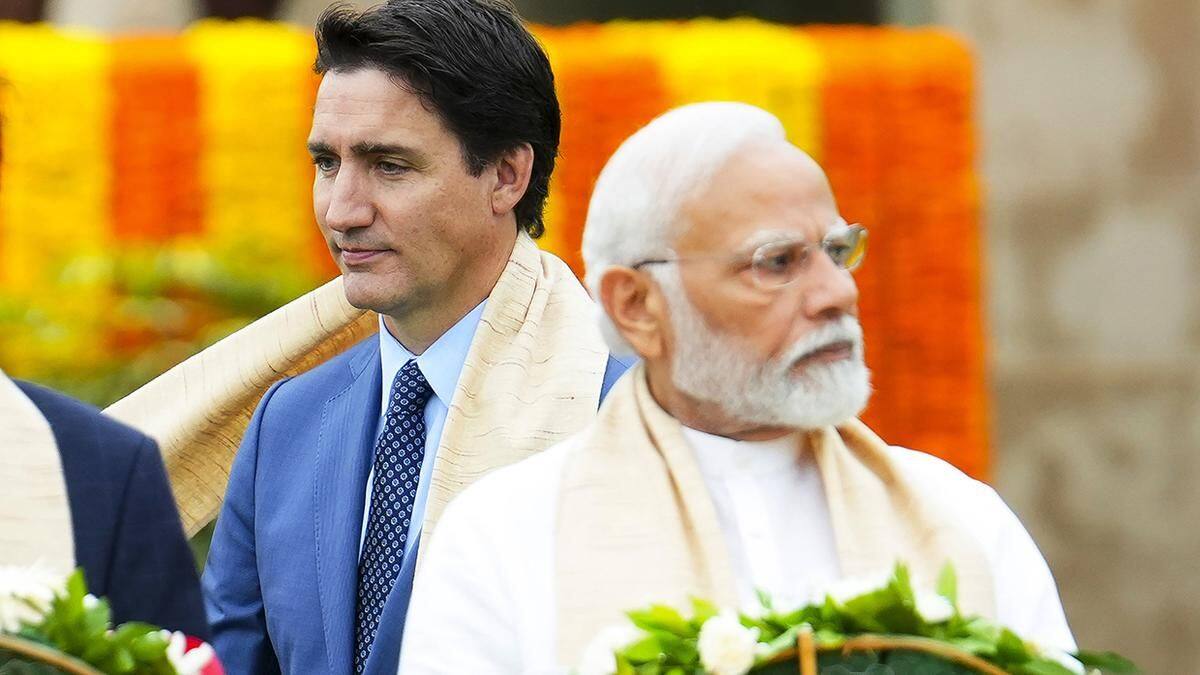
This caused great uncertainty, owing to which students started looking elsewhere. Now, diplomatic relations have improved between the two countries.
Canada speaks
But despite all of this, Canada’s High Commissioner to India, Chris Cooter, noted that there’s a misconception that Ottawa is shutting its doors. “We now have 400,000 students in Canada. Students and parents are very welcome, so please do consider Canada,” he said.
He further acknowledged that visa delays have been a concern but added that following the Canadian Prime Minister Carney’s visit to India two-and-a-half months ago, efforts are under way to improve the process and make the experience smoother.
Cooter emphasised that Canada remains open and welcoming to genuine students and is actively working to streamline visa approvals and improve the overall student experience.
With inputs from agencies

Military drones & police check-ups: How Sri Lanka is fighting against worst dengue outbreak in a decade
How Facebook job ad lured 2 Karnataka men into Myanmar cyber scam camp
Why is India seeing 95% cloud cover despite a Super El Niño?
What is CJP’s fourth demand to the government as protests in Delhi intensify?
The new geography of war: Why the Houthis can no longer be ignored