


As China faces difficult economic moment, Xi Jinping tightens his grip
Xi Jinping’s belief in the primacy of the Communist party of China could shift the world’s second-largest economy back toward a more state-led model

Then over the weekend, as part of a twice-a-decade leadership reshuffle, Xi moved many of his loyalists into the top ranks of the party.He pushed out long-time economic policymakers like Premier Li Keqiang, whose doctoral dissertation won China’s top award in economics in 1994, and Wang Yang, an architect of the free market economic boom in south-eastern China.[caption id="attachment_10791131" align="alignnone" width="640"]
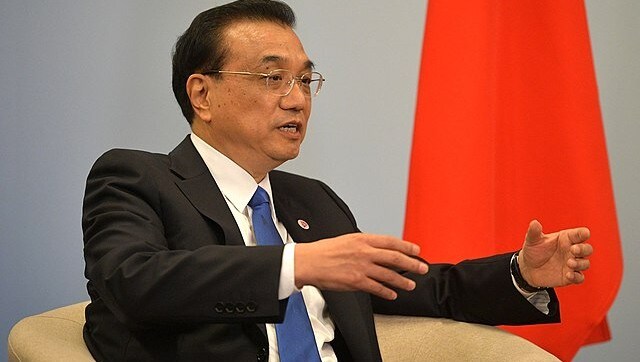
Li Keqiang. Image courtesy Wikimedia Commons[/caption]“The new administration doesn’t look particularly business-friendly — there’s every indication that party loyalty trumps everything else,” said Richard Harris, the chief executive of Port Shelter Investment Management, a Hong Kong investment firm.Under Xi, regulators have clamped down on the tech sector, contributing to widespread layoffs among young employees. Dozens of the country’s private property developers have defaulted on debts after Beijing discouraged real estate speculation. Tycoons have been fleeing the country. Lockdowns in cities and regions across the country to stop outbreaks of COVID-19 have taken a heavy toll on economic growth.Some observers and investors had hoped that Beijing would use the party congress to emphatically reassure private businesses and entrepreneurs that they were still welcome. Instead, the dominant rhetoric emerging from the conclave pointed to more state regulation.The nosedive in financial markets was particularly focused around the shares of Chinese internet companies, which have been a key target of Xi’s expansive campaign to strengthen the party’s control over the economy.“It is clear that before the party congress there had been a lot of wishful thinking in large swathes of the financial community that there would be some kind of clear signal of commitment to the traditional liberal economic reform, and that has now been exposed as a delusion,” said Arthur Kroeber, a founding partner and the head of research at Gavekal, a China-focused research firm.He added that few had expected Xi to move so many of his loyalists into the Politburo and particularly the Politburo Standing Committee, the apex of power in China.“I think there was a fair bit of money placed on the idea that there would be a more balanced Politburo and a Standing Committee that consisted of people who were not only direct acolytes of Xi,” Kroeber said.Of particular concern is Xi’s signature “zero COVID” policy, which has stamped out numerous outbreaks but imposed major disruptions to daily life and the functioning of the economy.Even though the headline figure for economic growth released Monday showed China on a path of recovery, it still fell short of Beijing’s target of 5.5 per cent for this year. The details also illustrated the continuing impact of lockdowns. Consumer spending, which recovered over the summer from a lockdown in Shanghai last spring, slowed sharply in September, as a jump in COVID cases prompted authorities to confine people to their homes.The lockdowns have particularly hurt small shops and eateries, which are a mainstay of urban employment. In Beijing, Wang Shixiong has run a store for more than 20 years selling incense and Buddhist figurines directly across the street from Beijing’s Lama Temple, a popular tourist destination.But his sales lately have been half of what they were before the pandemic.
During the recent Golden Week holiday in early October — normally a high point for tourism — his store was quiet.Neighbourhood officials kept stopping in every other day to check that he had disinfected the premises, he said. Security was subsequently stepped up across Beijing for the party congress.“Then you add the pandemic, and there are just many fewer people,” Wang said. “If there weren’t a pandemic, there would be so many people in front of our door.”China’s move to release important economic data Monday was as much of a surprise as its delay last week. Without explanation, the National Bureau of Statistics put out the figures without holding its usual quarterly news conference to discuss the country’s economic performance.The better-than-expected data suggested that the government’s motive in delaying the release was to avoid having any news last week that might distract from the party congress, rather than out of concern that the data would look bad. Still, economists said that the move had compromised international confidence in the reliability of China’s economic data.“Dark clouds of political suspicion will undermine official Chinese statistics for years to come,” said Stephen S Roach, a former chairman of Morgan Stanley Asia who is now a senior economist at Yale’s Jackson School of Global Affairs. He described the economic growth information released on Monday as “not a credible report from a discredited statistical agency.”Over the longer term, one question is how far Xi will push his vision of “common prosperity,” a vaguely defined, egalitarian campaign of redistributing wealth that has unnerved investors and could be a signal of higher taxes to come.Xi spoke during the congress of making sure that income accrues to those who labour to earn it — an implicit rebuke to those who earn their livelihoods through trading or investment.“The return to Marxism is deeper than many people would have thought,” said Jean-Pierre Cabestan, a professor emeritus at Hong Kong Baptist University.Keith Bradsher and Alexandra Stevenson c.2022 The New York Times CompanyRead all the Latest News, Trending News, Cricket News, Bollywood News,India News and Entertainment News here. Follow us on Facebook, Twitter and Instagram.

Military drones & police check-ups: How Sri Lanka is fighting against worst dengue outbreak in a decade
How Facebook job ad lured 2 Karnataka men into Myanmar cyber scam camp
Why is India seeing 95% cloud cover despite a Super El Niño?
What is CJP’s fourth demand to the government as protests in Delhi intensify?
The new geography of war: Why the Houthis can no longer be ignored