
Advertisement


Sections
All about world’s second private Moon mission and its India connection
The US space robotics firm Astrobotic launched its Peregrine lunar lander into orbit aboard a Vulcan rocket from Cape Canaveral around 12.45 pm on Monday. Dr Sharad Bhaskaran, who is of Indian origin, is the mission director of the lander

The world’s second private mission to the Moon is underway.The US space robotics firm Astrobotic launched its Peregrine lunar lander into orbit from Cape Canaveral around 12.45 pm on Monday.But what do we know about the launch? And what’s the India connection?Let’s take a closer look:What do we know about the launch?The lander was shot into space on a new Vulcan rocket.This rocket was developed in a joint venture between Boeing and Lockheed Martin.If all goes well, Peregrine would mark the first US soft landing on the moon since the final Apollo landing in 1972, and the first-ever lunar landing by a private company – a feat that has proved elusive in recent years.As per CNN, NASA paid Astrobotic $108 million to build the lander and take its science experiments to the lunar surface.![]()
The lander is named after the falcon – the world’s fastest flying bird.As per The New York Times, the mission is part of NASA’s Commercial Lunar Payload Services program (CLPS) which aims to decrease the cost of sending payloads to the Moon.According to the Interesting Engineering website, the lander is six feet tall and eight feet wide.As per Economic Times, the lander has over 80,000 messages from children all across the globe.Its payload also contains a piece of Mount Everest.The 20 payloads comprise five from NASA and 15 from others including Mexico, a robotics experiment from a UK-based private firm and a package from DHL which has trinkets and mementos, as per CNN.As per Interesting Engineering, the payloads also contain a physical piece of a Bitcoin along with a private encryption key, student work, and novels.The lander is set to land on the moon on 23 February in the Bay of Stickiness, as per Economic Times.Most of its payloads will seek to gather data about the lunar surface ahead of planned future human missions.These include detecting water molecules, measuring radiation and gases around the lander, and assessing the lunar exosphere, as per the report.Once it touches down, it is expected to remain operational for up to 10 days, as per CNN.Paul Niles, NASA’s project scientist for the Commercial Lunar Payload Services program, was quoted as saying that NASA’s experiments would “help us better prepare to send crewed missions back to the moon.”But some of the payloads have become a source of controversy.As per The New York Times, the Navajo Nation is protesting the lander carrying human ashes and DNA.The lander is carrying payloads for two private companies – Celestis and Elysium Space – which immortalise human beings by sending their remains to space.Buu Nygren, the president of the Navajo Nation, told The New York Times he was calling for a halt to the mission.“The Moon is deeply embedded in the spirituality and heritage of many Indigenous cultures, including our own,” he wrote. “The placement of human remains on the moon is a profound desecration of this celestial body revered by our people.”It marks the first trek to the moon's surface as part of NASA's Artemis moon program.[caption id="attachment_13590312" align="alignnone" width="640"]
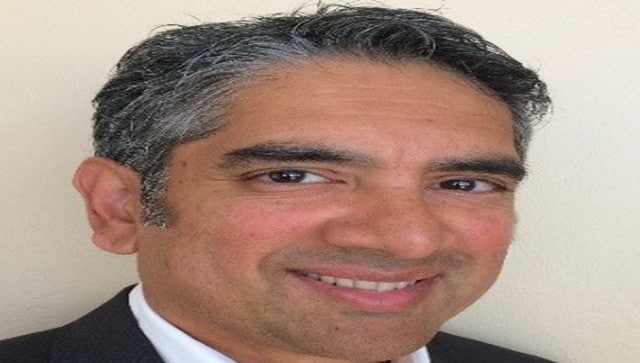
Dr Sharad Bhaskaran, the director of the mission, is of Indian origin. LinkedIn[/caption]That multibillion-dollar program, involving various countries and relying heavily on private companies such as SpaceX, envisions astronaut missions to the moon later this decade.Small landers such as Peregrine will get there first."Yee haw, I am so thrilled," ULA CEO Tory Bruno said in the company's launch control room. "This has been years of hard work. So far this has been an absolutely beautiful mission.""This is the moment we've been waiting for for 16 years," Astrobotic CEO John Thornton said. Applause roared in the launch control room when Peregrine was released from its booster stage, setting the golf cart-sized craft on its 46-day journey to the moon.The mission is the latest in recent years among countries and private companies sprinting to the moon, a reemergent stage of international competition where scientists hope its water-bearing minerals can be exploited to sustain long-term astronaut missions.The launch of Vulcan, a 200-foot 60-metre tall rocket with engines made by Jeff Bezos' Blue Origin, was a crucial first for ULA, which developed the rocket to replace its workhorse Atlas V rocket and rival the reusable Falcon 9 from Elon Musk's SpaceX in the satellite launch market.The stakes were high for Vulcan. Boeing and Lockheed, which own ULA in a 50-50 split, have been seeking a sale of the business for roughly a year. And the launch was the first of two certification flights required by the U.S. Space Force before Vulcan can fly lucrative missions for the Pentagon, a key customer.What’s the Indian connection?The undertaking also has an Indian connection – its mission director Dr Sharad Bhaskaran is of Indian origin.Bhaskaran has a B.SC in Mechanical Engineering from the University of Texas at Austin.He is currently the mission director at Astrobotic Technology Inc in Pittsburgh – a position he has held since 2016.He leads the engineering team responsible for developing a commercial robotic lunar lander designed to transport payloads to the moon's surface.
Bhaskaran earlier worked at Lockheed Martin for more than two decades.He was also an independent consultant at Pivotal Win as programme manager, department manager and section manager.A second private US company under the same NASA program expects to launch a lander of its own in February.Carrying similar NASA payloads and launching to space aboard a SpaceX Falcon 9 rocket, Houston-based Intuitive Machines' said its spacecraft could make a moon landing on 22 February a day before Peregrine.India last year became the fourth country to achieve a soft lunar landing after Russia failed in an attempt the same month. The US, China and the former Soviet Union are the only other countries that have carried out successful soft lunar landings.Private companies with hopes of spurring a lunar marketplace have had harder times, with Japan's ispace and an Israeli company crash-landing on their first attempts.With inputs from agencies
First Published:Jan 08, 2024, 17:42:04 IST
Advertisement
Advertisement

Why India may not witness a medal rush at 2026 Commonwealth Games
A 125-strong Indian contingent is in Glasgow for the 2026 Commonwealth Games, starting today (July 23), chasing international glory. However, with a roster of sports such as badminton and wrestling being cut from the event, the country’s medal chances have been drastically reduced
4 min read
Delhi Police asks personnel to wear uniform: What the law says on cops in plainclothes during protests
The Delhi Police has instructed all its personnel to wear uniforms when they report for duty at Jantar Mantar for crowd control. This comes after outrage grew over videos of men in civilian clothes or without name tags hitting protesters in the Capital. Is it legal for the police to ditch uniforms during protests?
4 min read
Military drones & police check-ups: How Sri Lanka is fighting against worst dengue outbreak in a decade
Sri Lanka is fighting its most severe dengue outbreak in nearly a decade, with infections rising sharply across the nation. Military drones have been deployed to tackle the outbreak, which has claimed 56 lives. Health officials said the outbreak is being driven primarily by the DENV-2 variant of the virus
3 min read
How Facebook job ad lured 2 Karnataka men into Myanmar cyber scam camp
The Karnataka Cyber Command has rescued two youths from a scam compound in Myanmar operated by Chinese fraudsters. The duo from Karnataka were lured on the pretext of data-entry jobs. They were asked to work for 16 hours a day and were expected to sleep for six hours daily
4 min read
Why is India seeing 95% cloud cover despite a Super El Niño?
India is witnessing nearly 95 per cent cloud cover despite a Super El Niño, a climate event usually linked to weaker monsoons. Regional weather systems, cyclonic circulations, the monsoon trough and moisture from two seas are temporarily overpowering one of the world's strongest climate phenomena
5 min read
Advertisement
Advertisement