


A Jurrasic World: Do dinosaurs still exist?
A recent study argues that dinosaurs might actually exist right now, although on a different planet. Researchers say that we might even be able to discover them by investigating materials that were present in the dinosaur era but are not present in the modern Earth

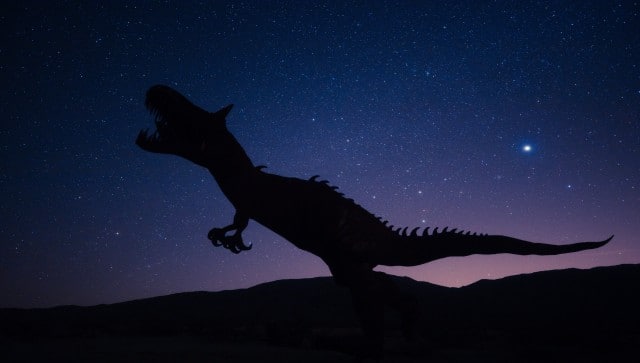
A recent study argues that a "Jurassic World" might actually exist right now, although on a different planet. Pexels[/caption]Another clue is to find if a planet is in “Phanerozoic stage”One indicator that scientists can look for is whether a planet is in the Phanerozoic period, which is when massive, complex life forms can exist on the planet.“The Phanerozoic is just the most recent 12% or so of Earth’s history, but it encompasses nearly all of the time in which life was more complex than microbes and sponges. This gives us hope that it might be just a little bit easier to find signs of life — even large, complex life — elsewhere in the cosmos,” Cornell University scientist Rebecca Payne told The Sun.These distinct light fingerprints are what we should be searching for if we're looking for something on other worlds that is more developed than a single-celled organism, according to Payne.Kaltenegger says that looking for planets with increased oxygen content may both facilitate and lead to the finding of intriguing life forms.“Hopefully we’ll find some planets that happen to have more oxygen than Earth right now because that will make the search for life just a little bit easier,” Kaltenegger said. “And, who knows, maybe there are other dinosaurs waiting to be found.”With inputs from agencies

Military drones & police check-ups: How Sri Lanka is fighting against worst dengue outbreak in a decade
How Facebook job ad lured 2 Karnataka men into Myanmar cyber scam camp
Why is India seeing 95% cloud cover despite a Super El Niño?
What is CJP’s fourth demand to the government as protests in Delhi intensify?
The new geography of war: Why the Houthis can no longer be ignored