
Advertisement


Sections
Why Anand Gandhi's OK Computer is a commendable attempt at homegrown science fiction
OK Computer has delivered a worthy failure, at least, one that is intermittently enjoyable. Who knows what it could achieve with a better writing team?

The recently released OK Computer is an acquired taste, to be sure. In 2031, a self-driving car has seemingly killed a man, and DCP Saajan Kundu (Vijay Varma) has been tasked with solving the case. Laxmi Suri (Radhika Apte), a ‘robot rights activist’ who has history with Kundu, is also monitoring the investigation, which may or may not implicate CNX, the billionaire genius behind this brave new world’s robot revolution. The problem is OK Computer juggles far too many disparate sets of influences, and if you are unfamiliar with most of them, the show can come across as alienating. In terms of overall tonality, it follows Douglas Adams-flavoured screwball sci-fi. The dialogues have a loose, improvisational feel to them, and the occasional non-sequiturs will remind you of experimental Indian films like Om Dar Ba Dar. In several dramatic scenes, the farcical dialogues and ‘lo-fi’ scene-setting owe a debt to the revolutionary street plays of Badal Sircar and others. A small core group of ‘talking heads’ surrounded by an identically dressed ‘crowd’ who ‘rearrange’ themselves depending upon the requirements of the scene; this is classic street play territory, and it is what happens with the big lawyer scene in the first episode. But the show reveals its preferred register with a cutesy animated sequence explaining the “Three Laws of Robotics”. This is a direct reference to science fiction maestro Isaac Asimov’s (1920-1992) concept, which he used across dozens of his robot stories and novels.![Ray Fisher as Cyborg and Dr Silas Stone in still from Justice League]() Ray Fisher as Cyborg and Joe Mortan as Dr Silas Stone in Justice League[/caption]Dr Stone ‘rebuilds’ his son into an android of sorts but something goes wrong — the ‘new’ Victor Stone is unsure of where the human part of him ends and where the robot begins. In the fight scene with Superman for instance, he cannot stop his arm’s weapons defence system from firing a pre-emptive strike at Kal-El/Superman. This is a clear callback to the "we can’t control the machines, they control us" messaging of the Terminator films.Plus, the biggest callback of them all is the casting of Joe Morton as Dr Silas Stone. It was Morton who played Miles Dyson in James Cameron’s Terminator 2: Judgment Day; Dyson was the scientist whose research leads to the development of Skynet, the world-ending artificial intelligence that controls the US' weapons systems, including nuclear missiles. It is in this context that the Asimovian robot made its pop cultural pushback against the idea of the evil robot. And just like OK Computer begins with a murder, allegedly committed by an Asimovian robot bound by the three laws, the last big-budget Hollywood Asimov adaptation, too, started with a murder investigation. This was the 2004 Will Smith movie I, Robot where Smith plays Del Spooner, the cop who is assigned the case. Like Radhika Apte’s Laxmi Suri becomes the advocate for robot rights in OK Computer, I, Robot features Bridget Moynahan playing ‘robopsychologist’ Dr Susan Calvin, a recurring character from Asimov’s robot stories. In Asimov’s books, Calvin was a kind of “bridge” character between robots and humans (she is a human who is depicted as somewhat cold and mechanical in her habits, plus she prefers robots to human company), which is why characters like her and Laxmi Suri are of paramount importance for modern-day creators. We are, after all, increasingly moving towards human-robot hybrid characters like Victor Stone/Cyborg — or to name a recent comedic example, the virtual assistant Janet from the comedy series The Good Place. It is in this context, especially, that I feel OK Computer missed a trick. Radhika Apte does a fine job as usual but the writing and characterisation for this all-important Laxmi Suri character needed to be much stronger than it is. How did she start developing her innate empathy towards robots? What are her views on the abuse of robotic technology? What would she say to workers who have been laid off en masse due to the latest robot making them obsolete overnight? Suri’s answers to these questions would have been fascinating, I reckon, but OK Computer does not really give us a chance to find out. The intriguing epilogue to the final episode — the one that sets up a potential second season — does make her more of a major player, though, and hopefully OK Computer will develop this plot strand better the next time around. (Also read: OK Computer cast Vijay Varma, Radhika Apte, Jackie Shroff discuss blending science and comedy in Disney+ Hotstar VIP show)Eco-terrorism and the anti-robot faction: On missed opportunitiesAnother worthy failure on the part of the show is Jackie Shroff’s character, cult leader and self-described eco-terrorist called ‘Pushpak Shakur’: first name communicating nature (‘pushp’ means flower in Sankskrit/Hindi), second name communicating revolution (the late rapper Tupac Shakur, whose family included several members of the revolutionary Black Panther party). Reactionary eco-terrorists are making a comeback as villains: in recent years, both Elementary and The Blacklist, two of the more popular shows on primetime TV, have featured really interesting and multi-faceted eco-terrorist villains.Alas, Pushpak Shakur does nothing of the sort. He seems more of a sketch comedy construct (which is to say, designed to hold your interest for a few minutes and no more) than a multi-season character with meaningful story arcs. There is so much they could have done with a society dedicated to bring humanity back into hippie-era Utopian ideals: no robots, no AI, just fresh produce, free love, and that commune life. Instead, we have Shroff performing what is an essentially a doped-out version of his infamous ‘Pulse Polio ad bloopers’ reel (yes, the “mausichi g***d one). In one moment, where he bursts into a sing-song bit of dialogue (“tumhaare bacche sad ke marenge”), I seriously thought he had forgotten the actual line mid-way and improvised (not very well). [caption id="attachment_9461261" align="alignnone" width="640"]
Ray Fisher as Cyborg and Joe Mortan as Dr Silas Stone in Justice League[/caption]Dr Stone ‘rebuilds’ his son into an android of sorts but something goes wrong — the ‘new’ Victor Stone is unsure of where the human part of him ends and where the robot begins. In the fight scene with Superman for instance, he cannot stop his arm’s weapons defence system from firing a pre-emptive strike at Kal-El/Superman. This is a clear callback to the "we can’t control the machines, they control us" messaging of the Terminator films.Plus, the biggest callback of them all is the casting of Joe Morton as Dr Silas Stone. It was Morton who played Miles Dyson in James Cameron’s Terminator 2: Judgment Day; Dyson was the scientist whose research leads to the development of Skynet, the world-ending artificial intelligence that controls the US' weapons systems, including nuclear missiles. It is in this context that the Asimovian robot made its pop cultural pushback against the idea of the evil robot. And just like OK Computer begins with a murder, allegedly committed by an Asimovian robot bound by the three laws, the last big-budget Hollywood Asimov adaptation, too, started with a murder investigation. This was the 2004 Will Smith movie I, Robot where Smith plays Del Spooner, the cop who is assigned the case. Like Radhika Apte’s Laxmi Suri becomes the advocate for robot rights in OK Computer, I, Robot features Bridget Moynahan playing ‘robopsychologist’ Dr Susan Calvin, a recurring character from Asimov’s robot stories. In Asimov’s books, Calvin was a kind of “bridge” character between robots and humans (she is a human who is depicted as somewhat cold and mechanical in her habits, plus she prefers robots to human company), which is why characters like her and Laxmi Suri are of paramount importance for modern-day creators. We are, after all, increasingly moving towards human-robot hybrid characters like Victor Stone/Cyborg — or to name a recent comedic example, the virtual assistant Janet from the comedy series The Good Place. It is in this context, especially, that I feel OK Computer missed a trick. Radhika Apte does a fine job as usual but the writing and characterisation for this all-important Laxmi Suri character needed to be much stronger than it is. How did she start developing her innate empathy towards robots? What are her views on the abuse of robotic technology? What would she say to workers who have been laid off en masse due to the latest robot making them obsolete overnight? Suri’s answers to these questions would have been fascinating, I reckon, but OK Computer does not really give us a chance to find out. The intriguing epilogue to the final episode — the one that sets up a potential second season — does make her more of a major player, though, and hopefully OK Computer will develop this plot strand better the next time around. (Also read: OK Computer cast Vijay Varma, Radhika Apte, Jackie Shroff discuss blending science and comedy in Disney+ Hotstar VIP show)Eco-terrorism and the anti-robot faction: On missed opportunitiesAnother worthy failure on the part of the show is Jackie Shroff’s character, cult leader and self-described eco-terrorist called ‘Pushpak Shakur’: first name communicating nature (‘pushp’ means flower in Sankskrit/Hindi), second name communicating revolution (the late rapper Tupac Shakur, whose family included several members of the revolutionary Black Panther party). Reactionary eco-terrorists are making a comeback as villains: in recent years, both Elementary and The Blacklist, two of the more popular shows on primetime TV, have featured really interesting and multi-faceted eco-terrorist villains.Alas, Pushpak Shakur does nothing of the sort. He seems more of a sketch comedy construct (which is to say, designed to hold your interest for a few minutes and no more) than a multi-season character with meaningful story arcs. There is so much they could have done with a society dedicated to bring humanity back into hippie-era Utopian ideals: no robots, no AI, just fresh produce, free love, and that commune life. Instead, we have Shroff performing what is an essentially a doped-out version of his infamous ‘Pulse Polio ad bloopers’ reel (yes, the “mausichi g***d one). In one moment, where he bursts into a sing-song bit of dialogue (“tumhaare bacche sad ke marenge”), I seriously thought he had forgotten the actual line mid-way and improvised (not very well). [caption id="attachment_9461261" align="alignnone" width="640"]![Jackie Shroff in Ok Computer trailer. YouTube Screengrab]() Jackie Shroff in OK Computer. YouTube Screengrab[/caption]Having said that, I confess I am thrilled to see an OK Computer getting the green light by a mainstream platform like Disney+ Hotstar VIP, simply because there is not much we have when it comes to homegrown science fiction (we are talking about onscreen stuff here, not books). A powerful reminder of this gaping pop cultural void is the last episode, where we finally come face-to-face with the elusive, all-powerful CNX, who we learn is called Cyrus Xerxes Noor (this is a show with outlandish names, so why not?). CNX is played, in a charming little cameo, by veteran director Shekhar Kapur, whose own Mr India (1987) was Bollywood’s original lo-fi science fiction caper. When I was watching Kapur, the initial surprise gave way to a familiar sadness — I realised that I haven’t really enjoyed a single desi science fiction film or TV show since Mr India, which for all its campiness understood how to have fun at the movies. The Krishh (or is it Krriiiishhh? KKKKrihhhsh?) films are all uniformly awful, although impersonating Jadoo the alien is a bankable party trick (press your index finger upon your larynx until you feel a moderate amount of pain; say ‘Om’ until someone begs you to stop). Other standalone efforts like Rudraksh or Ra.One are candidates for the so-bad-it’s-good zone.Over three decades, and we have nothing to show for our efforts — OK Computer has delivered a worthy failure, at least, one that is intermittently enjoyable. Who knows what it could achieve with a better writing team? (Also read — 'Long-term goal is to set more stories in India': Anand Gandhi opens up on Hotstar series OK Computer)
Jackie Shroff in OK Computer. YouTube Screengrab[/caption]Having said that, I confess I am thrilled to see an OK Computer getting the green light by a mainstream platform like Disney+ Hotstar VIP, simply because there is not much we have when it comes to homegrown science fiction (we are talking about onscreen stuff here, not books). A powerful reminder of this gaping pop cultural void is the last episode, where we finally come face-to-face with the elusive, all-powerful CNX, who we learn is called Cyrus Xerxes Noor (this is a show with outlandish names, so why not?). CNX is played, in a charming little cameo, by veteran director Shekhar Kapur, whose own Mr India (1987) was Bollywood’s original lo-fi science fiction caper. When I was watching Kapur, the initial surprise gave way to a familiar sadness — I realised that I haven’t really enjoyed a single desi science fiction film or TV show since Mr India, which for all its campiness understood how to have fun at the movies. The Krishh (or is it Krriiiishhh? KKKKrihhhsh?) films are all uniformly awful, although impersonating Jadoo the alien is a bankable party trick (press your index finger upon your larynx until you feel a moderate amount of pain; say ‘Om’ until someone begs you to stop). Other standalone efforts like Rudraksh or Ra.One are candidates for the so-bad-it’s-good zone.Over three decades, and we have nothing to show for our efforts — OK Computer has delivered a worthy failure, at least, one that is intermittently enjoyable. Who knows what it could achieve with a better writing team? (Also read — 'Long-term goal is to set more stories in India': Anand Gandhi opens up on Hotstar series OK Computer)
- A robot may not injure a human being or, through inaction, allow a human being to come to harm.
- A robot must obey the orders given it by human beings except where such orders would conflict with the First Law.
- A robot must protect its own existence as long as such protection does not conflict with the First or Second Law.
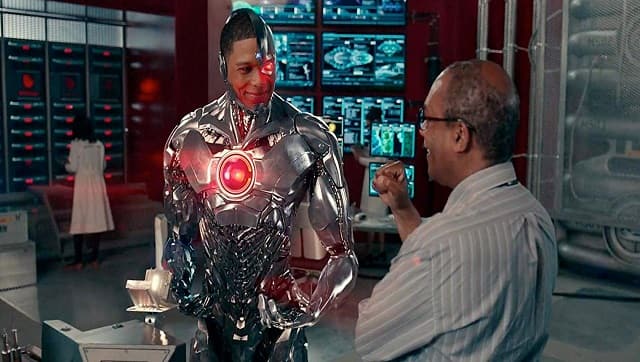 Ray Fisher as Cyborg and Joe Mortan as Dr Silas Stone in Justice League[/caption]Dr Stone ‘rebuilds’ his son into an android of sorts but something goes wrong — the ‘new’ Victor Stone is unsure of where the human part of him ends and where the robot begins. In the fight scene with Superman for instance, he cannot stop his arm’s weapons defence system from firing a pre-emptive strike at Kal-El/Superman. This is a clear callback to the "we can’t control the machines, they control us" messaging of the Terminator films.Plus, the biggest callback of them all is the casting of Joe Morton as Dr Silas Stone. It was Morton who played Miles Dyson in James Cameron’s Terminator 2: Judgment Day; Dyson was the scientist whose research leads to the development of Skynet, the world-ending artificial intelligence that controls the US' weapons systems, including nuclear missiles. It is in this context that the Asimovian robot made its pop cultural pushback against the idea of the evil robot. And just like OK Computer begins with a murder, allegedly committed by an Asimovian robot bound by the three laws, the last big-budget Hollywood Asimov adaptation, too, started with a murder investigation. This was the 2004 Will Smith movie I, Robot where Smith plays Del Spooner, the cop who is assigned the case. Like Radhika Apte’s Laxmi Suri becomes the advocate for robot rights in OK Computer, I, Robot features Bridget Moynahan playing ‘robopsychologist’ Dr Susan Calvin, a recurring character from Asimov’s robot stories. In Asimov’s books, Calvin was a kind of “bridge” character between robots and humans (she is a human who is depicted as somewhat cold and mechanical in her habits, plus she prefers robots to human company), which is why characters like her and Laxmi Suri are of paramount importance for modern-day creators. We are, after all, increasingly moving towards human-robot hybrid characters like Victor Stone/Cyborg — or to name a recent comedic example, the virtual assistant Janet from the comedy series The Good Place. It is in this context, especially, that I feel OK Computer missed a trick. Radhika Apte does a fine job as usual but the writing and characterisation for this all-important Laxmi Suri character needed to be much stronger than it is. How did she start developing her innate empathy towards robots? What are her views on the abuse of robotic technology? What would she say to workers who have been laid off en masse due to the latest robot making them obsolete overnight? Suri’s answers to these questions would have been fascinating, I reckon, but OK Computer does not really give us a chance to find out. The intriguing epilogue to the final episode — the one that sets up a potential second season — does make her more of a major player, though, and hopefully OK Computer will develop this plot strand better the next time around. (Also read: OK Computer cast Vijay Varma, Radhika Apte, Jackie Shroff discuss blending science and comedy in Disney+ Hotstar VIP show)Eco-terrorism and the anti-robot faction: On missed opportunitiesAnother worthy failure on the part of the show is Jackie Shroff’s character, cult leader and self-described eco-terrorist called ‘Pushpak Shakur’: first name communicating nature (‘pushp’ means flower in Sankskrit/Hindi), second name communicating revolution (the late rapper Tupac Shakur, whose family included several members of the revolutionary Black Panther party). Reactionary eco-terrorists are making a comeback as villains: in recent years, both Elementary and The Blacklist, two of the more popular shows on primetime TV, have featured really interesting and multi-faceted eco-terrorist villains.Alas, Pushpak Shakur does nothing of the sort. He seems more of a sketch comedy construct (which is to say, designed to hold your interest for a few minutes and no more) than a multi-season character with meaningful story arcs. There is so much they could have done with a society dedicated to bring humanity back into hippie-era Utopian ideals: no robots, no AI, just fresh produce, free love, and that commune life. Instead, we have Shroff performing what is an essentially a doped-out version of his infamous ‘Pulse Polio ad bloopers’ reel (yes, the “mausichi g***d one). In one moment, where he bursts into a sing-song bit of dialogue (“tumhaare bacche sad ke marenge”), I seriously thought he had forgotten the actual line mid-way and improvised (not very well). [caption id="attachment_9461261" align="alignnone" width="640"]
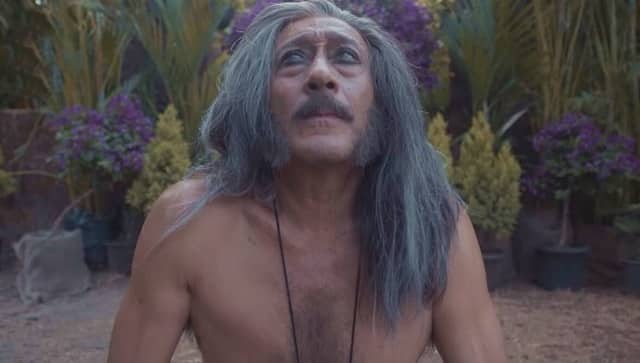 Jackie Shroff in OK Computer. YouTube Screengrab[/caption]Having said that, I confess I am thrilled to see an OK Computer getting the green light by a mainstream platform like Disney+ Hotstar VIP, simply because there is not much we have when it comes to homegrown science fiction (we are talking about onscreen stuff here, not books). A powerful reminder of this gaping pop cultural void is the last episode, where we finally come face-to-face with the elusive, all-powerful CNX, who we learn is called Cyrus Xerxes Noor (this is a show with outlandish names, so why not?). CNX is played, in a charming little cameo, by veteran director Shekhar Kapur, whose own Mr India (1987) was Bollywood’s original lo-fi science fiction caper. When I was watching Kapur, the initial surprise gave way to a familiar sadness — I realised that I haven’t really enjoyed a single desi science fiction film or TV show since Mr India, which for all its campiness understood how to have fun at the movies. The Krishh (or is it Krriiiishhh? KKKKrihhhsh?) films are all uniformly awful, although impersonating Jadoo the alien is a bankable party trick (press your index finger upon your larynx until you feel a moderate amount of pain; say ‘Om’ until someone begs you to stop). Other standalone efforts like Rudraksh or Ra.One are candidates for the so-bad-it’s-good zone.Over three decades, and we have nothing to show for our efforts — OK Computer has delivered a worthy failure, at least, one that is intermittently enjoyable. Who knows what it could achieve with a better writing team? (Also read — 'Long-term goal is to set more stories in India': Anand Gandhi opens up on Hotstar series OK Computer)
First Published:Apr 05, 2021, 08:05:34 IST
Advertisement
Advertisement

How Spider-Man actor Tom Holland has been on a sobriety journey of 4.5 years after being "addicted to alcohol"
Tom Holland has been open about his struggle with alcohol addiction and his 4.5-year sobriety journey, even at the height of his Spider-Man and The Odyssey fame.
3 min read
Sitar virtuoso Rishab Sharma steals the spotlight with Rs 35.8 lakh Jacob & Co Ram Janmabhoomi watch at ‘Ramayana’ event: Here's what makes it rare
Sitarist Rishab Sharma grabbed attention at the Ramayana event with a limited-edition Rs 35.8 lakh Jacob & Co. Epic X Ram Janmabhoomi watch. Here's what makes the luxury timepiece so special.
2 min read
Amitabh Bachchan reveals being admitted to the ICU and undergoing surgery, calls recovery 'the most difficult phase of life'
Amitabh Bachchan has revealed he was hospitalised, underwent surgery and spent time in the ICU. The veteran actor reflected on the emotional and physical challenges of recovery in a deeply personal blog post.
2 min read
Avengers Doomsday trailer out: What to expect from Marvel's ultimate crossover
Marvel Studios has dropped the first trailer for Avengers: Doomsday. From Robert Downey Jr.'s Doctor Doom and Chris Evans' return to the X-Men crossover, here's everything you need to know.
3 min read
Christopher Nolan banned the orchestra for 'The Odyssey': The sound of gongs, scrap metal and more
Composer Ludwig Göransson reveals how he built the epic's entire sound world from bronze gongs, scrap metal and ancient Greek instruments like the aulos and lyre.
2 min read
Advertisement
Advertisement