


Tokyo Vice review: Investigative thriller has a compelling lede — but not quite the compelling lead
Tokyo Vice conducts itself with a measure of self-awareness, not ennobling a white saviour or the Western moral identity.

Language: English
Like all well-reported stories, Tokyo Vice begins with a compelling lede. Two men walk down a hallway, all serious in slo-mo. One is an older Japanese man with the nervous disposition of a law enforcement officer. The other a younger white American putting on a brave face. Both are suited up, strapped in bullet-and-knife-proof vests underneath, ready to meet the “No. 2 yakuza” at a closely-monitored restaurant in an up-scale Tokyo hotel, only to learn the meeting has been shifted to a private lounge on the top floor. Waiting there is a dark-suited man with a cigarette dangling from his lip, and all his henchmen. “We know what you’re investigating. We want you to stop,” the man threatens. “Publish, and there’s nowhere you can hide.”
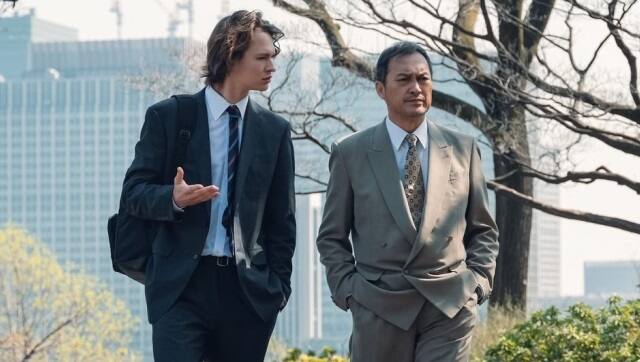
Ansel Elgort and Ken Watanabe in a still from Tokyo Vice[/caption]An entire Tokyo underworld is built around a spider’s web that connects the reporters, the cops, the mob syndicates and all those in debt to them. Over eight episodes, creator JT Rogers guides us into the city’s heart of darkness, an operatic playground of vices spread across hostess clubs, love hotels, pachinko parlours and alleyways all drenched in glistening neon and wet shadows. The show lives and breathes through tracking shots, frenetic handhelds, deep focus, revealing zooms, night-time photography, pulsating synths and all that have typified Mann’s neo-noirs. The blurry lines between truth and lies sharpen in Tokyo’s hostess clubs where patrons pay for the illusion of intimacy. Once Mann sets the tone, Josef Kubota Wladyka, Hikari and Alan Poul, who take over in the next seven episodes, struggle to keep the momentum going with the same dynamism.
The show may have a compelling lede, but its lead is anything but compelling. Elgort makes for a flaccid protagonist, his plastered smile and thick head of hair working overtime to counterbalance the side-effects of Jake’s inflated sense of self. Estranged from his coroner father, Jake has left his family, including a clinically depressed sister, in Missouri to pursue his Japanese dream. An introductory montage shows him cramming for the entrance exam to join the newspaper Meicho Shimbun, while also teaching English to the Japanese, practicing Aikido, and dancing at a nightclub to let off steam.
 More from Entertainment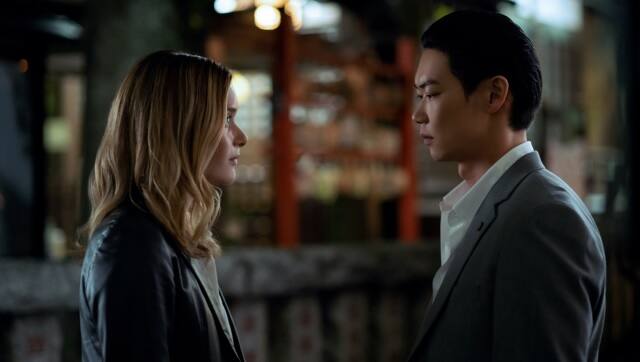
Rachel Keller and Show Kasamatsu in a still from Tokyo Vice[/caption]For a fish-out-of-water tale, you need a root-able audience surrogate at the centre. Jake sure is not. His backstory of parental estrangement is not only vague, but it fails to give us a sense of his motivations. Elgort’s stilted performance deprives Jake of any interiority. Though he eats, drinks and talks like a local to blend in, everyone treats him as an outsider, referring to him as “gaijin” (foreigner in Japanese). The editorial protocol in Japan isn’t the same as it is in America, but Jake can’t respect the differences. Moreover, not only does he refuse to accept the unspoken rules of engagement between reporters, cops and criminals, he is arrogant enough to rewrite them to his benefit. Even if it means pissing off his editor and everyone else, he will pursue his story, banking on juicy tips gained from schmoozing detectives with steak and sake, and arming himself with his American arrogance and a point-and-shoot camera.
If the show needed an outsider’s perspective, there was a far more interesting character working from the sidelines. Jake’s supervisor, Emi Maruyama (Rinko Kikuchi), is a woman hiding her Korean descent to avoid giving her co-workers another reason besides gender to discriminate against her. Despite having to battle sexism on a daily basis, she knows how to pick her battles. When Jake is being an arrogant prick, she calls him out on it. When he is in the right, she backs him. Even when he comes into office high as a kite after smoking meth with a source to get information, she doesn’t fire his ass but sends him home to sober up. What makes Emi an editor and reporter to admire is she keeps her sense of humanity intact, even if she is pursuing a big scoop. When Jake refers to the victims of the yakuza conspiracy as “burned guy” and “stabbed guy”, she is there to remind him “they have names.” When Miyamoto calls a victim who was stalked and murdered as “some girl,” she reminds him of the girl’s name, her age, her love for shojo manga — that she was a woman with a story of her own. Only, as she puts it, a woman’s words happen to count less than a man’s. Emi is what gives Tokyo Vice a voice of reason and conscience.[caption id="attachment_10613671" align="alignnone" width="640"]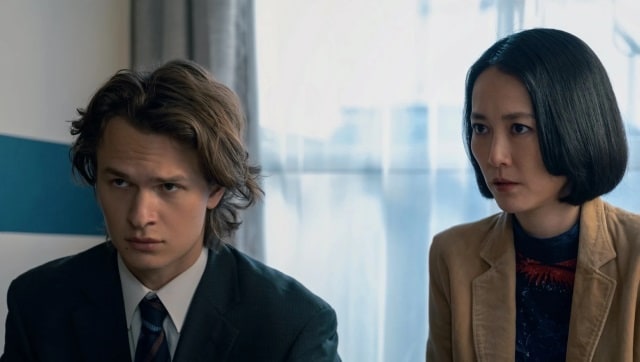 Ansel Elgort, Rinko Kikuchi in a still from Tokyo Vice[/caption]If this were only a story about the Tokyo underworld, Sato could have made for a much more intriguing lead. Also, an outsider estranged from his family, Kasamatsu’s Backstreet Boys-loving character gives us an insider’s perspective into a yakuza clan. He starts off as a low-level enforcer, before saving the life of the clan chairman earns him an undesired promotion. The internal conflict over his job is compounded by his affection for Samantha, creating a love triangle with fellow courter Jake. The details on Samantha’s backstory remain a little unclear. She came to Tokyo as a Mormon missionary before deciding to break bad as a hostess. She has got ambitions of her own: tired of working for a sleazy manager and fiercely protective of her fellow hostesses, especially her credulous Eastern European best friend Polina (Ella Rumpf), she hopes to start her own club. Only, locals are reluctant to rent space to a “gaijin” woman. When her past catches up to her, she will use the affection of her courters to her advantage. Watanabe, who may have been the most obvious option for the lead, personifies gravitas as Katagiri. Being a married man with two daughters, the seasoned detective knows better than to ruffle the yakuza’s feathers — but the closer he gets to bringing Tozawa down, the more his family is in danger. Katagari takes Jake under his wing and shows him the ropes like a father figure, teaching him how to build a relationship with the yakuza but stopping short of becoming their pawn. When Jake inevitably messes up, Katagiri’s “Such entitlement. Such disappointment” reproach cuts deep into the bone.[caption id="attachment_10613691" align="alignnone" width="640"]
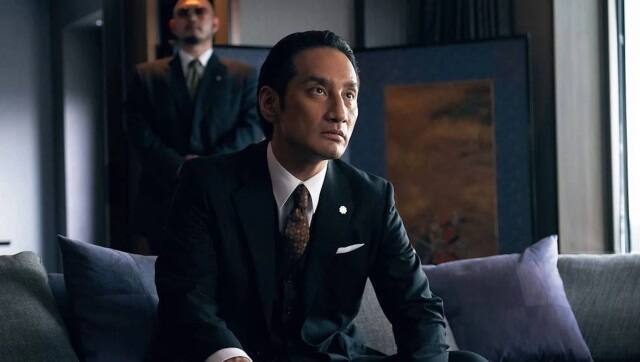 Ayumi Tanida as Shinzo Tozawa[/caption]There is a measure of self-awareness here. Tokyo Vice isn’t exactly ennobling a white saviour or the Western moral identity. When it takes Jake one by-line to “feel like the greatest investigative journalist that ever lived,” a Japanese colleague is happy to remind him his country of origin may have a lot to do with why he feels that way. “Because you’re an American, you think that you’re more talented than you actually are.” With Mann as one of the directors and executive producers, we may be mistaken into thinking Tokyo Vice is more exciting than it actually is. A sword-driven sequence mid-way into the season and a fierce confrontation between Jake and Tozawa’s goons in the finale inject some kinetic thrills, hinting at the more exciting saga it could have been. In mapping the Tokyo underworld and the mythology surrounding it at the turn of the century, density here comes at the expense of depth.

How Spider-Man actor Tom Holland has been on a sobriety journey of 4.5 years after being "addicted to alcohol"
Sitar virtuoso Rishab Sharma steals the spotlight with Rs 35.8 lakh Jacob & Co Ram Janmabhoomi watch at ‘Ramayana’ event: Here's what makes it rare
Amitabh Bachchan reveals being admitted to the ICU and undergoing surgery, calls recovery 'the most difficult phase of life'
Avengers Doomsday trailer out: What to expect from Marvel's ultimate crossover
Christopher Nolan banned the orchestra for 'The Odyssey': The sound of gongs, scrap metal and more