


Hollywood still lacks inclusion in behind-the-scene jobs, LGBTQ+ representation, study finds
According to the latest report by the Inclusion Initiative at the USC Annenberg School for Communication and Journalism, Hollywood has remained far from reflecting the multi-racial composition of its American audience in certain areas.

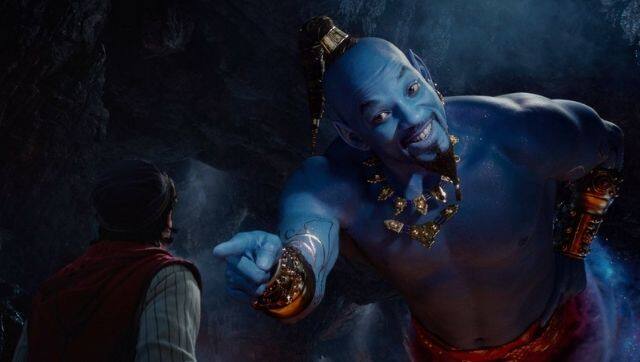
Mena Massoud as Aladdin, left, and Will Smith as Genie in Disney's live-action adaptation of the 1992 animated classic Aladdin.[/caption]Many films went without roles from underrepresented groups entirely. There were no Hispanic speaking characters in 44 of the films; no speaking African Americans in 15 of them; and no speaking Asian characters in 36 movies.Female speaking characters have only marginally increased over the last 13 years, reaching 34 percent in 2019. For every woman talking on screen, there’s nearly two men. People of colour speaking characters also still lag behind the US population with 34.3 percent in 2019. There were three films with speaking transgender characters, adding up to about two minutes of screen time. Just 1.4 percent of speaking characters were LGBTQA, and 2.3 percent were characters with disability. Among the 112 directors of 2019′s top films, 80.4 percent were white.“The chart really reveals that there isn’t a procedure in place to counter bias in decision making,” said Smith. “That’s really what’s most necessary as a way forward particularly in the moment of racial justice that we’re in as a country.”The study sheds light on the film industry’s inclusivity while the Academy of Motion Pictures Arts and Sciences is taking more sweeping steps than it has before to encourage the industry. The academy this week announced new rules to mandate a certain level of diversity in nominated films and at the studios behind them. Smith, among others, has criticised those criteria as not rigorous enough. All but five of the top 100 films of 2019 would meet the Oscars’ standard of on-screen representation.“I wish they would have gone further because it’s more business as usual rather than we need to push the industry to think more critically about who they hire.”Some companies have been more proactive. Half of Universal Pictures’ 2019 releases, which included Us, Queen & Slim, and Ma, starred female protagonists. The studio, the lone major studio headed by a woman in Donna Langley, also led in female directors, writers, and producers, as well as lead roles from underrepresented groups.The Walt Disney Co, which dominated the box office in 2019, accounted for arguably the largest impact with diversely cast blockbusters like The Lion King, Aladdin, and Star Wars: The Rise of Skywalker.Netflix, which only releases its films in brief theatrical runs fell outside the study’s scope, but still drew Smith’s praise for “ushering in a different reality” by hiring female directors at a pace far above that of the studios over the past decade.Other companies have reorganised at the top. MGM this summer revamped Orion Pictures as a hub for diverse moviemaking with producer Alana Mayo (formerly head of Michael B Jordan’s production company) as its president.“That represents what we need to see,” said Smith. “That reflects exactly what needs to be observed quickly if we’re going to see 2021 or 2022 look different than this 2019 report.”A study on 2020, Smith acknowledged, isn’t likely possible since the box office was shuttered for much of the year and most major releases have been postponed.

How Spider-Man actor Tom Holland has been on a sobriety journey of 4.5 years after being "addicted to alcohol"
Sitar virtuoso Rishab Sharma steals the spotlight with Rs 35.8 lakh Jacob & Co Ram Janmabhoomi watch at ‘Ramayana’ event: Here's what makes it rare
Amitabh Bachchan reveals being admitted to the ICU and undergoing surgery, calls recovery 'the most difficult phase of life'
Avengers Doomsday trailer out: What to expect from Marvel's ultimate crossover
Christopher Nolan banned the orchestra for 'The Odyssey': The sound of gongs, scrap metal and more