
Advertisement


Sections
Bela review: Prantik Basu's documentary on Chhau dancers is a gorgeous, timeless journey into a vanishing world
Prantik Basu remains determined to treat the film as a paean to the rebellion of an indigenous community — composed of Kurmis and Mahatos — and their reverence for an artform fast approaching its expiry date.

In the 59-minute long Bela (the word loosely translates to time in Bengali), director Prantik Basu unravels the mysteries and rewards of observing closely. The hypnotic documentary, which marks the filmmaker’s third collaboration with the inhabitants of the region, is a sensual, sensory portrait of the communal mores in the titular village located in West Bengal’s Purulia region. From the film’s opening shot, it’s evident that the filmmaker’s intent is to document the leisurely rhythm of everyday life in the village without any interventions. To that end, the film is unbelievably spare and elusive, featuring no musical score, narrative commentary, voiceover, or even any interviews with the film’s subjects. What greets viewers through this measured form of filmmaking is a thing of unparalleled beauty: a series of immersive vignettes that act as an archive for the cyclic nature of time, space, sound, and ultimately life.The enigmatic disparity between tradition and modernity, space and time, gendered labour and its role-reversal, lies at the heart of Basu’s investigation in Bela. At the centre of Bela are the village’s Chhau dancers who are single-mindedly preparing for a local competition. A classical folk dance form that demands the display of male prowess, Chhau involves gyrating men dressing up in costumes to entertain crowds. These dancers are the members of the Manbhum Sramjibi Chhau Nritya Dal, who first made an appearance in Sakhisona, Basu’s 2017 outing that won the Tiger Short Award at Rotterdam Film Festival. [caption id="attachment_9593931" align="alignnone" width="640"]![Still from Bela. Image courtesy IFFR 2021]() Still from Bela. Image courtesy IFFR 2021[/caption]Basu juxtaposes their preoccupations by simultaneously framing the village’s women involving themselves in back-breaking physical work. Bela follows these women as they labour to provide for their families in more traditionally masculine ways than the men, who remain immersed in rehearsing their dance routines. The camera watches them as they exert themselves day after day, crushing rice, gathering wood and harvesting rice, lingering often on the soles of their feet. When the camera trains its gaze on the feminine side of the village’s men, often caught cackling, the film delivers its ultimate commentary on the performance of gender. It’s worth noting that Basu doesn’t rely on any cinematic supplements to make the distinctions between natural and cultural landscapes, beyond envisioning a rich soundscape and blistering visual framing. One of the first scenes in the film, for instance, captures the village’s Chhau dance troupe as they rehearse their dance performance. The image in front of us is blurry, playing out against the growing evening darkness. The only source of intermittent light is a single 100-watt bulb hung nearby and occasional lightning in the sky. The ambiguity and trance-like element of the proceedings lends it an air of mystery, a feeling that is directly constructed by the specificity of sound: we clearly hear crickets chirping, noises that are interspersed with rhythmic drum beats that accompany the performance. It’s in these ways that Basu manages to blur the lines between the perception of reality and fantasy.[caption id="attachment_10545431" align="alignnone" width="640"]
Still from Bela. Image courtesy IFFR 2021[/caption]Basu juxtaposes their preoccupations by simultaneously framing the village’s women involving themselves in back-breaking physical work. Bela follows these women as they labour to provide for their families in more traditionally masculine ways than the men, who remain immersed in rehearsing their dance routines. The camera watches them as they exert themselves day after day, crushing rice, gathering wood and harvesting rice, lingering often on the soles of their feet. When the camera trains its gaze on the feminine side of the village’s men, often caught cackling, the film delivers its ultimate commentary on the performance of gender. It’s worth noting that Basu doesn’t rely on any cinematic supplements to make the distinctions between natural and cultural landscapes, beyond envisioning a rich soundscape and blistering visual framing. One of the first scenes in the film, for instance, captures the village’s Chhau dance troupe as they rehearse their dance performance. The image in front of us is blurry, playing out against the growing evening darkness. The only source of intermittent light is a single 100-watt bulb hung nearby and occasional lightning in the sky. The ambiguity and trance-like element of the proceedings lends it an air of mystery, a feeling that is directly constructed by the specificity of sound: we clearly hear crickets chirping, noises that are interspersed with rhythmic drum beats that accompany the performance. It’s in these ways that Basu manages to blur the lines between the perception of reality and fantasy.[caption id="attachment_10545431" align="alignnone" width="640"]![Still from Bela. Image courtesy IFFR 2021]() Still from Bela. Image courtesy IFFR 2021[/caption]The gorgeous tapestry that Basu builds in Bela remains committed in its delicate handling of the present. In that, it’s an example of minimalist filmmaking stripped off all the distractions of filmmaking. The film’s final moments, steeped in tragedy, root its ambitions singularly to its setting. Bela is streaming on MUBI.Poulomi Das is a film and culture writer, critic, and programmer. Follow more of her writing on Twitter.Read all the Latest News, Trending News, Cricket News, Bollywood News, India News and Entertainment News here. Follow us on Facebook, Twitter and Instagram.
Still from Bela. Image courtesy IFFR 2021[/caption]The gorgeous tapestry that Basu builds in Bela remains committed in its delicate handling of the present. In that, it’s an example of minimalist filmmaking stripped off all the distractions of filmmaking. The film’s final moments, steeped in tragedy, root its ambitions singularly to its setting. Bela is streaming on MUBI.Poulomi Das is a film and culture writer, critic, and programmer. Follow more of her writing on Twitter.Read all the Latest News, Trending News, Cricket News, Bollywood News, India News and Entertainment News here. Follow us on Facebook, Twitter and Instagram.
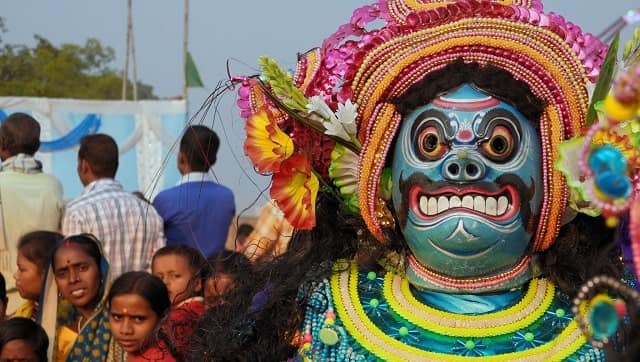 Still from Bela. Image courtesy IFFR 2021[/caption]Basu juxtaposes their preoccupations by simultaneously framing the village’s women involving themselves in back-breaking physical work. Bela follows these women as they labour to provide for their families in more traditionally masculine ways than the men, who remain immersed in rehearsing their dance routines. The camera watches them as they exert themselves day after day, crushing rice, gathering wood and harvesting rice, lingering often on the soles of their feet. When the camera trains its gaze on the feminine side of the village’s men, often caught cackling, the film delivers its ultimate commentary on the performance of gender. It’s worth noting that Basu doesn’t rely on any cinematic supplements to make the distinctions between natural and cultural landscapes, beyond envisioning a rich soundscape and blistering visual framing. One of the first scenes in the film, for instance, captures the village’s Chhau dance troupe as they rehearse their dance performance. The image in front of us is blurry, playing out against the growing evening darkness. The only source of intermittent light is a single 100-watt bulb hung nearby and occasional lightning in the sky. The ambiguity and trance-like element of the proceedings lends it an air of mystery, a feeling that is directly constructed by the specificity of sound: we clearly hear crickets chirping, noises that are interspersed with rhythmic drum beats that accompany the performance. It’s in these ways that Basu manages to blur the lines between the perception of reality and fantasy.[caption id="attachment_10545431" align="alignnone" width="640"]
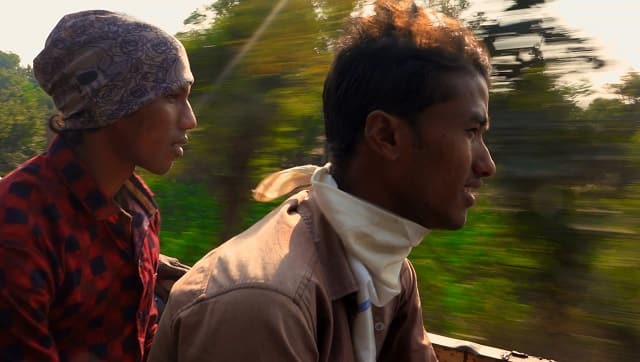 Still from Bela. Image courtesy IFFR 2021[/caption]The gorgeous tapestry that Basu builds in Bela remains committed in its delicate handling of the present. In that, it’s an example of minimalist filmmaking stripped off all the distractions of filmmaking. The film’s final moments, steeped in tragedy, root its ambitions singularly to its setting.
 The idea of gender fluidity consumes a large part of Bela’s explorations. But Basu remains as determined to treat the film as a paean to the rebellion of an indigenous community — composed of Kurmis and Mahatos — and their reverence for an artform fast approaching its expiry date.In that sense, Basu demonstrates tremendous formal control over his craft and a rare conviction in his austere storytelling methods. The filmmaker effectively utilises the camera to craft textures of the communal existence of the villagers, transporting us into their realities without attempting to manufacture any narrative about their lives. Basu’s camera consistently remains unobtrusive and at a distance, happy to record than to meddle.As a filmmaker, he boasts a light touch and keen eye for asymmetry, attaining moody, impressionistic effects through the interplay of light and shadow. A scene featuring a Diwali celebration toward the end of the film explodes on screen with a host of colours, lights, and movements. In many ways, Bela seems emboldened without the crutch of narrative dialogue — the artistic approach of Basu’s persistent gaze ensures that the framed images speak about the universe it occupies as it is. At the same time, these images are also loaded with meaning, acting as an invitation for viewers to poetically interpret them as per their convenience. In fact, gradually, it becomes so easy to forget that there is a camera in the first place — as if art is directly originating in the frame and not being captured in it. In fact, the device’s invisibility makes the lives of the villagers visible in unflinching detail, in the process pushing the possibilities of documentary as an artform.Many movies ask viewers what it really means to be seen. But Bela is the kind of cinematic wonder that is interested in asking the more important question: What does it mean to feel the full extent of what you’re seeing?
First Published:Apr 12, 2022, 08:57:17 IST
Advertisement
Advertisement

How Spider-Man actor Tom Holland has been on a sobriety journey of 4.5 years after being "addicted to alcohol"
Tom Holland has been open about his struggle with alcohol addiction and his 4.5-year sobriety journey, even at the height of his Spider-Man and The Odyssey fame.
3 min read
Sitar virtuoso Rishab Sharma steals the spotlight with Rs 35.8 lakh Jacob & Co Ram Janmabhoomi watch at ‘Ramayana’ event: Here's what makes it rare
Sitarist Rishab Sharma grabbed attention at the Ramayana event with a limited-edition Rs 35.8 lakh Jacob & Co. Epic X Ram Janmabhoomi watch. Here's what makes the luxury timepiece so special.
2 min read
Amitabh Bachchan reveals being admitted to the ICU and undergoing surgery, calls recovery 'the most difficult phase of life'
Amitabh Bachchan has revealed he was hospitalised, underwent surgery and spent time in the ICU. The veteran actor reflected on the emotional and physical challenges of recovery in a deeply personal blog post.
2 min read
Avengers Doomsday trailer out: What to expect from Marvel's ultimate crossover
Marvel Studios has dropped the first trailer for Avengers: Doomsday. From Robert Downey Jr.'s Doctor Doom and Chris Evans' return to the X-Men crossover, here's everything you need to know.
3 min read
Christopher Nolan banned the orchestra for 'The Odyssey': The sound of gongs, scrap metal and more
Composer Ludwig Göransson reveals how he built the epic's entire sound world from bronze gongs, scrap metal and ancient Greek instruments like the aulos and lyre.
2 min read
Advertisement
Advertisement