



Union Budget: Real Estate from a tax perspective
The real estate sector has been a major contributor and enabler of the growth of the Indian economy

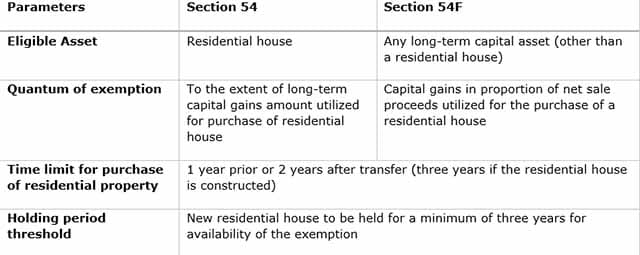
It is pertinent to note that Budget 2023 imposed a limit of INR 10 crore for deduction on long-term capital gains tax for reinvestment in residential house under Section 54 and 54F. No limit existed earlier. The amendment was introduced to prevent huge deductions claimed by HNIs on purchase of high-end luxury houses.Part 2: Key budget expectations for real estate industry from tax perspective:REIT tax framework - tying the loose ends: In past budgets, the government rationalized the REIT tax framework to iron out key developer and investor concerns. This has given significant traction to successful REIT listings. There are still few areas which need to be addressed to further incentivise this product and correct anomalies: (i) tax exemption is only provided for swap of shares of a special purpose vehicle with REIT. Other forms of transfers such as ownership of real estate assets, interest or rights, should also be covered within the scope of the exemption; and (ii) since listed units of REIT are akin to listed shares, period of holding to qualify as long-term capital asset for REIT units should be reduced to 12 months from existing 36 months.Taxation in Joint Development Agreements (JDAs): A developer (being individual or HUF) is subjected to capital gains tax only at the time of completion of project in relation to gains arising on transfer of immovable property under the JDA agreement. Such beneficial provisions should be extended to all categories of taxpayers to simplify the taxation of all JDA transactions.Rationalise stamp duty: Stamp duty is a very important cost factor in any immovable property transaction. Central and state governments should consider measures to rationalise stamp duty mechanism to provide fillip to real estate purchase transactions.GST input tax credits: Certain provisions under the GST framework, impose restrictions to avail input tax credit on construction of an immovable property. This has resulted in an increase of construction cost and in cost of doing business. Since there is a direct nexus between construction services received by the commercial developer and activity of renting/leasing of space, input credit of such taxes paid should be allowed to the developer.GST levy on inter-company transactions real estate: Recently, there have been conflicts on GST levy on inter-company transactions such as guarantee, brand usage etc. Many real estate players have received GST tax demand in this regard. The government/GST Council should provide clarifications on GST levy and valuation aspects of such inter-company transactions to resolve the conflicts.In conclusion, the proposals if implemented will pave way to resolve critical tax pain points and in turn enable overall growth in the real estate sector.The author is Partner, Deloitte India. Views expressed in the above piece are personal and solely that of the author. They do not necessarily reflect Firstpost’s views.Read all the Latest News, Trending News, Cricket News, Bollywood News,India News and Entertainment News here. Follow us on Facebook, Twitter and Instagram.

India remains among fastest-growing major economies despite global uncertainty, says RBI Bulletin
Iran war could cut global growth by more than half: World Bank’s chief economist Indermit Gill
Brent crude climbs to $94 as analysts expect oil prices to stay in $90–100 range
UK inflation cools further to 2.6% in June as transport and food prices ease
India's gem and jewellery exports jump 26.5% in June on stronger global demand