



Sensex, Nifty crash on sixth consecutive day; here are old new investment lessons from ongoing carnage at markets
Between 29 January and 6 February, 2018, BSE Sensex fell by around 5.8 percent and wiped out one-third of gains in first nine months of FY18

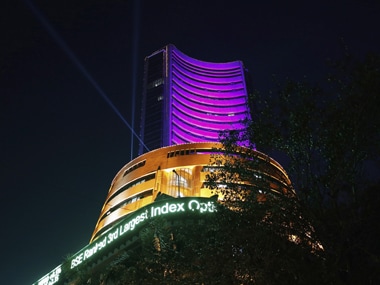
Reuters image.[/caption]Nevertheless, the stock market experts told us that this time is different because there was no bubble in the United States of the kind we saw in 2000 or that the financial crisis that broke out in 2008, was a thing of the past. Hence, there was no real reason for the stock market to fall. (Of course, to these experts, the lack of earnings growth did not matter).The trouble is that when the markets are in bubbly territory, there typically is no reason for them to fall, until some reason comes along. The first reason came in the form of the finance minister Arun Jaitley, introducing a long-term capital gains tax of 10 percent on stocks and equity mutual funds. This tax will have to be paid on capital gains of more than Rs 1 lakh, starting from 1 April, 2018.Investors took some time to digest this, and the stock market fell by 2.3 percent, a day after the budget. If this wasn’t enough, the yield on the 10-year treasury bond of the American government came back into the focus. This yield jumped by around 40 basis points to 2.85 percent, in a month’s time. This yield sets the benchmark interest rates for a lot of other borrowing that takes place. In the aftermath of the financial crisis that broke out in September 2008, the central banks of the Western world, led by the Federal Reserve of the United States, printed a lot of money to drive down interest rates.This was done in the hope of people borrowing and spending money and the economies recovering. That did not happen to the extent it was expected. What happened instead was that large financial institutions borrowed money at low rates and invested them in stock markets all across the world. This phenomenon came to be known as the dollar carry trade. All this money flowing in drove up stock prices. The problem is that as the 10-year treasury bond yield approaches 3 percent, dollar carry trade will become unviable in many cases. Given this, many carry trade investors are now selling out of stock markets, including that of India.The larger point here is that nobody exactly knows when the stock market will reverse. The way the market has behaved over the last few days, has proved that all over again. The sellers are not selling out because the valuations are too high (they were too high even a month or two back). They are selling out because of an entirely different reason all together; investors are selling out because they are seeing other investors selling out. The herd mentality that guides investors to buy stocks when everyone else is, also forces them to sell when everyone else is.Also, the stock market, when it falls can fall very quickly. The last generation of stock market investors learnt this when the BSE Sensex fell by close to 60 peercent between 9 January, 2008 and 27 October, 2008. Is it time for this generation of stock market investors to learn the same lesson all over again? On that your guess is as good as mine.Stay tuned!(Vivek Kaul is author of India’s Big Government —The Intrusive State and How It is Hurting Us. He tweets @kaul_vivek)

India remains among fastest-growing major economies despite global uncertainty, says RBI Bulletin
Iran war could cut global growth by more than half: World Bank’s chief economist Indermit Gill
Brent crude climbs to $94 as analysts expect oil prices to stay in $90–100 range
UK inflation cools further to 2.6% in June as transport and food prices ease
India's gem and jewellery exports jump 26.5% in June on stronger global demand