



Recall? What's that? Auto lobby treads softly on car defects
SIAM, the auto industry lobby, is working on a Recall Policy for defective cars, but does not like calling it that

New Delhi: If there is one word the Indian auto industry dislikes, it is Recall. Recall, as in free replacement of parts that are found defective or problematic in an entire batch of cars.
Little wonder, the industry lobby, the Society of Indian Automobile Manufacturers (SIAM), would like to tiptoe around the issue. The industry is shying away from making recalls of defective cars mandatory - like it is in countries like the United States.
In fact, even though Indian companies have had their crop of recalls, they don't like calling it that.
[caption id="attachment_271385" align="alignleft" width="380" caption="ne of the largest recalls in India happened in December 2011 when Tata Motors called back 1,40,000 Nano cars to replace the starter motor free of cost. Reuters"]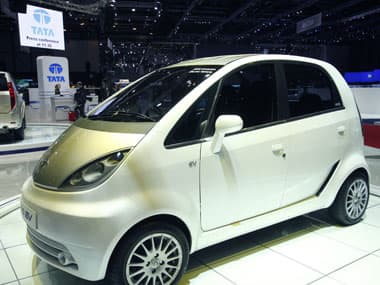 [/caption]
One of the largest recalls in India happened in December 2011 when Tata Motors called back 1,40,000 Nano cars to replace the starter motor free of cost. Some estimates pegged the cost of this recall at over Rs 100 crore for the company but the company did not term this exercise a recall, saying it was merely changing the old starter motor free of cost with a better one and there had been no customer complaints on the issue.
 More from Business
In 2010, Maruti Suzuki recalled one lakh A-Star cars on a fuel tank glitch. In April 2011, it recalled 13,157 units of its diesel engine cars to replace what was suspected to be a faulty engine part. The recall ran across its three top-selling models - the Swift Dzire, the Swift and the Ritz.
Currently, India has no policy on recall of vehicles. Recall means a manufacturer tells all customers of a vehicle that there could be a defect in a vehicle part and that it would be replaced free of charge. Indian car makers are notorious in keeping recalls under wraps and don't like discussing them.
SIAM President S Sandilya said that the association was working on a Recall Policy but this will not be mandatory for automobile companies. "We are working out a voluntary policy. No car maker in the world will knowingly manufacture a defective product and sell it in the market to tarnish its reputation".
SIAM Secretary General Vishnu Mathur said that if the policy were made mandatory, all kinds of frivolous lawsuits could arise. He also pointed out that while in the US auto companies manufacture and sell products on the basis of self-certification, in India an elaborate third party certification process was in force.
SIAM is now developing a policy which will provide a specific policy guideline and procedure for car makers to announce recalls.
SIAM is also hoping for a new policy on scrapping old vehicles. Such a scheme would ban vehicles older than 10 or 15 years from plying on roads while simultaneously incentivising the purchase of new vehicles. Pointing towards scrappage schemes in many European nations, Sandilya said old vehicles were fuel guzzlers and polluting and need to be retired.
Apart from a well-defined scrappage policy, SIAM is also seeking movement towards diesel price decontrol. With the finance minister avoiding a special tax on diesel cars, the automobile industry wants the price gap between petrol and diesel reduced. Sales of diesel vehicles have zoomed in the last fiscal year (2011-12) and diesel prices are raised, sales of petrol cars will continue to suffer.
Last year, small car sales actually fell 7 percent due to the rising gap between petrol and diesel prices.

Can a record May offset a shrunk international schedule and help IndiGo turn a profit?
China has dominated Myanmar’s rare earth mines — now India eyes deal to harness country’s critical minerals
JPMorgan to hire 1,000 technology professionals for India GCCs amid AI-led transformation
BOJ seen raising interest rates by December as weak yen fuels inflation risks
'From make in India to launch from India': Skyroot COO on why Vikram-1 could change India’s space sector