
Advertisement
Co Presented By
Co Presented By


Sections
RBI refuses to give reasons behind demonetisation
The monetary policy regulator also refused to give any details about the time it will take to replenish the currency notes.

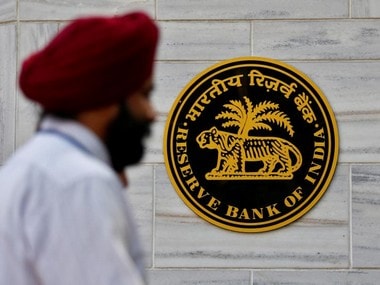 Reserve Bank of India (RBI). Reuters[/caption]"The query is in the nature of seeking future date of an event which is not defined as information as per Section 2(f) of the RTI Act," RBI said in response to an RTI query. The Bankers' Bank refused to disclose reasons behind the demonetisation of about Rs 20 lakh crore of currency in the country citing Section 8(1)(a) of the Right to Information Act.The section states, "Information, disclosure of which would prejudicially affect the sovereignty and integrity of India, the security, strategic, scientific or economic interests of the State, relation with foreign State or lead to incitement of an offence."Denying the information sought in the RTI application, the RBI did not give any reasons as to how exemption would apply in the given caseas the decision was already taken and there was no way that disclosure of information would have fit in any of the reasons cited in section8(1)(a) of the RTI Act."The clause of public interest would apply where exemption clause applies on the information sought by an applicant. In the present case,the information sought does not attract any exemption clause," former Central Information Commissioner Shailesh Gandhi told PTI.He said law is very clear that when a public authority rejects to disclose an information it must give clear reasons as to how the exemption clause would apply in the given case.Recently, it had refused to allow access to minutes of meetings held to decide on the issue of demonetisation of Rs 1000 and Rs 500notes announced by Prime Minister Narendra Modi on November 8.
Responding to an RTI application filed by activist Venkatesh Nayak, the Banker's Bank refused to disclose the minutes of the crucialmeetings of Central Board of Directors on the issue of demonetisation citing section 8(1)(a) of the transparency law.Nayak said he will appeal against the decision, adding, while confidentiality prior to the making of the demonetisation decision isunderstandable, continued secrecy after the implementation of the decision is difficult to understand when crores of Indians are facingdifficulties due to the shortage of cash in the economy.He said the refusal to disclose the minutes of the board meeting where the decision was taken is perplexing to say the very least.Former Information Commissioner Shailesh Gandhi also underlined that RBI has created an inhouse "disclosure policy" which is againstthe letter and spirit of the RTI Act.Gandhi has also filed a complaint before Central Information Commission against RBI for adopting the policy.
First Published:Dec 29, 2016, 20:03:17 IST
Advertisement
Advertisement

Can a record May offset a shrunk international schedule and help IndiGo turn a profit?
Record domestic market share boosts operating performance, but forex losses, rising oil prices and geopolitical disruptions could weigh on IndiGo's bottom line.
3 min read
China has dominated Myanmar’s rare earth mines — now India eyes deal to harness country’s critical minerals
India is deepening rare earth cooperation with Myanmar as New Delhi seeks alternative sources of critical minerals dominated by China, including dysprosium and terbium used in EVs, defence systems and clean energy technologies
6 min read
JPMorgan to hire 1,000 technology professionals for India GCCs amid AI-led transformation
Wall Street banking giant to expand hiring across cloud, cybersecurity and AI data pipeline roles as it strengthens its India Global Capability Centres despite AI-driven workforce optimisation.
1 min read
BOJ seen raising interest rates by December as weak yen fuels inflation risks
Majority of economists expect Japan's central bank to deliver a 25-basis-point rate hike by year-end, with further policy tightening likely through 2027.
2 min read
'From make in India to launch from India': Skyroot COO on why Vikram-1 could change India’s space sector
Skyroot Aerospace’s successful Vikram-1 mission marks a major milestone for India’s private space sector, as the country seeks to shift from “Make in India” to “Launch from India” and compete in the global commercial satellite launch market
8 min read
Advertisement
Advertisement