



Massive H-1B visa denial rates for Indian IT companies under Trump administration, says report
As a result of the more restrictive Trump Administration policies, denial rates for H-1B petitions have increased significantly from just six percent in 2015 to 24 percent in the third quarter of the current fiscal, a study carried out by an American think-tank has showed

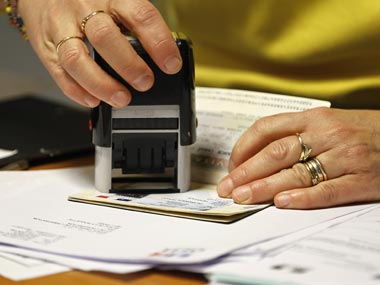
Representational image. Reuters[/caption]At least 12 companies that provide professional or IT services to other US companies, including Accenture, Capgemini and others, had denial rates of over 30 percent through the first three quarters of fiscal 2019. Most of these companies had denial rates between two percent and seven percent as recently as in 2015, it said.The denial rate for H-1B petitions for continuing employment was also high for Indian IT companies. For Tech Mahindra, it increased from two percent to 16 percent during the same period, while that of Wipro increased from four percent to 19 percent, and Infosys from one percent to 29 percent, the study showed.On the other hand, the denial rates for H-1B petitions for continuing employment among major American companies were low — Amazon (from one percent to three percent), Microsoft (remained at two percent), Intel (from one percent to three percent), Apple (remained at one percent) and for Google, it increased from 0.4 percent in 2015 to one percent in 2019.Noting that between 2015 and 2019, the denial rate for new H-1B petitions for initial employment quadrupled from six to 24 percent, the National Foundation for American Policy said to put this in perspective, between 2010 and 2015, the denial rate for "initial" H-1B petitions never exceeded eight percent, while today the rate is three times higher."A key goal of the Trump administration – achieved through memos and policy changes – has been to make it more difficult for well-educated foreign nationals to work in America in science and engineering fields," the foundation said.In the first three quarters of fiscal 2019, US Citizenship and Immigration Services adjudicators denied 24 percent of H-1B petitions for "initial" employment and 12 percent of H-1B petitions for "continuing" employment, it said.The 12 percent denial rate for continuing employment is also historically high. It was only three percent in 2015, the think-tank said."Based on how the agency processes cases, this data suggests the environment has not improved for employers," Lynden Melmed, a partner at Berry Appleman & Leiden and former chief counsel for USCIS, said."'Cream of the crop' cases would have been approved during that time period, but cases, where the government issued a Request for Evidence, would likely not show up in that data set because they would not be decided until much later," he said.A research by Britta Glennon, assistant professor at the Wharton School of Business at the University of Pennsylvania, found that "restrictive H-1B policies could not only be exporting more jobs and businesses to countries like Canada, but they also could be making the US's innovative capacity fall behind".In response to being unable to hire high-skilled foreign nationals, US companies increase their hiring overseas, which causes more innovation by foreign nationals to take place in other countries, benefiting those nations, the think-tank said.H-1B visa restrictions, such as those now being implemented by the administration, push jobs outside the United States and lead to less innovation in America, it said.

Air India to cut Delhi-Toronto flight time by 3 hours, resume non-stop services from August 1
South Korea economy grows faster than expected in Q2 as chip exports power recovery
India remains among fastest-growing major economies despite global uncertainty, says RBI Bulletin
Iran war could cut global growth by more than half: World Bank’s chief economist Indermit Gill
Brent crude climbs to $94 as analysts expect oil prices to stay in $90–100 range