



GST panel unlikely to favour tax rate cut for auto, component sectors; revenue losses major concern for govt
The auto sector, which has been reeling from the worst slump in nearly two decades, has pushed for a lowering of tax rates at the 20 September GST panel meeting, in a bid to revive vehicle demand.

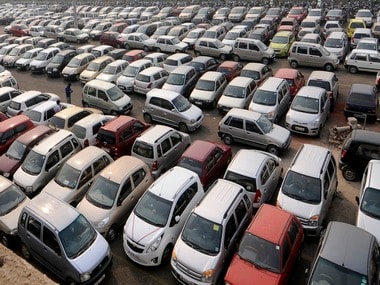
Representational image. Reuters[/caption]In the April-July period, total tax revenues of 20 states fell 7 percent to Rs 4.9 lakh crore compared with the same period last year.Some states were particularly hard hit, with data showing Andhra Pradesh, Rajasthan and Punjab tax collections plunged 59 percent, 35.5 percent and 12.5 percent, respectively.“I will oppose any reduction for the simple reason that it won’t be revenue-neutral,” said Thomas Isaac, finance minister of the southern state of Kerala.The auto sector, which has been reeling from the worst slump in nearly two decades, has pushed for a lowering of tax rates at the 20 September GST panel meeting, in a bid to revive vehicle demand.The GST panel is chaired by the federal finance minister and all state finance ministers are members. The panel makes decisions by vote.Still, those states ruled by Prime Minister Narendra Modi’s Bharatiya Janata Party may be willing to support a GST cut if the federal government pushes such a proposal.“In my view, if the centre feels that it is good for the economy, and they will be able to compensate the states, then the states should support the proposal,” said Himanta Biswa Sarma, the finance minister of the northeastern state of Assam.The GST meeting will be closely watched as it could help investors gauge the government’s seriousness in reviving growth in Asia’s third-largest economy.Finance Minister Nirmala Sitharaman has in recent weeks outlined a slew of measures to revive investor sentiment and push growth up from a 25-quarter low of 5 percent in April-June.But measures such as creating a stressed fund for the hard-hit housing sector, withdrawal of higher taxes on foreign portfolio investors and planned mergers among state-owned banks have not really helped revive investor sentiment.Weak growth has also hit the federal government’s direct tax collections, which are showing a 6 percent growth rate, considerably less than the budgeted 17 percent growth rate for this fiscal year, while GST collections in August fell to a six-month low.This, in turn, could make it challenging for the government to meet its fiscal deficit target of 3.3 percent for 2019/20.

South Korea economy grows faster than expected in Q2 as chip exports power recovery
India remains among fastest-growing major economies despite global uncertainty, says RBI Bulletin
Iran war could cut global growth by more than half: World Bank’s chief economist Indermit Gill
Brent crude climbs to $94 as analysts expect oil prices to stay in $90–100 range
UK inflation cools further to 2.6% in June as transport and food prices ease