



Fuel prices cut for fourth consecutive day; petrol rate falls below Rs 70-mark in Delhi for the first time this year
Oil markets rose on Monday on signs that the recent price plunge may start crimping supply from the United States though concerns about the global economy continued to weigh.

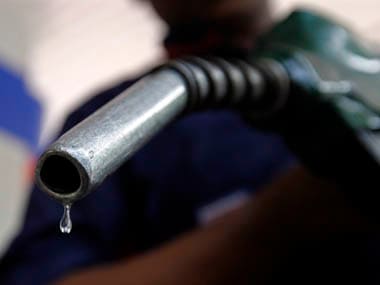
Representative image. Reuters[/caption]In Delhi, diesel was retailed at Rs 63.83 per litre, Mumbai 66.79, Chennai Rs 67.38 and Kolkata Rs 65.59 a litre.Meanwhile, oil markets rose on Monday on signs that the recent price plunge may start crimping supply from the United States, currently the world’s biggest crude producer, though concerns about the global economy continued to weigh.International benchmark Brent crude futures had risen 30 cents, or 0.56 percent, to $54.12 a barrel, at one point climbing as far as $54.66.US West Texas Intermediate (WTI) crude futures were up 15 cents, or 0.33 percent, at $45.74 a barrel. They earlier climbed as high as $46.24.Crude prices rebounded from sharp declines last week. Brent fell 11 percent for the week, dropping to its lowest since September 2017 on Friday, while WTI also lost 11 percent last week, its worst weekly performance since January 2016.Both benchmarks are down more than 35 percent from their recent peaks in early October.The price plunge has caused US shale oil producers to curtail drilling plans for next year.The boom in US shale output has boosted the country into the top producer spot over traditional suppliers Saudi Arabia and Russia. The industry is at the centre of US president Donald Trump’s calls to boost the country’s energy independence.With inputs from Reuters

Bharat Forge, Flying Whales sign pact to develop 60-tonne airships for India’s defence logistics
Air India to cut Delhi-Toronto flight time by 3 hours, resume non-stop services from August 1
South Korea economy grows faster than expected in Q2 as chip exports power recovery
India remains among fastest-growing major economies despite global uncertainty, says RBI Bulletin
Iran war could cut global growth by more than half: World Bank’s chief economist Indermit Gill