



Euro has always been a shaky concept with or without Greece
The Eurozone was essentially a monetary union without being a political one.

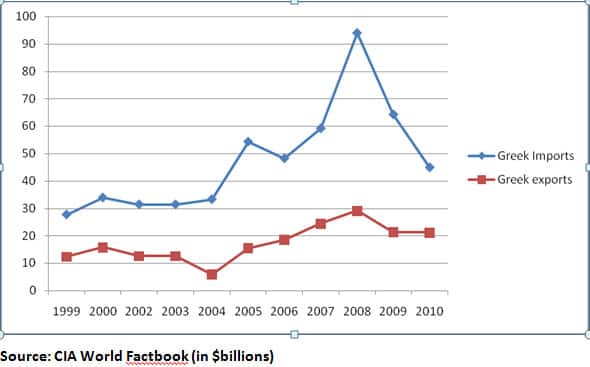
(Editor's note: This article was originally published on 1 July and is being republished in light of the Greece referendum in which the nation has voted against the financial bailout terms) The world has been going bonkers over whether Greece will default on the 1.6 billion euros that it needs to pay the International Monetary Fund(IMF). All together the country owes 240 billion euros to the troika of European Commission, European Central Bank (ECB) and IMF. With the default, chances are Greece will have to exit from the Eurozone and stop using euro as its currency.But irrespective of whatever happens to Greece, euro continues to remain a shaky idea. In order to understand this point, we need to go back a little in history.The European Union (EU) was established by the Maastricht Treaty signed on December 9 and 10, 1991. After the formation of the EU, the members became bound to start a monetary union, which would share the same currency, by January 1, 1999.The EU introduced the euro first in non-physical form (traveller's cheques, electronic transfers, banking, etc.) on January 1, 1999. On this day, 11 member countries of the EU started using euro as their currency. Meanwhile, Greece joined the Eurozone, as countries which decided to use the euro as their currency came to be referred to as, on June 19, 2000 and gave up its currency, the drachma.The Eurozone was essentially a monetary union without being a political one. Hence, while the monetary policy of the entire zone was managed by the European Central Bank based out of Frankfurt, every government ran its own fiscal policy and had its own budget.[caption id="attachment_2318304" align="alignleft" width="380"]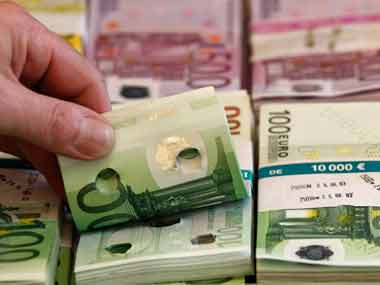 Greece's euro crisis. Reuters[/caption]East and West Germany merged together as Germany in 1990. Massive investments were made to modernise the Eastern part and to integrate it with Germany’s industrial heartland. Between 1990 and 2010, nearly 1.6 trillion euros have gone from west to east to pay for all kind of things from pensions and salaries of government employees, to build roads and cities, and factories.One of the impacts of this transfer of money was that wages in the Eastern part started to go up and converge towards the Western part. This led to unit labour costs in Germany going up by 17.6% from 1990 to 1995. During the same period the labour cost in what would become the Eurozone rose at the rate of 11.5% on an average. Higher labour costs made German exports uncompetitive and the share of the exports as a portion of the GDP fell from 1991 to 1993. This led to an increase in unemployment from 4.2% to 8.2%.The unified Germany responded to the challenge. It came up with structural reforms which included moderation of the wages being paid. The government spending on employee wages fell by 1% between 1993 and 2000. The private sector also responded to the challenge bycutting labour costs.The high rate of unemployment helped given that people could be hired at lower wages. This allowed Germany to push down unit labour costs by 3.4% between 1995 and 2000. This gave the German exports a push that was badly needed and ensured that the share of exports in the total German GDP shot up from 22% to 33% between 1993 and 2000.This despite the fact that Germany’s overall share in the global export market fell by 3.5% from 1990 to 2000, but in comparison the share of other advanced economies fell by 6.5%.The euro came into being in 1999. And Germany was well placed to take advantage of it. With the euro being used as a currency within the Eurozone, the exchange rate risk was taken out of the equation totally for selling things within the zone This meant that the country which had the lowest labour cost and the best productivity would be able to come up with products that had the most demand in the countries which had the euro as their currency.And this is was a problem with a monetary union without a political union. In a monetary union without a political union the labour force can’t move around freely and this hurts the industries and economies of one set of countries.Let’s understand this through an example which calls for a slight leap of faith to appreciate the broader point that I am trying to make. Let’s say that the wages in Germany are lower and are rising at a much slower rate than wages in Greece, where the wages are higher and rising at a faster pace.This makes German businesses more competitive and hence their products are cheaply priced vis a vis products made in Greece. Hence, the other countries in the Eurozone including the Greeks would buy German products instead of products made in their own countries. This would mean that their industries would suffer.But in monetary union which is also a political union such a situation wouldn’t prevail for a long period of time. In a political union, labour would easily move from Germany to Greece. This would lead to the wages in Germany rising because the German companies would try to hold back the workers who are leaving. The wages in Greece would fall because the Greeks would be happy to hire Germans who would come in at lower salaries.With Germans moving to Greece to enjoy the prospect of higher wages would lead to wages being equalised in the two countries. Hence, the competitiveness that Germans had acquired because of lower wages would go away and businesses in Greece and other countries would be equally competitive.But that was not to be because the Eurozone is a monetary union and not a political one. This made German exports tremendously competitive especially within the Eurozone, as German companies drove down cost. The share of German exports as a proportion of the world exports went up by 0.5% between 2000 and 2009, during a period when the share of the advanced countries in global exports fell by 11.6%.At the same the contribution of the export sector to the German GDP went up further. By 2008, exports made up 47% of the German GDP. The low labour costs along with productivity ensured that the German exports took off. They went from $608 billion in 2002 to around $1.5 trillion in 2008, an increase of almost 150%.And all this was on the back of low wage growth. Between 2000 and 2009, wages grew by 11% in Germany. This was 15% lower than the average wage growth in the Eurozone and 36% below the wage growth in what are now being called the PIIGS (Portugal, Ireland, Italy, Greece and Spain) countries.Given this, since the beginning of the euro in 1999, Germany became some 30% more productive than Greece. Very roughly, that meant that it cost 30% more to produce the same kind of goods in Greece than in Germany. Hence, the imports of a country like Greece where many times its exports as can be seen from the accompanying graph. The situation peaked in 2008 when the imports at nearly $94billion where 3.2 times the exports.
 As the writer Michael Lewis said in an interview “The Greeks will never be as productive as…Germans, and the Germans will never be as unproductive as…Greeks.”Niall Fergusson, the premier economic historian of this generation is of the opinion that a politician union of the countries in the Eurozone has become a necessity. The euro is firmly entrenched and it’s too late to unravel it, he feels. The effects of any country leaving the euro could go far and wide. “It could even be a tsunami that hits New York,” he said in a interview to the Sunday Times of London a few years back.In the normal scheme of things countries which get uncompetitive can try improving their exports by devaluing their currency. But that is not possible in case of the euro. This is the fundamental problem at the heart of the euro. It makes Germany too competitive. And how do you solve that problem?Sources:Dadush, E and Eidelman,V. 2010. Germany: Europe’s Pride or Europe’s Problem?, Carnegie Endowment for International Peace.(Vivek Kaul is the author of the Easy Money trilogy. He tweets @kaul_vivek)

Air India to cut Delhi-Toronto flight time by 3 hours, resume non-stop services from August 1
South Korea economy grows faster than expected in Q2 as chip exports power recovery
India remains among fastest-growing major economies despite global uncertainty, says RBI Bulletin
Iran war could cut global growth by more than half: World Bank’s chief economist Indermit Gill
Brent crude climbs to $94 as analysts expect oil prices to stay in $90–100 range