



Global food crisis bubbling, but is anyone listening?
According to experts, global food prices are poised to increase through the decade. And India is unlikely to prove an exception. So get ready for 100 percent jumps in the prices of onions and potatoes every year.

We've said it before and we'll say it again: Don't heave a sigh of relief over falling food prices. It's temporary.
According to experts, global food prices are poised to increase through the decade. India is unlikely to prove an exception.
"The time of cheap food is over," Unilever Chief Executive Paul Polman told journalists on the sidelines of the World Economic Forum in Davos, Switzerland, according to The Economic Times. "I expect food prices to go up by at least 2-3 percent across the entire basket."
[caption id="attachment_194398" align="alignleft" width="380" caption="If no action is taken quickly, we might as well start getting used to 100 percent jumps in the prices of onions, potatoes and other food products every year. Reuters"]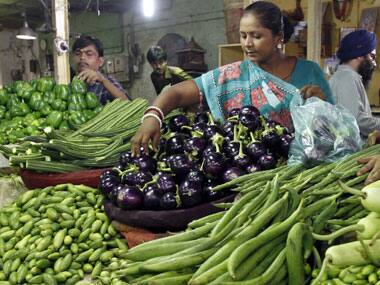 [/caption]
Polman listed surging demand, unsustainable farming policies and climate change as the main reasons for his belief, adding that while more than $70 billion needs to be invested in agriculture, only a fraction of that is actually being invested.
Of course, the Unilever boss is not the first person to sound warning bells on food prices. Food prices surged to astronomical levels in 2008, hit by faltering production and climate change disruptions; they caused food riots in several countries and sparked predictions that prices would stay at elevated levels for years to come.
 More from Economy
Three years on, the world is doing very little to change the situation.
Bill Gates, the software billionaire philanthropist, told the Chicago Tribune before heading to Davos that he thought it was shocking that only $3 billion was being spent each year on agricultural research to improve the seven most important staple crops on which the poor depend.
In another piece in Financial Times, he was quoted as saying that it is time to reboot the 'green revolution', which revolutionised farming in the 1960s and 1970s by improving crop yields dramatically.
However, raising production alone is not enough, note other experts.
In India, for instance, while food grain production has hit record highs, the bigger problem is that of storage. Up to 40 percent of farm produce gets wasted or rots before it reaches the shops.
India is not alone in this wasteful behaviour. Globally, one-third of the food produced every year, or 1.3 billion metric tonnes, is lost or wasted, according to this Bloomberg report.
Given the limited investments in agriculture and high levels of wastage, is it any wonder that global food prices are set to rise?
World food prices tracked by the United Nations' Food and Agriculture Organisation reached their highest in February last year, and although they slipped 11 percent by December, they were still 23 percent higher than 2010 levels.
Prices could go higher still. According to a report released jointly by the United Nations' Food and Agriculture Organisation and the Organisation for Economic Cooperation and Development, global agricultural output is projected to grow at 1.7 percent annually on average in the next 10 years, down from 2.6 percent in the previous decade, reflecting lower crop growth.
In India too, an appalling lack of investments in agriculture has led to declining productivity levels -- and no turnaround seems to be in sight. The Reserve Bank of India has repeatedly stressed that given the lack of measures to increase agricultural output, any relief in food prices will only be temporary.
If no action is taken quickly, we might as well start getting used to 100 percent jumps in the prices of onions, potatoes and other food products every year.

India’s trade surplus with US may cross $90 billion after tariff cuts, says SBI report
Inflation likely to be a big focus area for budget 2024, say sources
Explained: Will the Bank of Japan break tradition and raise interest rates?
UK enters recession, central bank admits
Explained: How the rising US dollar can affect everyone