



Demonetisation reduced cash transactions, encouraged digital payments: Niti Aayog VC Rajiv Kumar
As per the RBI Annual Report released on Wednesday, 99.3 percent of the demonetised Rs 500 and Rs 1,000 notes were returned to the banking system.

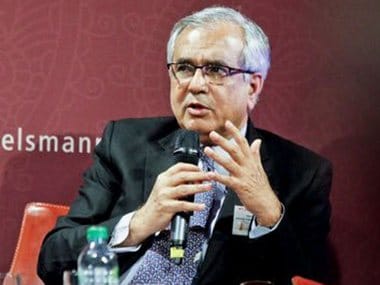
File photo of NITI Aayog vice-chairman Rajiv Kumar. Image: News18[/caption]"Who said the aim of demonetisation was to get back less money? Demonetisation has impacted the markets and market psychology. How many transactions used to take place in cash (before the note ban), and what is the position now?", Kumar said replying to media queries on the sidelines of an event.To another question, he said the government was committed to fiscal discipline and pointed out that the Prime Minister resisted the pressure to cut down excise duty on fuel while the oil prices were on rise.He further said that retail inflation, which includes fuel and food, is lower than core inflation."So inflationary impact of an oil price rise, or that of minor exchange rate decline is not that high, because there can be a supply response to that. Inflation is well under control. We are constantly on vigil on these issue," he added.On 8 November, 2016, Prime Minister Narendra Modi had announced the demonetisation of high-value currency notes.Of the Rs 15.41 lakh crore worth Rs 500 and Rs 1,000 notes in circulation on 8 November, 2016, when the note ban was announced, currency worth Rs 15.31 lakh crore has returned to the banking system.

Can a record May offset a shrunk international schedule and help IndiGo turn a profit?
China has dominated Myanmar’s rare earth mines — now India eyes deal to harness country’s critical minerals
JPMorgan to hire 1,000 technology professionals for India GCCs amid AI-led transformation
BOJ seen raising interest rates by December as weak yen fuels inflation risks
'From make in India to launch from India': Skyroot COO on why Vikram-1 could change India’s space sector